

The Best Flooring Solutions for Warmth
Is there anything more luxurious than stepping onto a warm floor on a frosty winter morning? Underfloor heating has transitioned from a high-end luxury to a standard feature in many modern renovations. It offers energy-efficient warmth, frees up wall space by removing radiators, and creates a cosy ambient temperature.
However, the efficiency of your system depends entirely on what you put on top of it. Not all materials conduct heat effectively, and some can be damaged by the thermal stress. In this guide, we explore why engineered vinyl is the perfect partner for underfloor heating and outline the essential rules to ensure your Pro-Tek™ warranty remains valid.
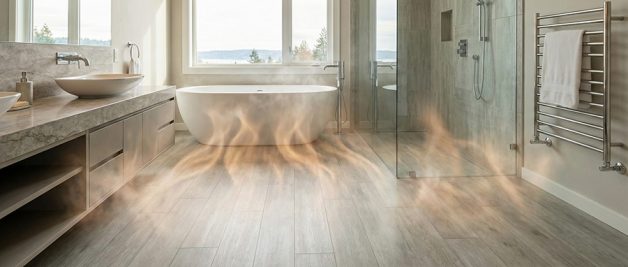
Why Vinyl is the Best Flooring for Underfloor Heating
When choosing the best finish for your system, thermal conductivity is key. You want a material that transfers heat quickly into the room rather than blocking it.
Carpet acts as an insulator, stopping the heat from rising. Solid wood can be risky, as the heat dries out the timber, leading to cracks and warping. Pro-Tek™ engineered vinyl, however, is thermally stable and conductive. It allows the warmth from your underfloor heating to pass through efficiently, meaning your system doesn’t have to work as hard to heat the room, potentially lowering your energy bills.
Water-Based vs. Electric Underfloor Heating Systems
It is crucial to know which system you are installing, as this dictates which Pro-Tek™ collection you can use.
- Water-Based Systems: All Pro-Tek™ engineered vinyl flooring is suitable for use with water-based (hydronic) systems. These systems generally run at lower temperatures and heat up more gradually.
- Electric Systems: These heat up very quickly and can sometimes create “hot spots.” Consequently, only our Editions collections are approved for use with electric underfloor heating.
- Important Note: We do not guarantee Pro-Tek™ Excel engineered vinyl flooring for use on electric systems. Always check your specific product range before installation.
Critical Temperature Limits for Underfloor Heating
To maintain the stability of your floor, you must adhere to strict temperature guidelines. Vinyl is a reactive material; if it gets too hot, it can soften and destabilize.
The Golden Rule: The floor surface temperature must never exceed 26°C (79°F).
Furthermore, you should never crank the heating up from cold to max instantly. The temperature should be turned up or down gradually. Sudden spikes in heat from your underfloor heating can shock the material, causing rapid expansion that the locking mechanism may not be able to handle.
Managing Expansion with Underfloor Heating
Heat causes things to expand. When you have a heated floor, this natural physical reaction is amplified. To prevent your beautiful floor from buckling or lifting, you must accommodate this movement.
- Doorways: Always fit a transition strip or a T-profile door bar in all doorways or room dividing points. This allows the floor in separate rooms to move independently.
- Large Rooms: For open-plan spaces over eight metres in length or six metres in width, transition strips are mandatory. Without them, the cumulative expansion of the vinyl over a large underfloor heating area can cause the joints to fail.
The “No Rug” Rule for Underfloor Heating
This is the most common mistake homeowners make. If you have underfloor heating installed beneath vinyl, you must strictly avoid covering the floor with heavy rugs, bean bags, or dog beds.
A rug acts as a thermal blanket (a high tog rating). It traps the heat between the subfloor and the vinyl plank, causing the temperature in that specific spot to soar well above the safe 26°C limit. This localized overheating can cause the vinyl to become unstable, peak at the joints, or discolour. To keep your floor flat and secure, keep it uncovered.
Partial Installation and Warranty Exclusions
Consistency is key. Any areas that have partial underfloor heating fitted will be excluded from your warranty.
Why? Because the movement in the warmer, heated area will be significantly greater than in the cooler, unheated area. This differential expansion creates stress across the floor that can lead to separation.
By following these guidelines and referring to your heating supplier for specific system information, you can enjoy the ultimate comfort of Pro-Tek™ flooring and underfloor heating for years to come.