Redoing your bathroom is a great project. It is your chance to turn a basic room into a relaxing space to unwind. But to get it right, you need materials that look good and do the job well. Out of all the choices you will make, picking the right floor is the most important.
Unlike your walls, your bathroom floor takes a lot of abuse. It has to handle constant walking, the heavy weight of a bathtub, plus lots of water, steam, and cleaning products. If you pick the wrong tile, your floor could end up dangerously slippery, or the grout could crack and let water ruin the floor underneath. By knowing a little bit about what makes a good tile, you can pick a floor that looks great, keeps you safe, and lasts for years.
Jump to section
- Porcelain vs. Ceramic: Demystifying the Options
- Navigating Slip Resistance and Safety Ratings
- Design Trends: Wood, Stone, and Patterned Elegance
- Installation Essentials: Tanking and Underfloor Heating
- A Quick Breakdown: Pros and Cons
- 15 Frequently Asked Questions (FAQ)
Porcelain vs. Ceramic: Demystifying the Options
When you shop for tiles, you will mostly see ceramic and porcelain. They might look exactly the same on the surface, but they are made differently and handle water in very different ways.
Ceramic Tiles These are made from baked clay with a smooth glaze on top. They are usually cheaper, lighter, and easier to cut. However, the clay underneath the glaze can soak up water. If the top layer chips, water can get inside the tile, which might cause it to weaken or crack over time.
Porcelain Tiles Porcelain is the top choice for bathroom floors. It is made from a tougher clay mixture and baked at a much higher heat. This makes it incredibly solid and almost completely waterproof. Because it is so strong, it won’t easily crack under the weight of a heavy bathtub or if you accidentally drop a bottle on it.
Navigating Slip Resistance and Safety Ratings
Safety should be your main focus when picking a bathroom floor. Shiny tiles might look great in a shop, but they turn into a dangerous slip hazard the second they get wet.
To avoid slipping, you need to check the tile’s grip, which is measured by an “R-rating.” For a home bathroom, you should look for an R10 or R11 rating. These tiles have a matte or slightly textured finish that stops you from slipping, even when the floor is wet and soapy.
Small mosaic tiles are another very safe choice. Because they are tiny, they need a lot of grout to hold them together. All those extra grout lines give your bare feet a lot of natural grip. If you prefer the look of big tiles, just make sure to choose ones that have a textured surface or a special anti-slip finish.
Design Trends: Wood, Stone, and Patterned Elegance
Choosing a durable tile doesn’t mean you have to give up on style. Today’s porcelain tiles can be made to look exactly like almost any natural material.
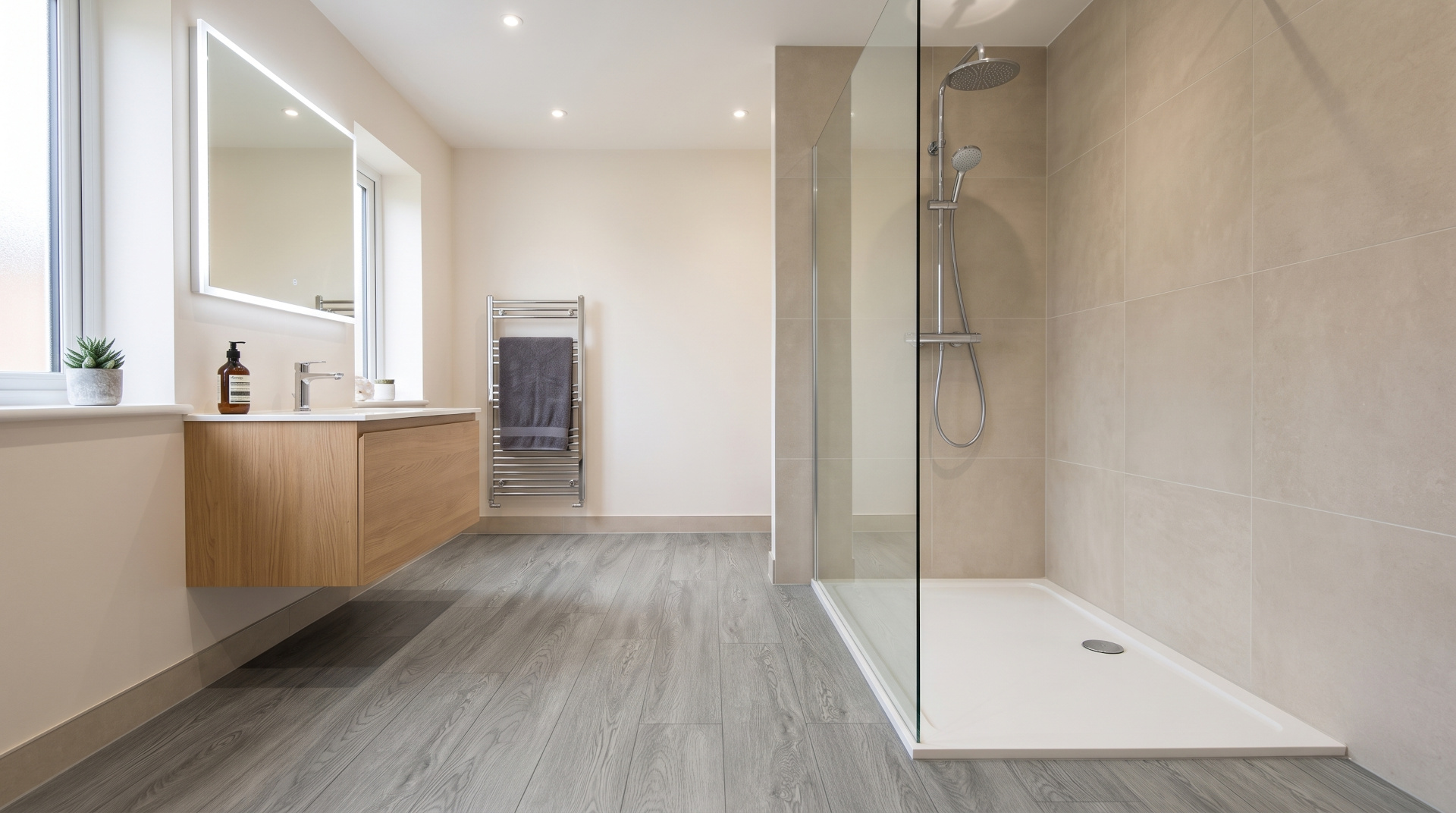
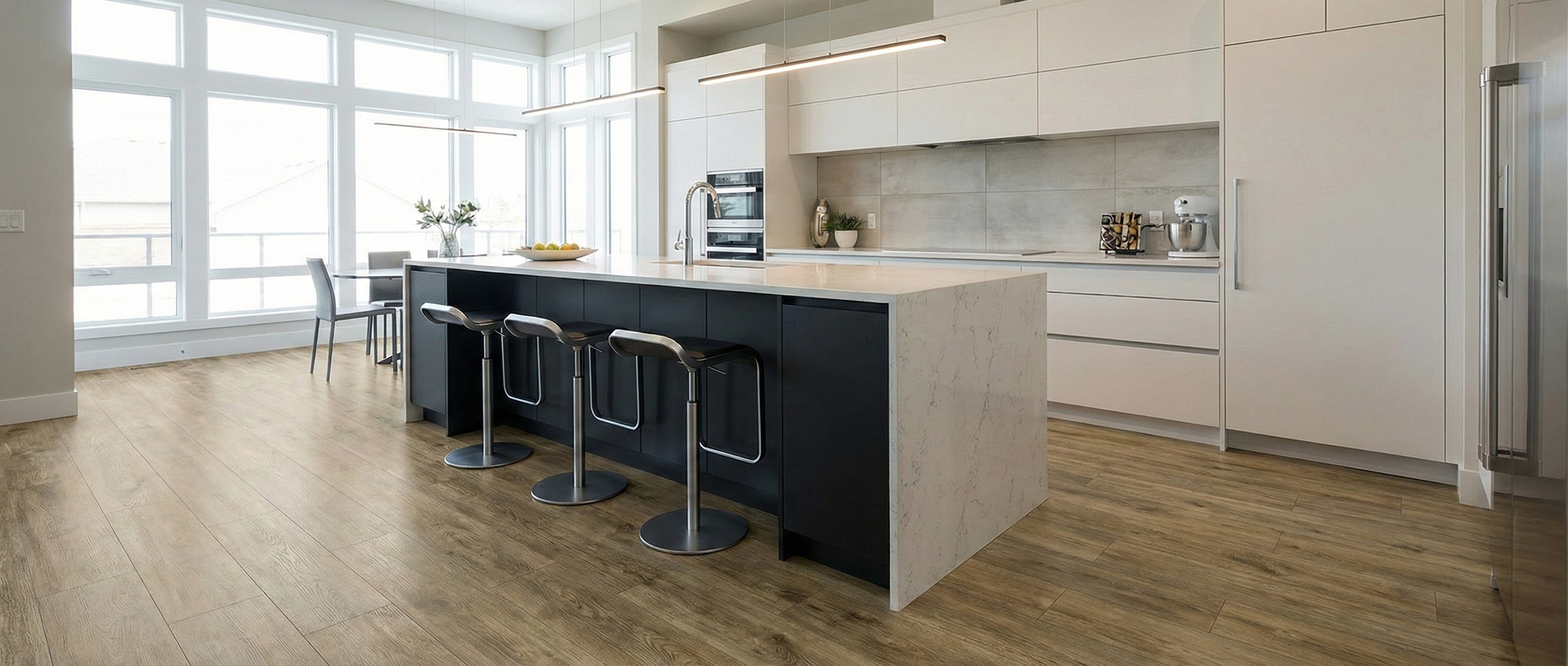
Wood-Effect Tiles These are very popular right now. They look and feel just like real wood, letting you bring that warm oak look into a wet bathroom without worrying about the floor warping or rotting.
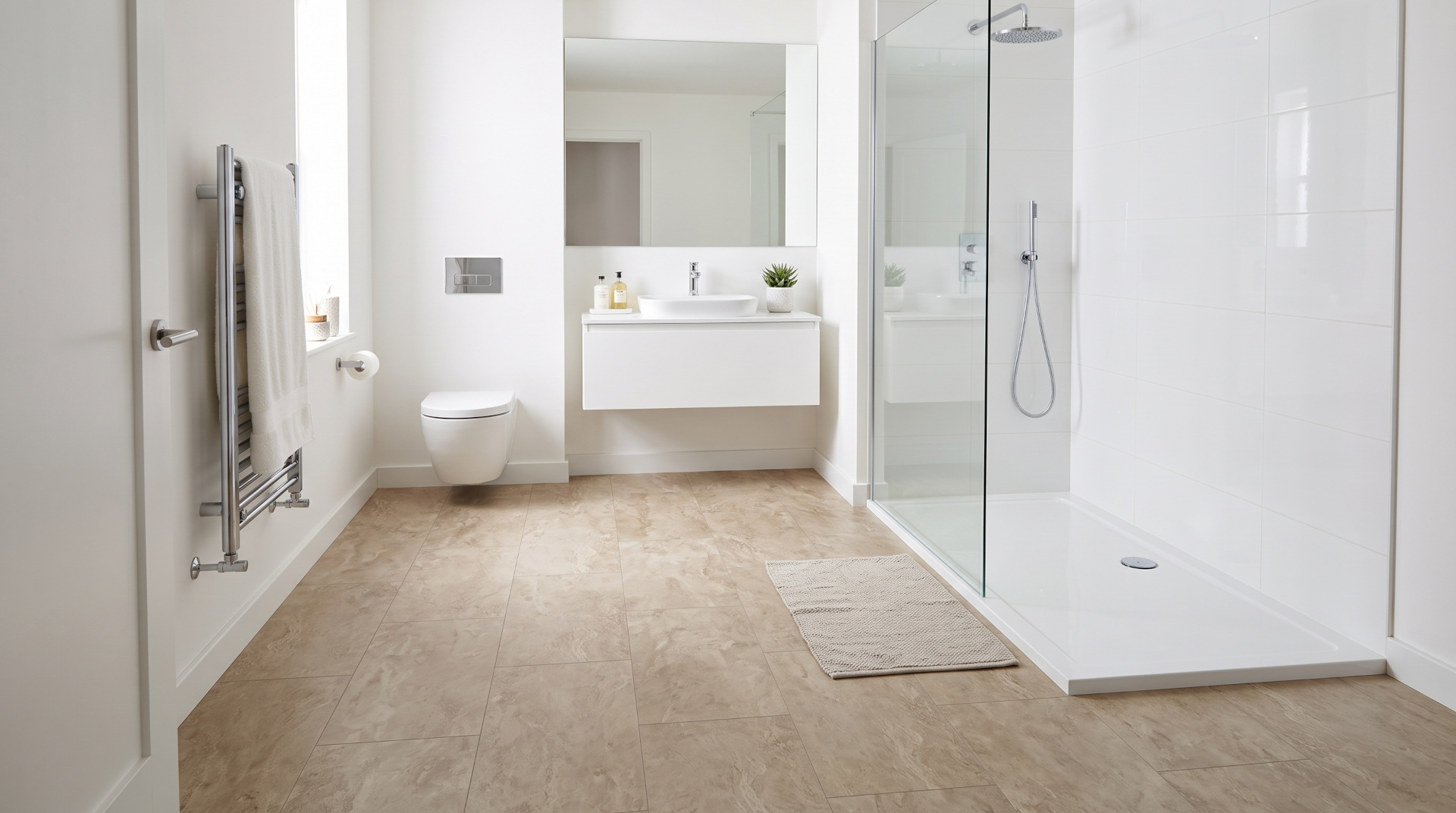
Stone and Patterned Tiles If you want a relaxing, spa-like feel, large marble or slate-effect tiles give a clean look with very few grout lines. On the other hand, if you want something fun and bold, patterned Victorian-style tiles are a great way to add character to a small bathroom or en-suite
Installation Essentials: Tanking and Underfloor Heating
Even the best tiles will fail if the floor underneath them isn’t prepared right. Before laying a single tile, your floor needs to be completely solid. If your wooden floorboards have any bounce to them, the tile glue will fail, leading to cracked tiles and broken grout. To prevent this, fitters usually put down strong cement boards over wooden floors to make them perfectly stiff.
Waterproofing (Tanking) If you are building a wet room or a walk-in shower, the area needs to be completely waterproofed. This is usually done by painting a special waterproof liquid over the floor and lower walls to stop any hidden leaks.
Underfloor Heating Once your floor is prepped, it is a great time to think about underfloor heating. Tiles hold heat really well. Putting a heating mat under the tiles not only keeps your feet warm in the winter, but it also helps wet puddles dry up much faster.
A Quick Breakdown: Pros and Cons
To help you decide if tile is the best choice for your bathroom, here is a simple look at the good and the bad.
The Pros
- Waterproof: Good quality porcelain keeps water out completely.
- Super tough: It is hard to scratch and can last for decades.
- Great with heating: It holds heat perfectly if you have underfloor heating.
- Easy to clean: Dust, mold, and bacteria won’t stick to it.
- Stain-proof: Spilled makeup, hair dye, or strong cleaners won’t ruin the color.
- Lots of styles: You can find almost any look or pattern you want.
- Adds value to your home: Buyers love a well-done tiled floor.
- Strong: It easily holds heavy things like cast-iron bathtubs.
- Eco-friendly: Made from natural clay with no nasty chemicals.
- Won’t fade: Sunlight won’t make the colors look washed out over time.
The Cons
- Cold on the feet: Without underfloor heating, tiles get freezing in the winter.
- Very hard: Standing on them for a long time can make your legs ache, and dropped glass will smash instantly.
- Grout gets dirty: The cement lines between the tiles will need a good scrub to stay looking fresh.
- Messy to fit: You need special tools and wet glue, which can be messy work.
- Prep is pricey: Getting the floor underneath perfectly flat and stiff costs extra time and money.
- Can be slippery: Shiny tiles are dangerous when wet, so you have to make sure you buy textured ones for safety.
- Heavy: Your floorboards and joists have to be strong enough to hold all that weight.
- Hard to fix: If one tile cracks, chipping it out and replacing just that one piece is a big job.
- Costs more upfront: Tiles usually cost more to buy than basic vinyl or laminate.
- Takes time to lay: Between prepping, gluing, and letting everything dry, a tile floor takes a few days to finish.
15 Frequently Asked Questions (FAQ)
1. Can I use wall tiles on my bathroom floor?
No, you should never use wall tiles on a floor. Wall tiles are typically thinner, more brittle, and finished with a smooth, glossy glaze that is dangerously slippery and prone to cracking under foot traffic. Always check that a tile is explicitly rated for floor use.
2. What slip-resistance rating do I need for a bathroom floor tile?
You should look for a tile with an R10 or R11 slip rating for a residential bathroom floor. This ensures the surface provides sufficient grip when walked on with wet feet.
3. Is it essential to seal bathroom floor tiles?
Glazed ceramic and porcelain tiles do not require sealing because their surface is non-porous. However, natural stone tiles (like marble, slate, or travertine) and unglazed encaustic tiles are highly porous and must be treated with a high-quality impregnating sealer to prevent water and stain absorption.
4. Does bathroom tile grout need to be waterproof?
Standard cement-based grout is water-resistant but not completely waterproof. To prevent mold and water penetration, you should use a premium polymer-modified grout, or opt for an epoxy grout, which is completely impervious to water and highly stain-resistant.
5. Why did the grout on my new bathroom floor crack so quickly?
Cracking grout is almost always caused by movement in the subfloor. If tiles are laid directly onto flexible plywood or bouncy floorboards without a rigid cement backer board underneath, the slight flexing will quickly break the rigid cement bonds of the grout.
6. Can I lay new bathroom floor tiles directly over old ones?
While technically possible if the old tiles are perfectly flat and securely bonded, it is generally not recommended. It raises the height of the floor, creating awkward steps at doorways, and makes it impossible to inspect or repair the underlying waterproofing membrane.
7. Which is better for a bathroom floor: ceramic or porcelain?
Porcelain is significantly better. It is denser, stronger, and absorbs virtually no water compared to standard ceramic, making it far more durable and long-lasting in high-moisture zones.
8. Are large format tiles a good idea for small bathrooms?
Yes. Large format tiles (like 60x60cm) mean fewer grout lines, which creates a cleaner, less cluttered visual look that can make a compact bathroom feel significantly larger and more open.
9. How do I clean discolored grout lines on my bathroom floor?
You can clean grout using a specialized grout cleaner and a stiff-bristled brush. For an eco-friendly option, create a paste of baking soda and water, spray it with white vinegar, let it bubble, and scrub it clean.
10. What is the difference between rectified and non-rectified tiles?
Rectified tiles are mechanically ground and cut after firing to ensure their edges are perfectly straight and identical in size. This allows you to lay them with incredibly narrow grout lines (as thin as 1.5mm) for a sleek, ultra-modern finish.
11. Do I need to tank my bathroom floor if I am not building a wet room?
While full tanking is mandatory for a walk-in wet room shower, it is highly recommended to water-protect the splash zones around baths and sinks to prevent long-term damp damage from accidental overflows or structural leaks.
12. Can I cut bathroom floor tiles with a standard hand tool?
Ceramic tiles can easily be cut using a standard manual score-and-snap tile cutter. However, dense porcelain tiles are much harder and usually require a diamond-blade electric wet saw or a specialized heavy-duty porcelain cutter to ensure clean edges without chipping.
13. What type of tile adhesive should I use for a bathroom floor?
You should always use a flexible, waterproof, cement-based powder adhesive (Class S1 or S2) rather than a ready-mixed tub paste. Flexible adhesives allow for minor thermal movements caused by temperature shifts and underfloor heating without cracking.
14. Are dark floor tiles or light floor tiles better for a bathroom?
Light tiles make a space feel brighter and larger but show hair and dust easily. Dark tiles create a dramatic, cozy look but can easily show white water spots, dried soap scum, and limescale marks, meaning they may require more frequent wiping.
15. Can I use a steam mop to clean my porcelain bathroom floor?
Yes, a steam mop is perfectly safe to use on glazed porcelain or ceramic tiles. The intense heat breaks down grime and sanitizes the floor quickly without chemical cleaners. However, avoid using a steam mop if you have natural stone tiles, as the thermal shock can cause damage.