


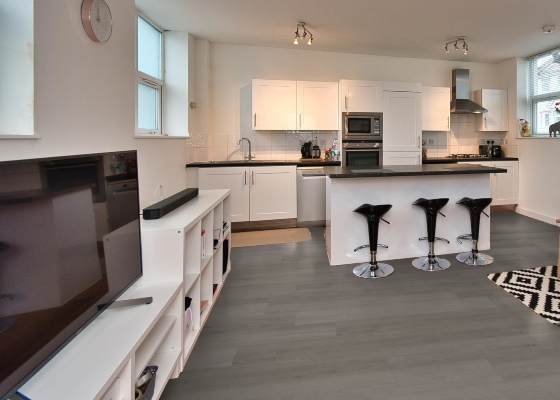
Before ordering any flooring, it is important to understand how to measure a room accurately. Getting these measurements right ensures you cover the surface area completely without any visible joins, resulting in a professional, attractive finish.
Unfortunately, not all rooms are simple shapes with straight walls. Interruptions such as bay windows, alcoves, and fireplaces can make it tricky to know where to start. This guide illustrates how to measure a room with different obstacles to give you a precise estimate of how much flooring you need to order.
Note: All flooring is priced per m² but sold in complete packs. The number of packs you need will be calculated for you on our product pages, so it is the total m² figure that you need to calculate first.
Tools You Will Need
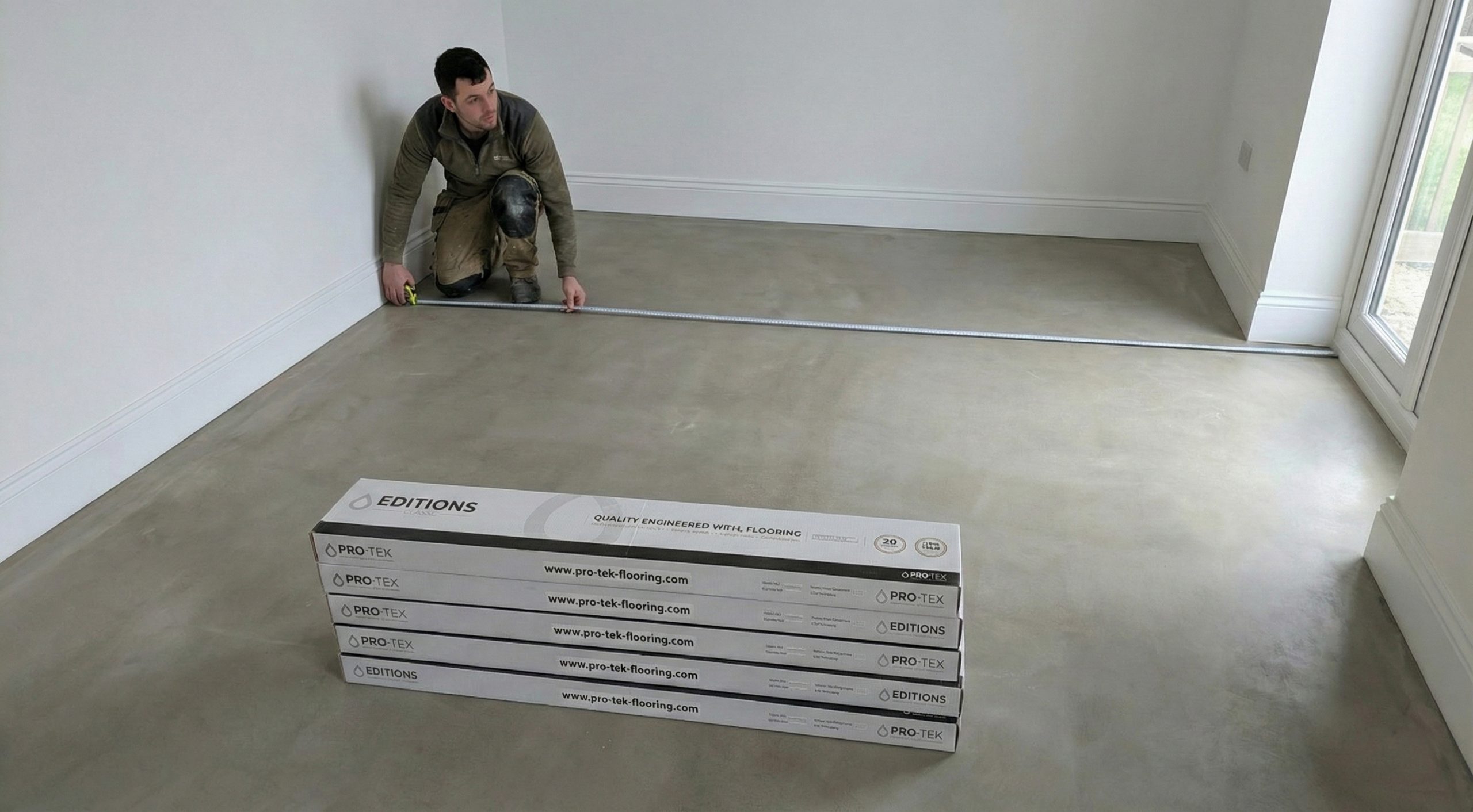
To achieve the most accurate results when figuring out how to measure a room, we recommend using:
- A metal tape measure
- A calculator
- A notepad and pen
How to Measure a Room: Basic Shapes
At the simplest level, the area of a space is calculated by measuring the length by the width in metres.
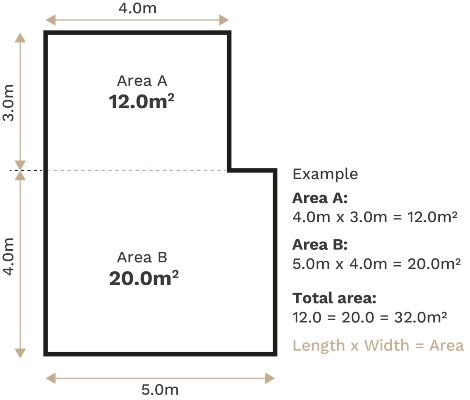
For example, if a room is 5.0m long by 4.0m wide, the total area is 20m².
If the room is completely symmetrical with no deviations, this will be the only calculation you need. However, if you are looking at how to measure a room that is L-shaped (but has no other disruptions), simply split the room evenly into two rectangles, measure each part separately, and add them together.
Indentations & Recesses

Most spaces will have some level of deviation from straight walls due to bay windows, fireplaces, or wall supports. When considering how to measure a room with these features, you must account for the extra cuts required.
To allow for this, the “divide and conquer” method is best:
- Measure the main square or rectangular part of the room first.
- Measure the length and width of the indentation or recess separately.
- Add the two areas together.
Example 1 – Rectangular Indentation:
- Split the room: Measure the main area first, then the small alcove area.
- Calculation: 1.5m + 2.0m + 1.5m = 5.0m (Total Length)
- Total Area: 5.0m x 4.0m = 20.0m²
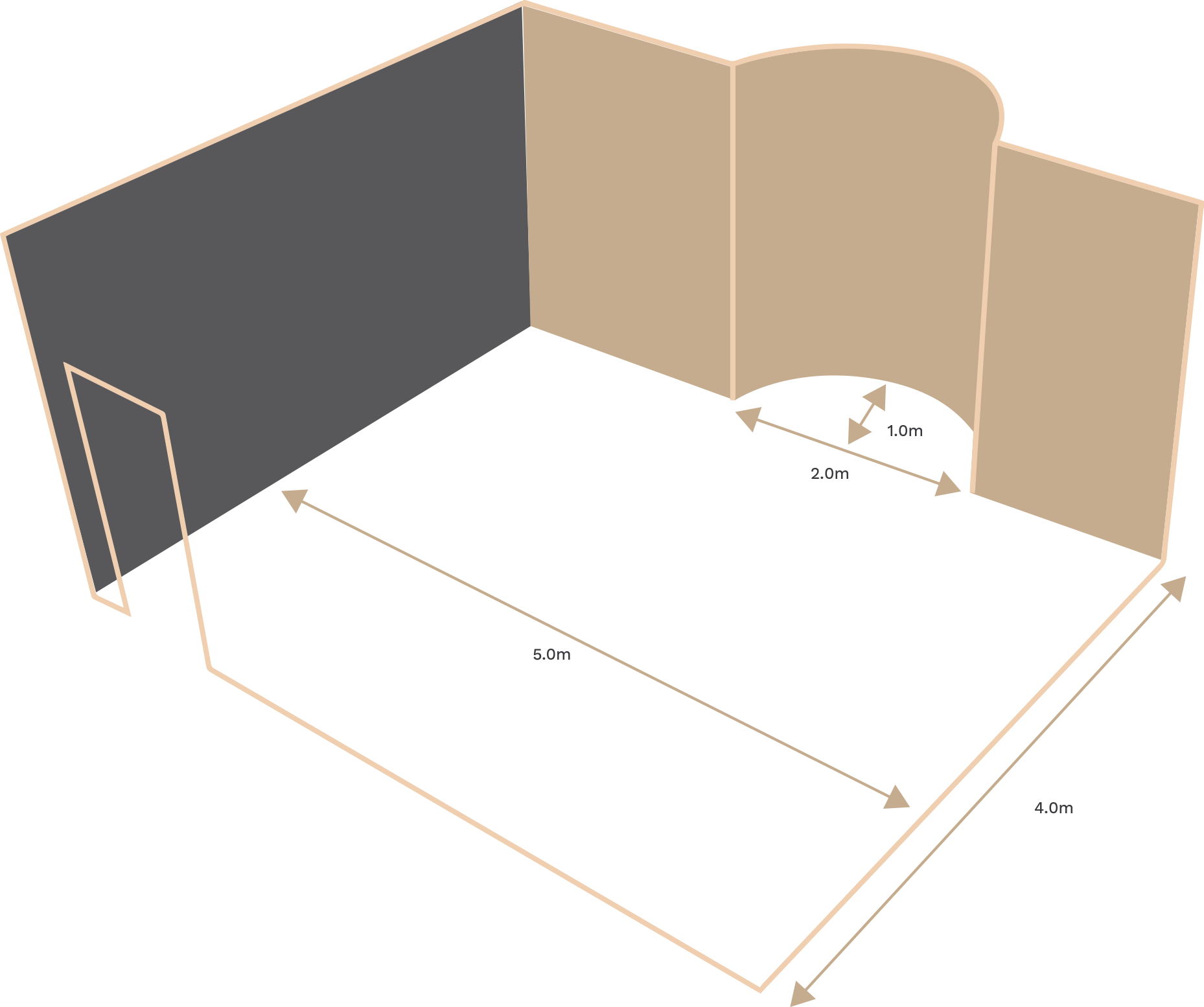
Example 2 – Curved Recesses (e.g., Bay Windows): Learning how to measure a room with a bay window requires calculating the area of the curve.
- Recess Calculation: (1.0m radius x 3.14) / 2.0 = 1.57m²
- Main Room: 5.0m x 4.0m = 20m²
- Total Area: 20.0m² + 1.57m² = 21.57m²
Staircases
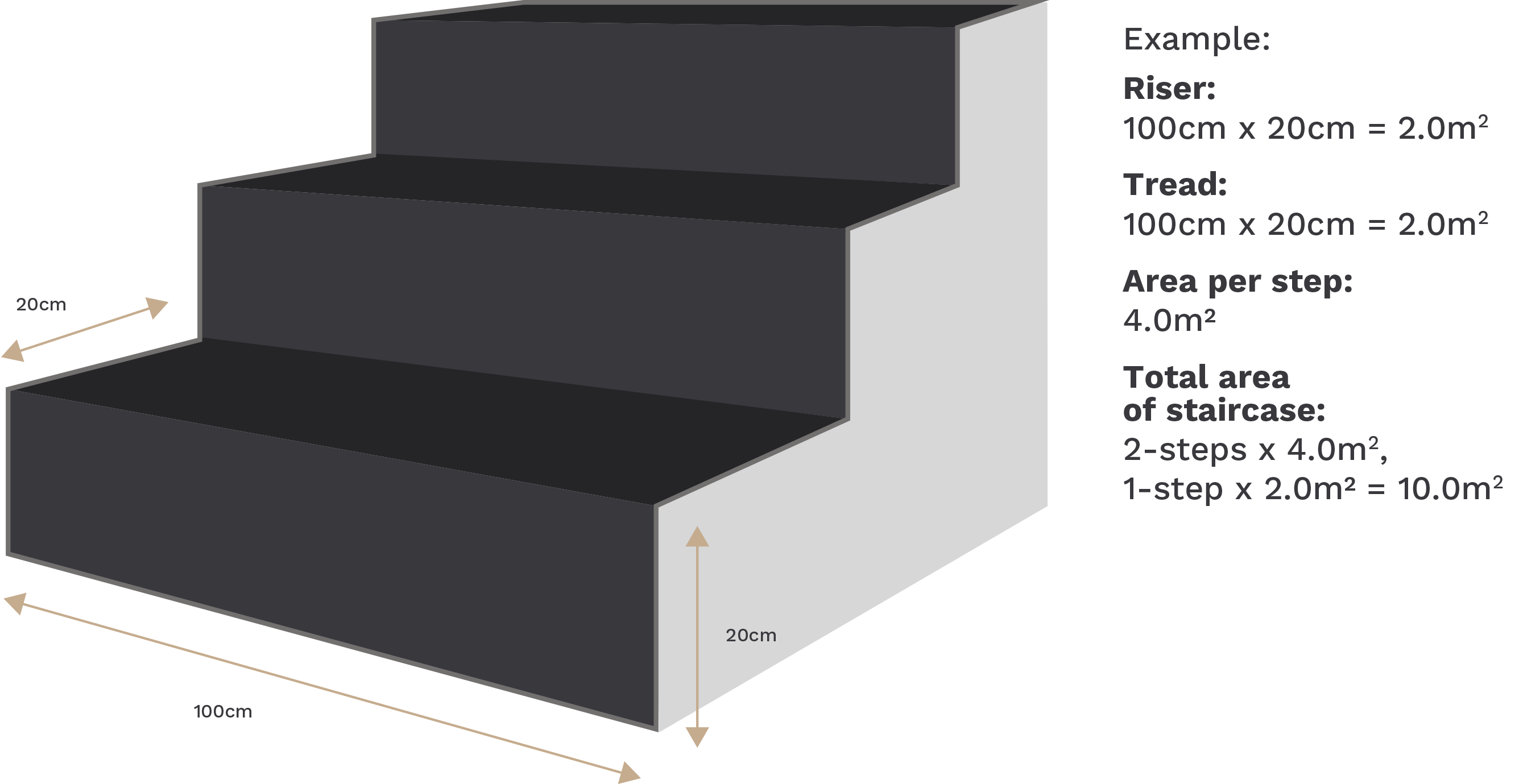
Staircases require careful measurement of both the tread and the riser.
For straight staircases with identical steps:
- Measure the length and width of the tread (the top part you step on) and multiply to get the area.
- Measure the length and depth of the riser (the vertical front part) and multiply to get the area.
- Add these two figures together to get the total area per step.
- Multiply the area per step by the number of steps (exclude the top step, as this is usually covered by your landing flooring).
For complex staircases: If your staircase has turns (winders) or uneven step sizes, you must measure the widest and longest parts of each stair individually and add them all together to get your total.
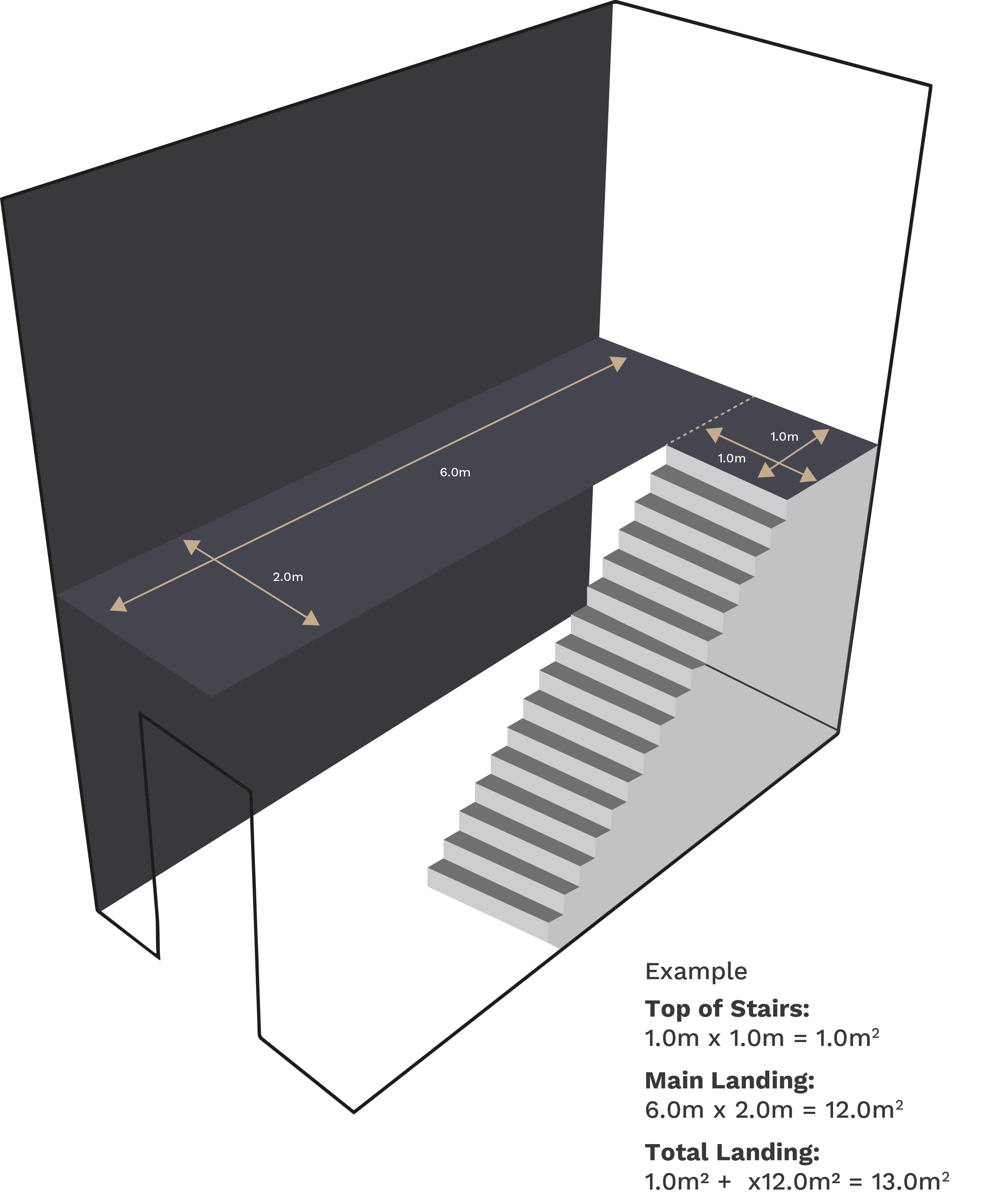
Landings
- Calculate the area of each distinct section.
- Add them together to find the total area.
- Important: Remember to include the area of the top step in your landing measurement.
Example Calculation:
- Top of Stairs: 1.0m x 1.0m = 1.0m²
- Main Landing: 6.0m x 2.0m = 12.0m²
- Total Landing Area: 1.0m² + 12.0m² = 13.0m²
Don't Forget Wastage!
Once you have calculated your total square meters, you must add a percentage for wastage. This covers cuts, mistakes, and fitting around corners.
- Straight Plank Boards: Add a minimum of 5-7%.
- Herringbone: Add a minimum of 12-15%.
For complicated spaces that require significant cutting of planks, it is always safer to allow for greater wastage than you would for a simple box room.
Need Help? If you are still unsure how to measure a room for your specific project, or how to calculate the amount of Pro-Tek flooring you need, please contact us and our team will be happy to assist you.