Most bathroom accidents are not dramatic. They are a wet foot on a smooth tile, a stumble out of the shower, an “I am fine” that turns into a wrist in a cast. The flooring choice is usually the variable people forget to take seriously.
There is a small problem with the phrase non slip bathroom flooring, though. No floor is truly non slip. The proper industry term is “slip resistant”, and understanding the difference is the difference between a floor that feels safe and one that actually is.
By the end, you’ll know exactly what to ask for, and what to steer clear of.
Jump to section
- What Does ‘Non Slip’ Bathroom Flooring Actually Mean?
- Why Bathrooms Need Slip Resistant Flooring
- How to Read Bathroom Flooring Slip Ratings
- The Best Non Slip Bathroom Flooring Materials
- Is LVT a Safe Non Slip Bathroom Flooring Option?
- How Pro-Tek™ LVT Performs in Bathrooms
- Slip Resistance vs Waterproofing: Why You Need Both
- Common Mistakes to Avoid With Non Slip Bathroom Flooring
What Does ‘Non Slip’ Bathroom Flooring Actually Mean?
Short answer: “Non slip” is a marketing term. The industry standard is “slip resistant”, and every floor is rated on a scale that tells you how much grip it offers when wet.
In the UK, slip resistance is measured using the Pendulum Test Value (PTV), the test method outlined in BS 7976. A floor is generally considered slip resistant when it scores 36 or above on the pendulum test in wet conditions. Lower than that, and you are relying on luck rather than grip.
You will often see an R rating (R10, R11, R12, R13) on tile and vinyl product sheets. Higher numbers mean more grip. For a domestic bathroom, R10 is the minimum sensible choice, with R11 a safer pick for families and anyone with mobility considerations.
The single biggest myth in bathroom flooring is that a glossy or “wet look” finish is the slippery one to avoid. Texture matters more than shine. A textured matte vinyl can be far grippier than a high-gloss ceramic tile, and it is also kinder on bare feet first thing in the morning.
Why Bathrooms Need Slip Resistant Flooring
Bathrooms are statistically the most dangerous room in the house. The Royal Society for the Prevention of Accidents (RoSPA) estimates that around a third of all injuries in the over-65s happen in the bathroom, and the majority are slip related.
Water is everywhere in a bathroom: shower overspray, post-bath drips, condensation, wet towels on the floor. That water, sitting on a smooth surface, turns ordinary walking into a balancing act. The HSE treats wet floor contamination as a primary cause of workplace slips, and the same physics apply at home.
Three groups are most at risk:
- Young children, who run on wet floors before they have built the reflex to slow down.
- Older adults, where a fall can mean months of recovery rather than a few bruised ribs.
- Anyone with mobility issues, where a single slip can mean losing independence for a season.
The cost of ignoring slip resistance is not abstract. A sprained ankle, a broken wrist, a hip replacement. None of these are dramatic, all of them are preventable with the right floor underfoot. Our guide to LVT benefits covers the wider safety case if you want to dig further.
How to Read Bathroom Flooring Slip Ratings
Short answer: Look for the pendulum test value (PTV 36+ is the safe threshold) or the R rating (R10 minimum for domestic bathrooms, R11 for safer family use).
There are two ratings you will see most often. Here is how to use them.
R ratings (used for tiles and vinyl):
- R9: minimal grip, not suitable for bathrooms.
- R10: the baseline for domestic bathrooms, fine for most households.
- R11: noticeably better grip, sensible pick for family bathrooms and anyone unsteady on their feet.
- R12 and R13: commercial-grade, often overkill for home use but excellent for wet rooms and accessible bathrooms.
PTV (Pendulum Test Value):
- Below 25: high slip risk, unsuitable for wet areas.
- 25 to 35: moderate slip risk, borderline for bathrooms.
- 36 and above: low slip risk, the HSE’s recommended threshold for wet areas.
If a product’s slip rating is missing from the spec sheet, treat it as a red flag. Reputable manufacturers publish it on the data sheet before you order.
The Best Non Slip Bathroom Flooring Materials
Not every flooring material behaves the same way when wet. Here is how the main options stack up.
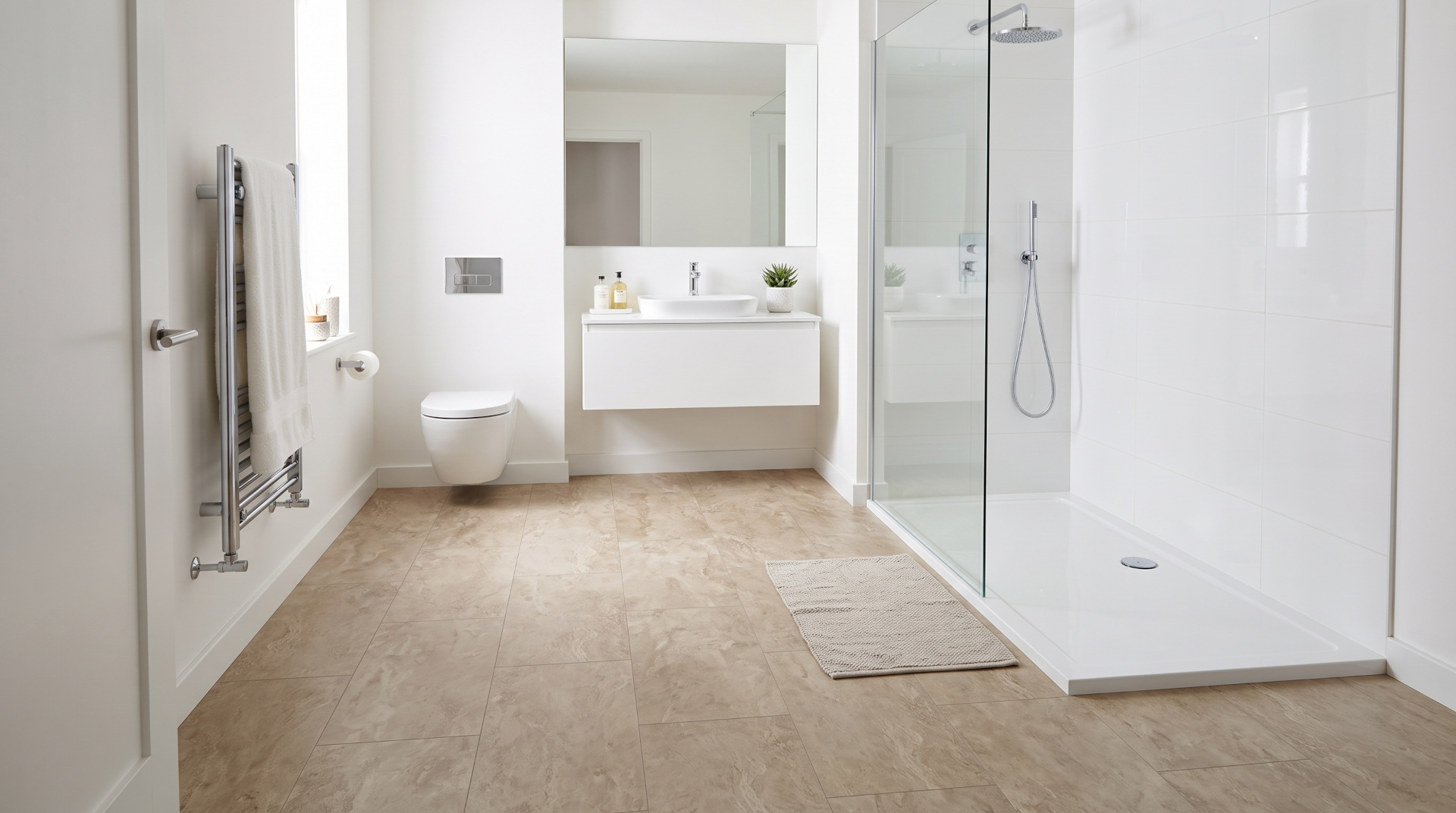
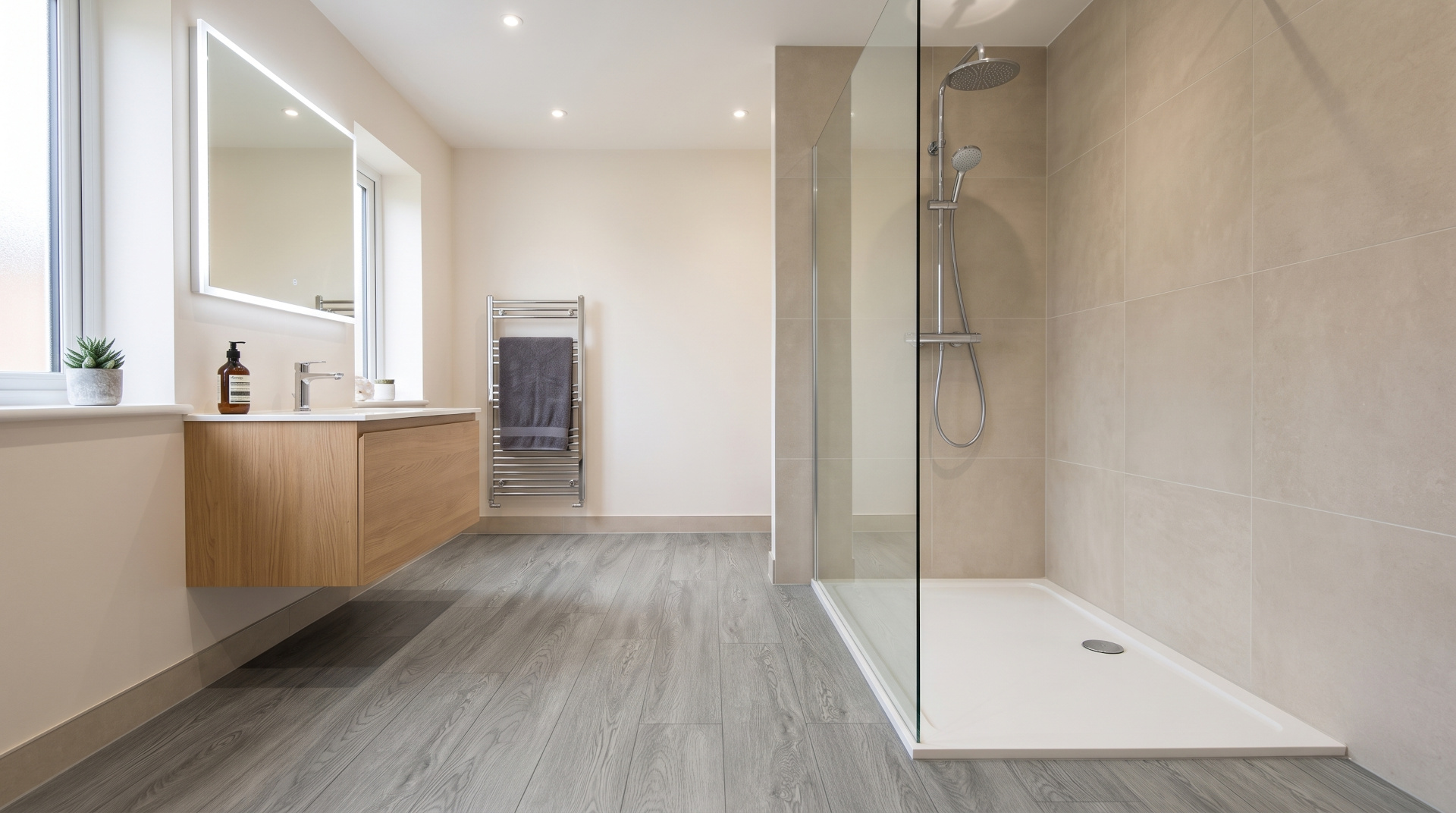
Textured LVT (luxury vinyl tile): The strongest combination of grip, warmth, and waterproofing of any option here. Most quality LVT, including Pro-Tek™’s bathroom vinyl flooring range, carries an R10 rating out of the box with textured wear layers that grip well even when wet. Feels warmer underfoot than tile and is genuinely waterproof.
Ceramic and porcelain tiles: Still the safe-house classic. Choose a textured or R11-rated tile in a matt finish, and you have a hard-wearing bathroom floor. The catch is cold feet in winter, harder cleaning of grout lines, and a more involved installation.
Natural stone (honed, not polished): Honed slate, limestone, and tumbled travertine look beautiful. High-gloss stone, on the other hand, is essentially ice when wet. If you love stone, specify honed only and seal it properly.
Rubber: Outstanding slip resistance, used widely in care homes. Limited design options, and the look reads as institutional rather than residential in most homes.
Cork: Naturally grippy and warm underfoot. Needs sealing to stay waterproof, and the colour range is narrower than vinyl or tile.
Concrete (sealed): Hardwearing and modern, but cold and unforgiving on feet and dropped mugs. Specify a textured finish or a sealant that adds grip.
Bath mats are not a substitute. A bath mat covers a square metre of floor and slides around itself. Useful, yes. A replacement for a slip resistant floor, no.
Is LVT a Safe Non Slip Bathroom Flooring Option?
Short answer: Yes, when you choose textured LVT from a reputable manufacturer with a published slip rating, it is one of the safest and most practical bathroom flooring options available.
There are three reasons LVT works well in bathrooms.
1. Texture is built in, not applied later. A good vinyl wear layer is embossed to mimic wood or stone grain, and that texture is what gives grip. It does not wear smooth the way some finishes can over years of cleaning.
2. Water cannot get underneath the floor. Unlike engineered wood or laminate, rigid core LVT is fully waterproof. Water sits on the surface rather than soaking in and damaging the floor or the subfloor below it. This is covered in more depth on our bathroom vinyl flooring page.
3. Comfort and warmth come as standard. Compared to tile, LVT feels warmer underfoot and softer to stand on. If you are brushing your teeth or stepping out of the shower, that comfort matters more than people expect.
There is one persistent misconception worth killing here. “Vinyl is smooth, therefore slippery.” It is wrong. Vinyl in a domestic setting is almost always textured, and the slip rating of a quality LVT matches or beats most ceramic tiles. We have compared the two head-to-head in our laminate vs vinyl flooring guide, and the safety story is part of why LVT wins for bathrooms.
If you are weighing up construction types, our SPC flooring guide explains why rigid core is the right pick for wet rooms, and our WPC flooring guide covers the softer, warmer Excel feel.
How Pro-Tek™ LVT Performs in Bathrooms
Pro-Tek™ offers four collections, and three of them are well suited to bathrooms. Here is the short version of what to pick when.
Editions (SPC, 0.55mm wear layer): The most popular pick for bathrooms. Broad design range across Classic Plank, Herringbone, Tiles, and Super Long Plank, with R10 slip resistance and a 5mm rigid core that handles the temperature swings of busy family bathrooms.
Excel (WPC, 8mm core): The premium feel. Softer and warmer underfoot than SPC, with the thicker wear layer that suits master en-suites and any bathroom where you tend to stand barefoot for longer. One honest caveat: Excel is not approved for use over electric underfloor heating, so if UFH is part of the plan, go with Editions or Tek-Core instead.
Tek-Core (hybrid, 0.7mm wear layer): The flagship when performance matters. The 8-layer construction gives enhanced stability and scratch resistance, useful in busy family bathrooms or en-suites that take a hammering from kids, pets, and muddy boots.
Value (SPC, 0.30mm wear layer): Budget-friendly and works in bathrooms where traffic is lighter, such as a downstairs cloakroom or a small en-suite. The thinner wear layer means it will not tolerate quite the same abuse, but for the price it is hard to argue with.
Lifetime residential warranties come as standard on three of the four collections (Editions, Excel, and Tek-Core). You can register your warranty once the floor is down.
The honest answer to “which is best” is that it depends on your bathroom and your priorities. For a deeper dive on the construction differences, our guide to the Pro-Tek™ collections explains it visually.
Slip Resistance vs Waterproofing: Why You Need Both
It is tempting to fixate on one or the other. A bathroom floor needs both.
Slip resistance is about grip underfoot. Waterproofing is about whether water sitting on the surface damages the floor, soaks through to the subfloor, or causes the covering to lift and create its own trip hazard over time. A bathroom floor that is grippy but not waterproof can become a hidden problem: the surface still feels safe while mould develops underneath.
A floor that is waterproof but slippery is the reverse, and frankly the more dangerous of the two, because it feels reassuring until the moment it does not.
LVT ticks both boxes when you buy a quality product with a published slip rating. Our guide to how long vinyl flooring lasts covers the durability side, including how waterproofing holds up over a realistic 15 to 25 year lifespan.
Common Mistakes to Avoid With Non Slip Bathroom Flooring
A few small choices can undo all the careful research above. Avoid these, and you are most of the way there.
Polishing a textured floor. It sounds daft, but people apply gloss or wax finishes to “protect” their bathroom floor and end up smoothing out the very texture they paid for. Stick to pH-neutral cleaners and follow the manufacturer’s guidance.
Trusting the look alone. Glossy and shiny does not mean slippery. Equally, a matte tile can still rate poorly on slip resistance. Always check the rating, not the visual.
Skipping the underlay. On concrete subfloors especially, a proper underlay does more than comfort. It supports the click system, reduces movement, and helps the floor hold its slip resistance over time. Our guide to LVT with built-in underlay covers the all-in-one option if you want to skip the separate underlay step.
Forgetting drainage and slope. In a wet room, the floor itself must slope correctly to the drain. A beautifully slip resistant floor laid on a poorly sloped subfloor will still puddle.
Picking slip resistance over practicality at the wrong end. A rubber floor has great slip stats, but it is hard to clean and rarely matches the rest of the house. Pick the floor that balances grip, look, and how you actually use the room.
Assuming “wet room vinyl” is automatically safe. It is a category, not a rating. Check the PTV or R rating on the specific product, not just the marketing.
The bottom line.
If you would like to see the options in your own bathroom before committing, order some free samples. They are the easiest way to feel the texture underfoot and judge it against your tiles and lighting. For a wider view of the four ranges, the Why Pro-Tek Flooring page is a good starting point.