Choosing a new floor usually starts the same way. You see a showroom display, pick up a plank, and start picturing it in your house. Suddenly, sorting out that worn hallway or updating the kitchen feels like a straightforward weekend job.
And most of the time, it is. Vinyl click flooring is a go-to choice across the UK right now. It gives you the look of real timber or tile without the hassle of maintaining the real thing. Plus, modern rigid-core and SPC boards are waterproof and tough enough to handle heavy daily traffic.
But there is one major detail the glossy brochures and showroom displays usually leave out
Installation matters. The room matters. The subfloor matters. And sometimes, the small details matter more than the flooring itself.
Over the years, we have heard plenty of stories from people who were delighted with their flooring at first, only to discover a problem later. None of these people set out to make a mistake. Most were simply trying to save time, save money or get the job finished.
Their experiences highlight some useful lessons for anyone considering vinyl click or SPC flooring.
A note about the stories: the customer experiences below are presented to illustrate common flooring mistakes and lessons. Individual names and locations may have been changed or combined for privacy.
Jump to section
- The Reality of Click Vinyl Flooring
- Sarah from Cambridge — The Conservatory That Got Too Hot
- David from Pimlico — The Subfloor Surprise
- Elena from Leeds — The Heavy Fridge Problem
- Mr Udi from Birmingham — The Underlay That Was Too Soft
- Dean and Jill from North Cheam — The Steam Mop Mistake
- Mark — The “Waterproof” Misunderstanding
- Claire from London — The Dark Floor That Looked Great Until Monday Morning
- Mr Lucas from Brighton — The Rush to Install
- Julie from Guildford — When “Heavy Duty” Isn’t Indestructible
- Sam from Bristol — Don’t Forget the Thresholds
- Mohammed from Battersea — The Online Bargain That Wasn’t a Bargain
- Mrs C from Essex — When Customer Service Matters
- Marcus from Reading — The Kitchen Island Disaster
- The Lesson Behind All These Flooring Problems
- Why Specialist Advice Can Make Such a Difference
- Quality Isn’t Just About the Floor
- Final Thoughts
The Reality of Click Vinyl Flooring
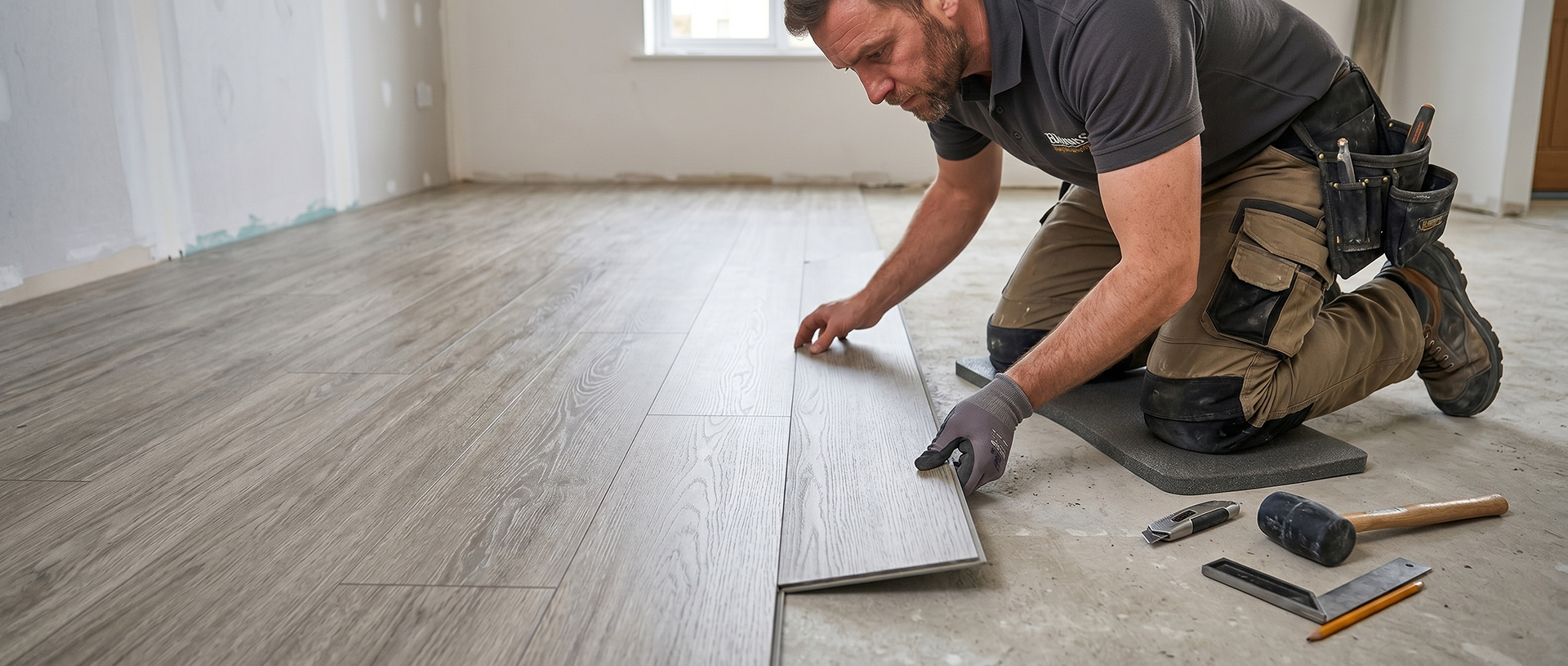
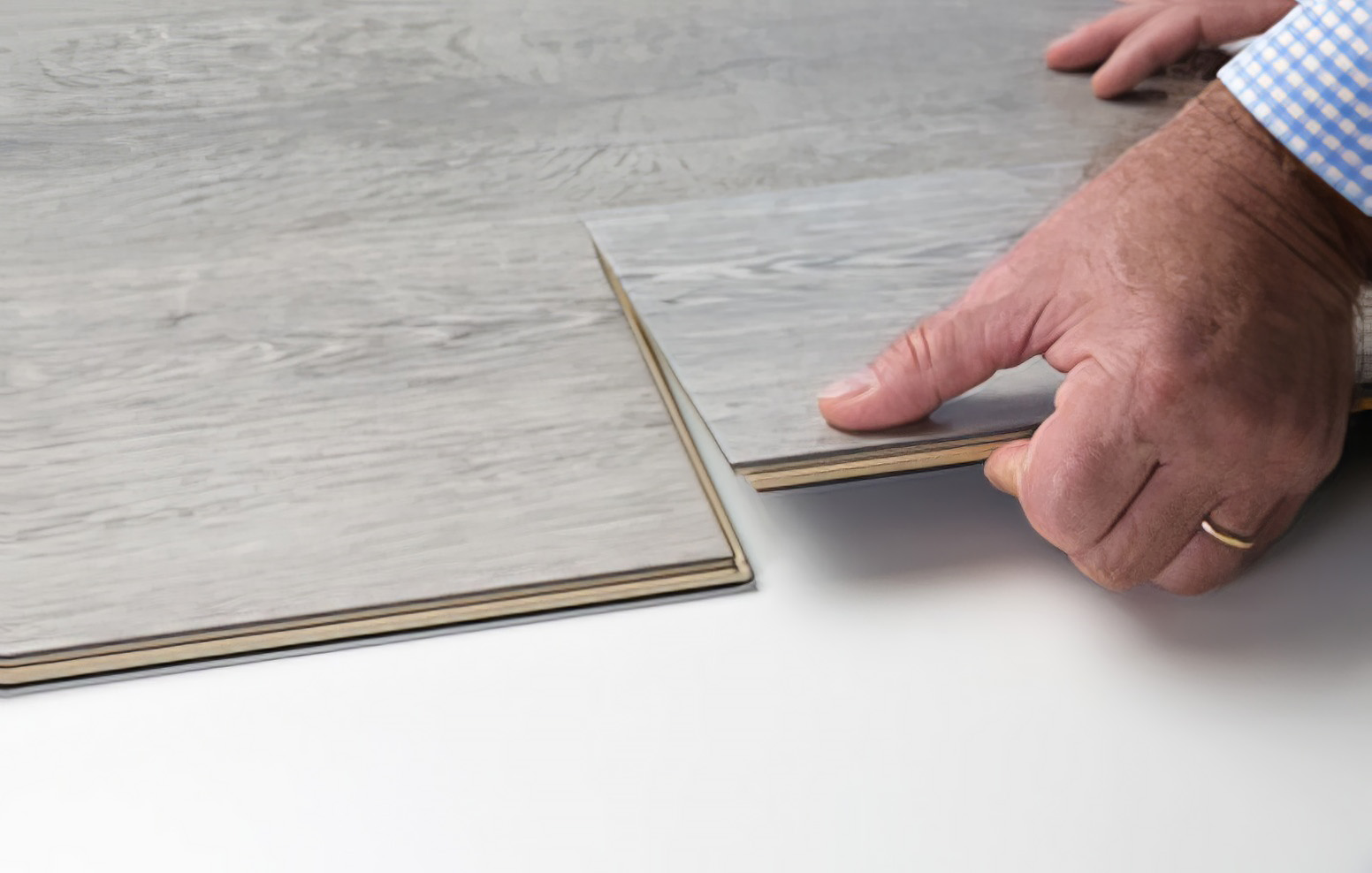
Click flooring is designed to make installation more straightforward. The boards or tiles lock together rather than being permanently glued to the subfloor, creating what is generally known as a floating floor.
That convenience, however, does not mean preparation can be skipped.
A click system relies on the floor underneath being suitable, the locking mechanism being correctly engaged and the installation being carried out in accordance with the particular manufacturer’s instructions.
Expansion requirements, room temperature, subfloor condition,and heavy fixed objects all need to be considered before the first plank is laid.
It is also important not to assume that every vinyl product behaves in exactly the same way. Different constructions have different requirements, so the installation instructions supplied with your chosen flooring should always take priority.
That is one of the biggest lessons these homeowners learned.
Sarah from Cambridge — The Conservatory That Got Too Hot
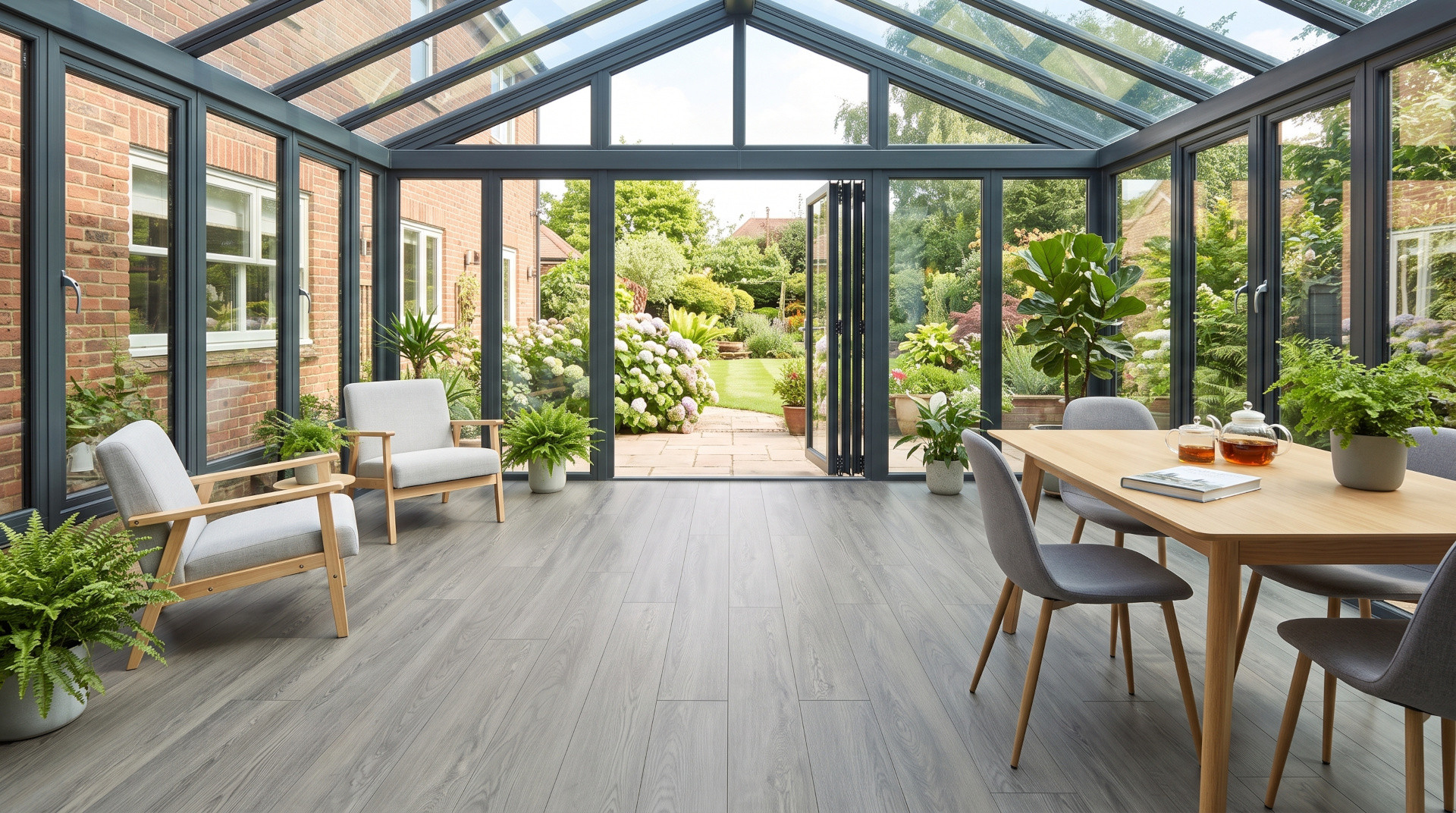
Sarah chose an attractive oak-effect click floor for her conservatory. It looked fantastic in the sample and seemed like the perfect way to make the room feel warmer and more connected to the rest of the house.
The problem was not the appearance of the flooring. It was the environment.
The conservatory had large areas of glazing, and during sunny periods the temperature inside could rise dramatically. Sarah had also underestimated the importance of leaving the correct perimeter allowance.
After several weeks, she noticed movement in the floor. Eventually, sections began to lift and buckle.
The lesson was a simple one: a conservatory is not just another room in the house.
Large areas of glass can create significant temperature changes, so anyone flooring a conservatory should check that their chosen product is suitable for the conditions and carefully follow the manufacturer’s requirements for expansion and installation.
David from Pimlico — The Subfloor Surprise
David was renovating his hallway and thought his existing timber floor was “flat enough”.
It looked fine at first glance.
He started installing the new click flooring. The job went surprisingly quickly, and by the end of the weekend he was pleased with himself.
Then the noises started.
Every time someone walked through the hallway, there was a creak or click from underneath. The joints were moving because the uneven areas beneath the flooring were allowing the boards to flex.
Eventually, some of the locking joints began to suffer.
David’s mistake was assuming that a subfloor only needs to look reasonably flat.
In reality, subfloor preparation is one of the most important parts of a floating-floor installation. Small imperfections can become much more noticeable once a rigid click system is installed over them.
Elena from Leeds — The Heavy Fridge Problem
Elena loved her new kitchen floor.
She loved it so much that she moved her large fridge freezer back into position as soon as possible.
That turned out to be a problem.
A floating floor is intended to move within the limits specified by the manufacturer. Installing heavy, fixed objects on top of a floating floor can interfere with that movement, depending on the product and installation method.
As temperatures changed, Elena noticed the joints beginning to move.
Eventually, a section of the floor opened up.
It was an expensive reminder that a flooring project does not end when the last plank is clicked into place. Heavy appliances, fitted furniture, kitchen units and fixed islands all need to be considered before installation.
Always check the manufacturer’s guidance before installing flooring beneath or around permanent fixtures.
Mr Udi from Birmingham — The Underlay That Was Too Soft
Mr Udi wanted his new floor to feel comfortable underfoot.
He had some thick carpet underlay left over from another project, so using it beneath the vinyl seemed like a sensible way to save money.
It wasn’t.
The carpet underlay was designed for a completely different type of floor and compressed too much under pressure. The rigid flooring was not getting the firm support it needed.
Over time, the floor began to feel unstable and the joints were put under unnecessary stress.
The lesson is worth remembering:
Never assume that an underlay suitable for one flooring product will automatically be suitable for another.
Some SPC floors have an integrated underlay, while other products may require a particular type of compatible underlay. Always check the flooring specification before adding anything underneath it.
For example, some Pro-Tek flooring products feature built-in IXPE underlay, meaning an additional underlay is not necessarily required for those particular products.
Dean and Jill from North Cheam — The Steam Mop Mistake
Jill was extremely house-proud.
Once the new kitchen floor had been installed, she wanted to keep it looking immaculate. Her solution was to use a steam mop regularly.
It seemed logical. Heat and steam meant clean floors, didn’t they?
Unfortunately, steam cleaning is not automatically suitable for every vinyl or SPC floor. Excessive heat and moisture can potentially cause problems depending on the construction and manufacturer’s care instructions.
The safest approach is remarkably simple: use the cleaning method recommended for your specific flooring.
Do not assume that because a floor is described as waterproof, it is automatically suitable for steam cleaning.
Waterproof and steam-proof are not interchangeable terms.
Mark — The “Waterproof” Misunderstanding
Mark installed click vinyl flooring in his bathroom and was confident that he had chosen a waterproof product.
The floor itself was suitable for the environment, but he overlooked something important: the areas where the floor met other surfaces.
Water can find its way into gaps around baths, shower trays, walls and other perimeter areas if the installation has not been properly detailed.
This taught Mark an important distinction.
A waterproof flooring product does not mean that every installation detail is automatically waterproof.
In bathrooms and other wet areas, perimeter sealing, trims and transitions need to be considered carefully, and the manufacturer’s installation instructions should be followed.
The same principle applies to wall protection. Pro-Tek’s SPC wall panels, for example, are specifically designed with a waterproof SPC core for high-moisture areas such as bathrooms and wet rooms.
Claire from London — The Dark Floor That Looked Great Until Monday Morning
Claire fell in love with a dark, almost black vinyl floor.
Under showroom lighting, it looked sophisticated and expensive.
In her busy hallway at home, it told a different story.
Every crumb, footprint, hair and speck of dust seemed to stand out.
The floor itself was perfectly good. The problem was simply that the colour did not suit Claire’s lifestyle.
It is something many homeowners overlook when choosing flooring. A sample viewed under showroom lighting tells you very little about how it will behave visually in a busy family home.
Take samples home.
Put them near the windows. Look at them in daylight. Look at them under artificial light. Walk past them with your shoes on. Imagine living with them.
The most beautiful floor is not necessarily the best floor for your household.
Mr Lucas from Brighton — The Rush to Install
Mr Lucas was keen to finish his spare bedroom.
The flooring arrived and, rather than allowing the boxes to adjust to the room conditions as required by the product instructions, he started laying them almost immediately.
The result was movement in the flooring after installation.
This is why manufacturers may specify an acclimatisation period for particular products and installation conditions. The exact requirements vary, so don’t rely on a generic number of hours found online.
Read the instructions supplied with your flooring before opening the boxes.
Sometimes waiting a little longer at the beginning can save a considerable amount of time later.
Julie from Guildford — When “Heavy Duty” Isn’t Indestructible
Julie chose a durable click floor for her ground floor and was particularly pleased with the product’s robust specification.
Then came the dog crates.
Whenever the crates were moved for cleaning, their metal edges dragged across the flooring. Over time, scratches began to appear.
The lesson here is not that durable flooring should never be used in a busy home. It is that durability has limits.
Furniture pads, protective mats and lifting rather than dragging heavy objects can make a significant difference.
If you have pets, large furniture or equipment that regularly moves across the floor, think about those things before installation.
Sam from Bristol — Don’t Forget the Thresholds
Sam concentrated so hard on laying his main floor that he overlooked the transition into the next room.
The vinyl met the existing carpet without the appropriate transition detail.
As the floor moved naturally, the edge began to lift.
It was a relatively small part of the project that eventually became a daily annoyance.
Transitions, doorways and thresholds deserve the same attention as the main area of flooring. A beautiful floor can quickly look unfinished if the edges and junctions have not been properly planned.
Mohammed from Battersea — The Online Bargain That Wasn’t a Bargain
Mohammed thought he had found an incredible deal online.
The price was considerably lower than comparable flooring, and the website made the product look impressive.
When the boxes arrived, however, some locking edges were already damaged.
Rather than returning everything, Mohammed decided to continue.
That decision proved costly.
After installation, the flooring began showing signs of premature wear and problems developed around the joints.
Eventually, he had to remove the entire floor.
The original low price suddenly looked very expensive.
Three Months Later: The Refund Problem
And there is another part of Mohammed’s story that deserves mentioning.
As of August 2026, three months after the original purchase, he says he is still waiting for a refund from the online company. We will not name the retailer, but the experience has left him dealing with the prospect of pursuing the matter through the small claims process.
The lesson is not that every online flooring company is unreliable. Far from it.
It is simply this:
Don’t look only at the price.
Check independent reviews, look at the company’s customer service reputation, find out how technical queries are handled and understand the returns and warranty process before placing a substantial order.
A cheap floor can become an expensive mistake if you cannot get help when something goes wrong.
Mrs C from Essex — When Customer Service Matters
Mrs C ordered flooring online after finding what appeared to be an attractive deal.
When sections of the floor began separating, she contacted the retailer.
Getting a useful response proved difficult.
After several calls and emails, she was eventually told that the problem was likely related to installation. She felt she had been left without meaningful technical support and was frustrated by the lack of clear communication.
Her experience highlighted something that is easy to overlook when shopping for flooring online.
You are not just buying boxes of flooring. You are buying a product that may require advice before, during and after installation.
A company that can answer technical questions before you purchase can be worth considerably more than a website offering the cheapest price.
Marcus from Reading — The Kitchen Island Disaster
Marcus wanted one continuous floor across his ground floor.
He installed the floating vinyl and then had his new kitchen and island fitted over it.
At first, everything looked perfect.
As the room warmed up, however, the flooring had limited freedom to move because heavy, fixed elements had been installed on top of it.
Sections began to lift and buckle.
The resulting repair was considerably more complicated than the original installation.
This is why flooring should be considered before the kitchen is finally installed, rather than treated as an afterthought.
Where a floating floor is being used, discuss the flooring with the kitchen installer and follow the flooring manufacturer’s specific guidance about fixed units and islands.
The Lesson Behind All These Flooring Problems
There is a common thread running through these experiences.
In many cases, the flooring itself was not the real problem.
The problems came from:
- An unsuitable or poorly prepared subfloor
- Ignoring expansion or movement requirements
- Using the wrong underlay
- Installing heavy fixed objects incorrectly
- Choosing cleaning products or equipment without checking the care instructions
- Rushing the installation
- Failing to plan thresholds and transitions
- Buying purely on price
- Not checking the company’s after-sales support
Modern vinyl and SPC flooring can be extremely practical, but no flooring product can compensate for an unsuitable installation.
Why Specialist Advice Can Make Such a Difference
Buying flooring online is convenient, but photographs and product descriptions cannot answer every question about your particular room.
What type of subfloor do you have?
Will the flooring work with your underfloor heating?
Do you need underlay?
How should the floor be treated around a kitchen island?
What expansion allowance is required?
Is your conservatory suitable?
These are questions worth asking before you buy rather than after something has gone wrong.
This is where dealing with an established flooring specialist can be particularly valuable.
Pro-Tek Flooring provides a range of rigid-core and other luxury vinyl flooring options, including SPC collections, herringbone designs, tile effects and long-plank formats. Its website also provides technical information, FAQs, product specifications, samples and a room visualiser to help customers make decisions before purchasing.
The company’s Room Visualiser is particularly useful if you are struggling to imagine how a particular colour or style will look in your own room. You can upload an image of your space and explore different flooring options before committing to the finished design.
Don’t Forget the Walls
Flooring is only part of the renovation.
If you are updating a bathroom, utility room or kitchen, coordinating the floor with the walls can make the finished project look considerably more polished.
This is where SPC wall panels can be an interesting alternative to traditional tiling.
Pro-Tek’s wall panels use a solid SPC core and are designed to be waterproof. The range includes plain, double-tile and multi-tile designs, as well as marble and stone-inspired finishes.
The panels also incorporate an anti-fungal layer, while the company’s multi-tile and double-tile collections use authentic grout-line detailing to create the appearance of individual tiles without conventional cement grout.
That opens up some interesting design possibilities.
A warm oak-effect floor could be paired with a soft beige wall panel. Grey SPC flooring could sit alongside a marble-effect wall. A dark floor could provide contrast against a lighter stone-effect wall.
The aim is not necessarily to match everything perfectly.
It is to make the different surfaces look as though they belong in the same room.
Getting It Right the First Time
If there is one thing these homeowner experiences demonstrate, it is that preparation is cheaper than repair.
Before ordering your flooring, take the time to:
- Measure the room accurately.
- Check the condition and suitability of the subfloor.
- Read the installation instructions for your specific product.
- Confirm whether underlay is required.
- Check expansion and perimeter requirements.
- Consider heavy furniture, kitchen units and appliances.
- Think about doorways and transitions.
- Check the cleaning and maintenance recommendations.
- Order samples before choosing a colour.
- Research the company behind the product, including customer service and after-sales support.
And if you are unsure about anything, ask before you start.
A ten-minute conversation with someone who understands flooring can potentially save you hours of work and a considerable amount of money.
Quality Isn’t Just About the Floor
There is a temptation when renovating to focus entirely on the product price.
But quality flooring is about more than what is printed on the box.
It is about the construction of the product, the suitability of the floor for the room, the quality of installation and the advice available when you need it.
That is why specialist knowledge matters.
For homeowners considering a new vinyl or SPC floor, Pro-Tek Flooring UK offers a range of luxury vinyl click flooring, including SPC options, herringbone, plank and tile-effect designs.
For bathrooms, wet rooms and other moisture-prone areas, Pro-Tek Wall Panels UK offers its SPC wall panel range, including plain, double-tile and multi-tile designs.
Pro-Tek is at the forefront of modern wall panel technology, combining the practical advantages of a rigid SPC construction with contemporary finishes designed to give homeowners an alternative to conventional tiled walls.
Final Thoughts
Choosing a new floor should be exciting, not stressful.
Vinyl and SPC flooring can be an excellent way to transform a home, but the best results come when you look beyond the photograph on the website and think about the room in which the floor will actually live.
Will the room get hot in summer?
Is the subfloor genuinely suitable?
Will heavy furniture sit on top?
What happens at the doorway?
How will you clean it?
Who will you call if you have a technical question?
These are not glamorous questions, but they are the ones that can make the difference between loving your new floor for years and wishing you had done a little more research.
The homeowners featured here learned many of these lessons the hard way.
You don’t have to.
Take your time, choose the right product for the right room, follow the manufacturer’s installation instructions and buy from a company that is prepared to offer proper advice.
Because when the furniture is back in place and the boxes have gone to the tip, what you really want is to look at your new floor and think:
“I’m glad I did that properly.”
Explore Pro-Tek Flooring and Wall Panels
Pro-Tek Flooring UK:
https://pro-tek-flooring.com/
Pro-Tek Wall Panels UK:
https://protekwallpanels.co.uk/