Walk into any home renovation show right now and you will see oak floorboards everywhere. Real oak costs a fortune, behaves badly near water, and scratches if you look at it. Oak vinyl flooring gets you around 95% of the look for a fraction of the cost, and it does not flinch at spillages.
The catch is that oak effect vinyl ranges from brilliant to bin-worthy, and the difference is rarely the price. It is the print quality, the wear layer, the texture, and whether the plank you have chosen actually suits the room.
This guide covers how oak vinyl flooring is made, the shades and finishes on offer, the formats that work in different rooms, and which Pro-Tek™ collections carry the best oak ranges. All of which matters. By the end, you will know exactly what to order, and what to avoid.
Jump to section:
- What Is Oak Vinyl Flooring?
- Oak Vinyl vs Solid Hardwood: The Honest Comparison
- Shades of Oak Vinyl Flooring Explained
- Plank Sizes, Herringbone and Tile Formats
- Choosing Oak Vinyl Flooring for Each Room
- Fitting and Caring for Oak Vinyl Flooring
- Common Mistakes When Buying Wood Effect Flooring
What Is Oak Vinyl Flooring?
Short answer: Oak vinyl flooring is a multi-layer LVT or SPC floor with a printed photographic oak surface, a clear wear layer on top, and a rigid or flexible core beneath. Quality versions look and feel remarkably like real oak.
LVT stands for luxury vinyl tile, and it is the broad category that includes most quality oak effect floors. The construction is layered: a high-resolution photographic film of real oak sits beneath a transparent wear layer (the part you walk on), with a rigid SPC, WPC, or hybrid core below for stability and click-system installation.
The wear layer is the part that protects the print, and it is measured in millimetres. 0.30mm suits light traffic, while 0.55mm is the everyday sweet spot for family homes. 0.7mm handles busy households, light commercial use, and the kind of dog that thinks the floor is a racetrack. Our LVT wear layer guide explains the numbers in more depth.
Yet the print is what makes the floor look like oak rather than a beige plank. Cheap vinyl uses a small library of repeat patterns, which means the same four “planks” turn up every metre or so. Quality oak vinyl flooring uses dozens of unique planks, with embossed grain that follows the printed pattern (called embossed in register, or EIR). In fact, stand on it barefoot and you can feel the difference.
In fact, oak is the most-clicked wood effect for a reason. It reads as warm and unfussy, which means it does not date the way trendier finishes can. It also photographs well in property listings, which matters if you are selling a home rather than renovating one for keeps.
Oak Vinyl vs Solid Hardwood: The Honest Comparison
Short answer: Oak vinyl flooring gives you around 90% of the look of solid oak for less cost, with better water resistance and easier maintenance. Solid oak wins on longevity if you can commit to refinishing it every 10 years or so.
Most people who land on oak vinyl flooring are weighing it against the real thing. Here is how they actually compare, in plain terms.
Cost. Yes, real oak is expensive. Quality oak LVT is not. The labour and material savings on vinyl are still substantial, particularly across larger rooms or whole-house refits.
Water resistance. Solid oak and water are not friends. In fact, a spilt drink left overnight can leave a permanent mark. Oak vinyl flooring is fully waterproof, with water sitting on the surface rather than soaking into the plank. This is the main reason LVT has eaten into the wood floor market in kitchens, bathrooms, and hallways.
Maintenance. Solid oak wants oil or lacquer refresh every few years, plus a careful approach to grit and water. Oak LVT wants a sweep and a mop with a pH-neutral cleaner. That is roughly it. The cleaning and maintenance guide covers the day-to-day routine in full.
Lifespan. This is where real oak claws back ground. A solid oak floor can last 50+ years with periodic refinishing. Quality LVT typically lands in the 15 to 25 year range, which is still longer than most people stay in one home. The 0.7mm wear layer options push that ceiling higher.
Comfort. Vinyl is warmer and softer underfoot than solid wood, particularly with WPC cores. Standing barefoot at the sink for ten minutes is a very different experience on the two surfaces.
Where solid oak still has the edge
Authenticity. Ultimately, solid oak still wins here. You can feel the grain, see the variation, and there is something irreplaceable about a real timber floor that a printed surface does not quite match. Whether that justifies the cost premium is a personal call, and the honest answer for most homes is that the gap is now small enough that vinyl is the sensible pick.
Shades of Oak Vinyl Flooring Explained
Short answer: Oak vinyl flooring comes in roughly five shade families: light, golden, mid-tone, grey, and dark. Each reads differently in a room, and the wrong shade can make a space feel cold, flat, or older than it is.
In general, most oak effect vinyl ranges cluster into a handful of shade families. Picking the right one matters more than people realise, because the colour sets the mood of the whole room.
Light oak. The bright Scandinavian look. Pale, slightly warm, sometimes with a pinkish undertone. Works brilliantly in north-facing rooms that need brightening, in small rooms you want to feel bigger, and with minimalist furniture. Can read as cold if the room is very white already.
Golden oak. The classic British new-build look of the 1990s and 2000s. Warm, mid-pale, with yellow and amber undertones. Pairs well with traditional kitchens, shaker units, and warm neutrals. Has a reputation for dating a room, but quality modern prints in this range have a more muted warmth that holds up better.
Mid-tone oak. The safe choice. Not too light, not too dark, with a balanced brown that goes with most colour schemes. This is the largest category in most ranges, and it is what most people mean when they ask for “oak flooring” without specifying further. The Pro-Tek™ Editions collection has a particularly strong spread of mid-tone options.
Cooler tones
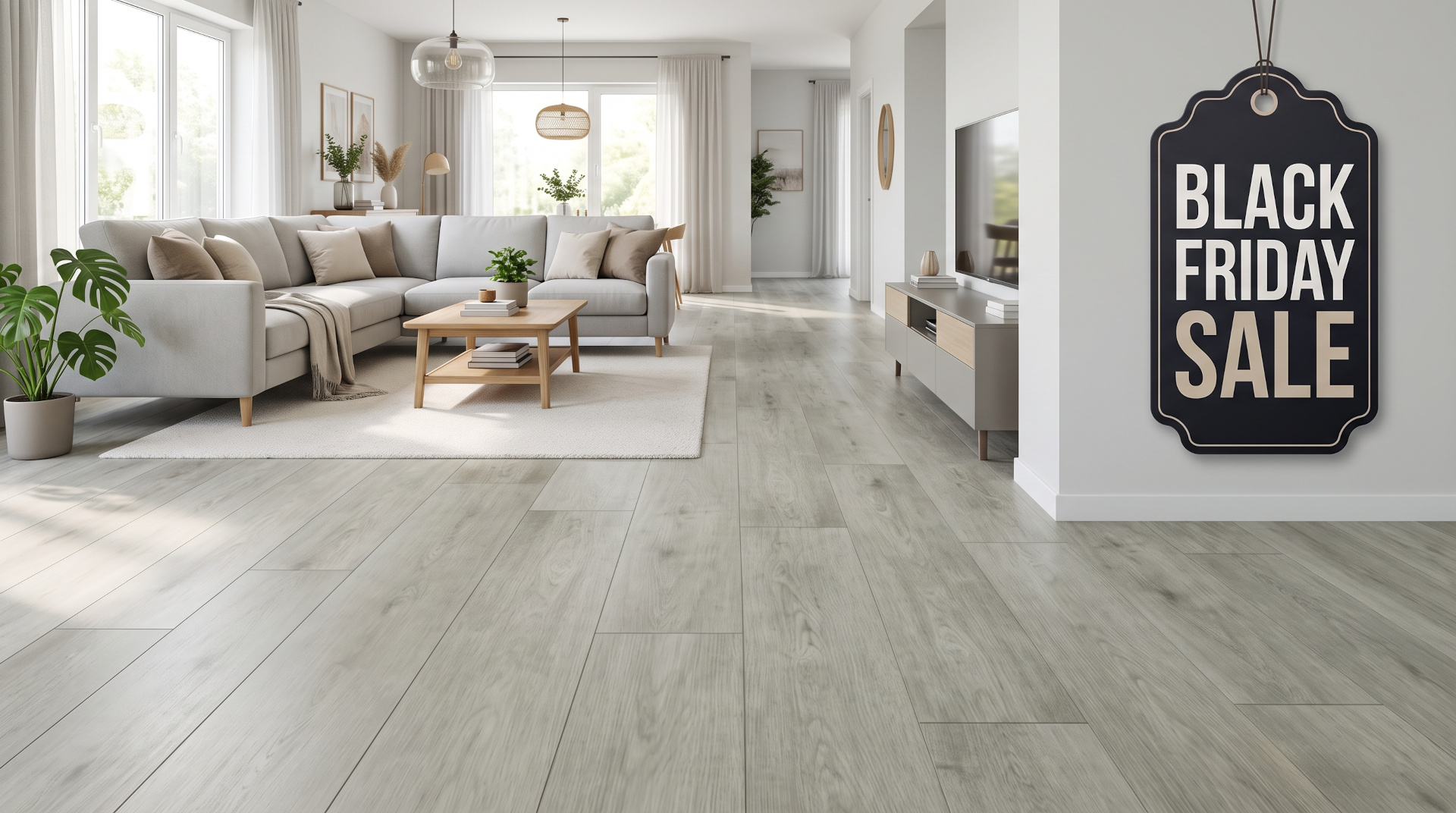
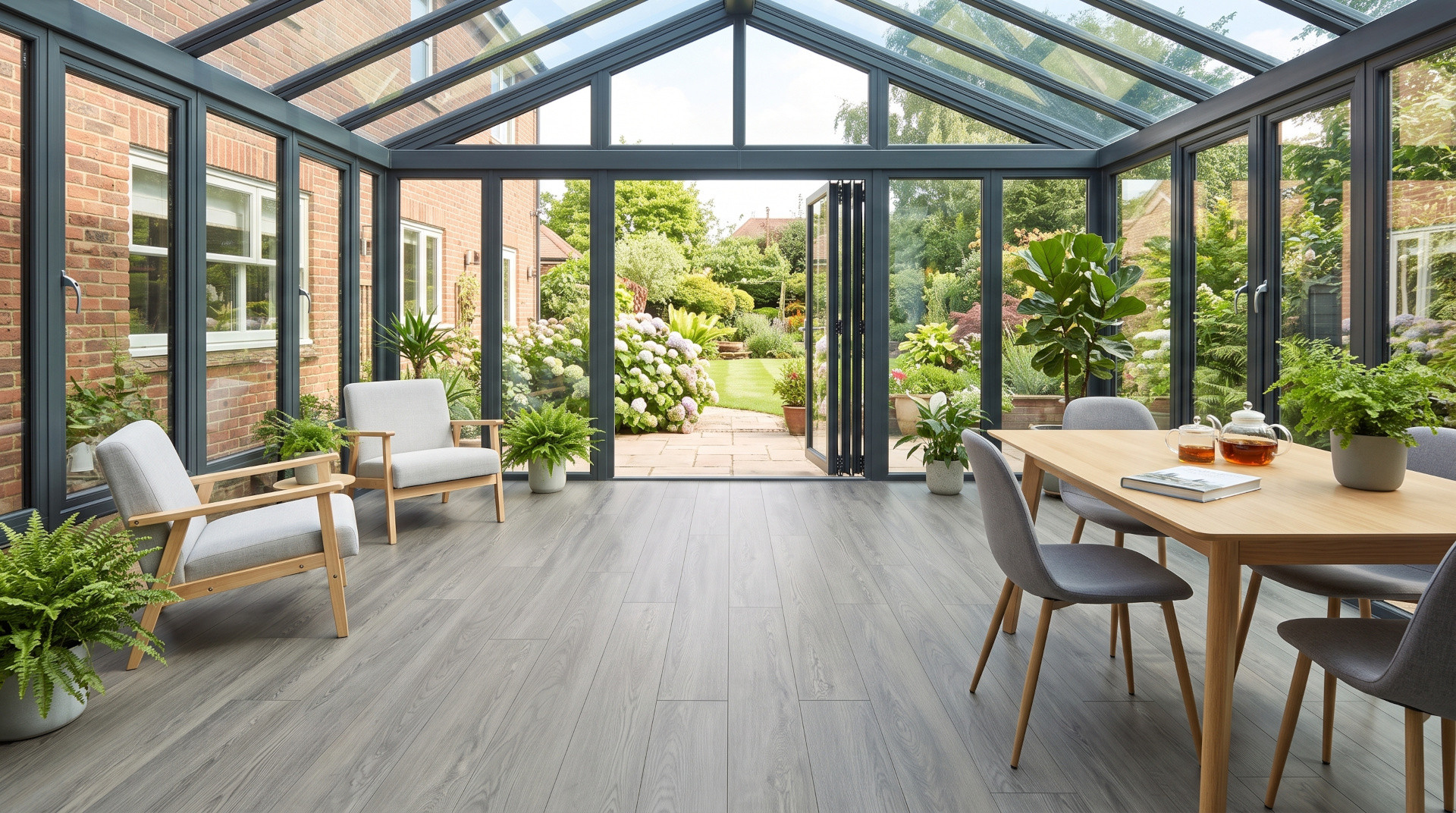
Grey oak. The contemporary choice.
Smoked oak. The dramatic choice. Deep brown, sometimes with a black undertone, and often featuring stronger grain contrast. Beautiful in larger rooms with plenty of natural light, but can dominate small spaces and make north-facing rooms feel gloomy.
Choosing the right shade for your room
If you are torn between two shades, order samples and put them in the actual room for a couple of days. Lighting changes a floor’s appearance dramatically between morning and evening, and the shade that wins on a showroom wall is not always the one that wins at home.
Plank Sizes, Herringbone and Tile Formats
Short answer: Oak vinyl flooring comes in classic plank, wide plank, super long plank, herringbone, and tile formats. The right choice depends on the size of the room, the design style, and how much visual movement you want underfoot.
Oak vinyl flooring comes in plank, herringbone, and tile formats, and the right choice depends on the size of the room and the design style you are after. Here is how the main options differ.
Classic plank (120-180mm wide, 1200-1500mm long). The safe, traditional look. Works in most rooms without dominating, and it is the format most people picture when they think of a wood floor. Pro-Tek™ Editions and Excel both have strong classic plank ranges in oak.
Wide plank (180-220mm). The modern, open-plan look. Wider planks show off the oak grain more dramatically and reduce the number of visible joins. Best in larger rooms where the planks can breathe. Excel Longplank and Tek-Core Pro Plank both have wide-format oak options.
Super long plank (220mm+ wide, 1800mm+ long). The statement look. Best in large open-plan spaces, big bedrooms, and anywhere you want the floor to feel like a design feature rather than a backdrop. Editions Super Long Plank covers this range in oak finishes.
Patterns and tile effects
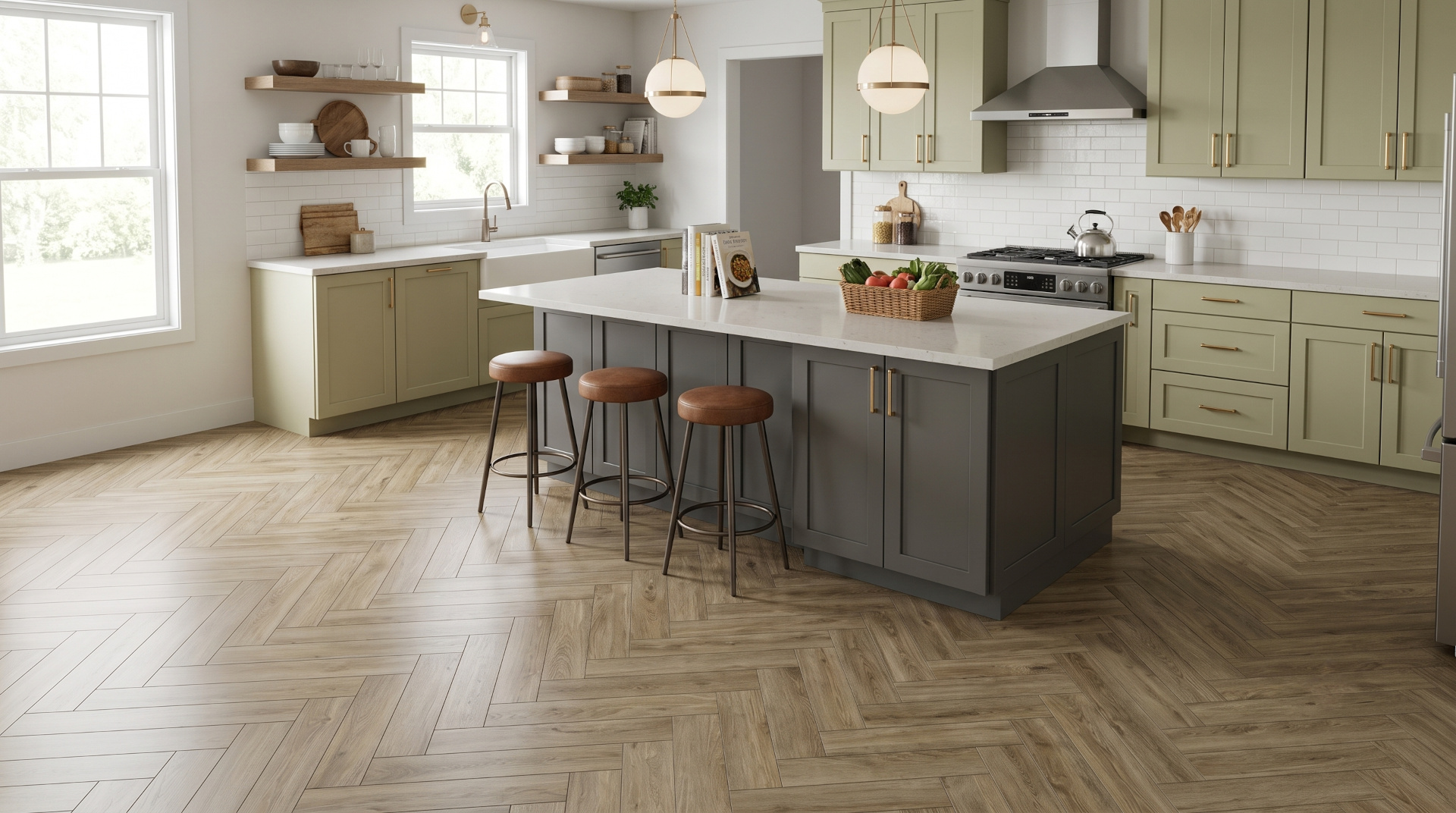
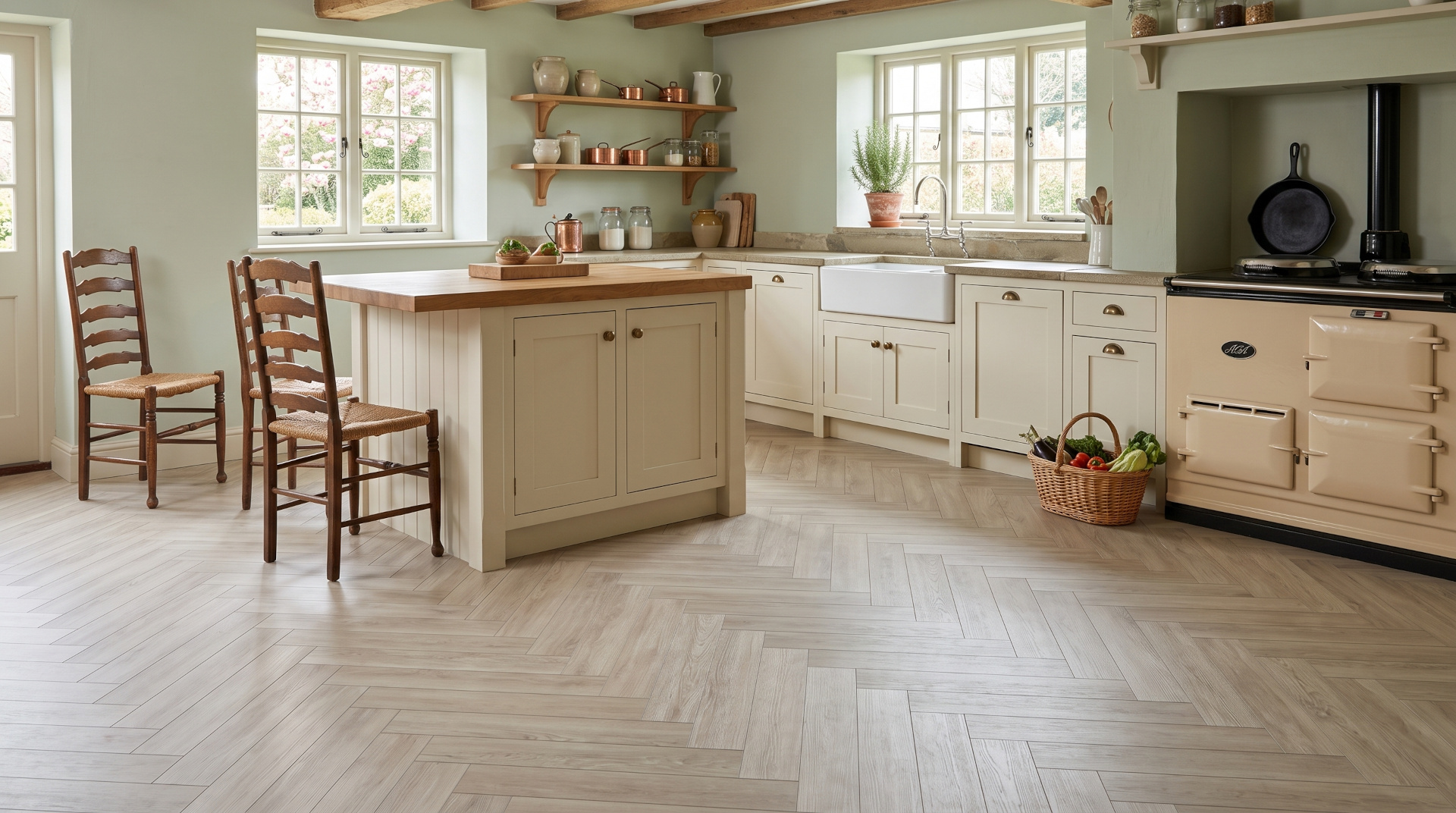
Herringbone. The timeless pattern.
Tile effect (parquet and square). A less common oak format, but a good way to get a parquet look with the durability of rigid LVT. Works particularly well in entryways and bathrooms where you want the oak feel without the long-plank fuss.
Choosing the right format for your space
For most homes, classic plank in a mid-tone oak is the safe starting point. From there, the format is a design choice rather than a technical one. Use the room visualiser to compare plank sizes in your own space before you commit.
Choosing Oak Vinyl Flooring for Each Room
Short answer: Oak vinyl flooring works in every room of a typical home, but the right shade, format, and wear layer change by use case. Kitchens and hallways want mid to dark shades with a thicker wear layer. Bedrooms can go lighter. Bathrooms want textured finishes for grip.
Indeed, oak is one of the few wood effects that genuinely works everywhere. A few room-specific pointers help you pick the right one.
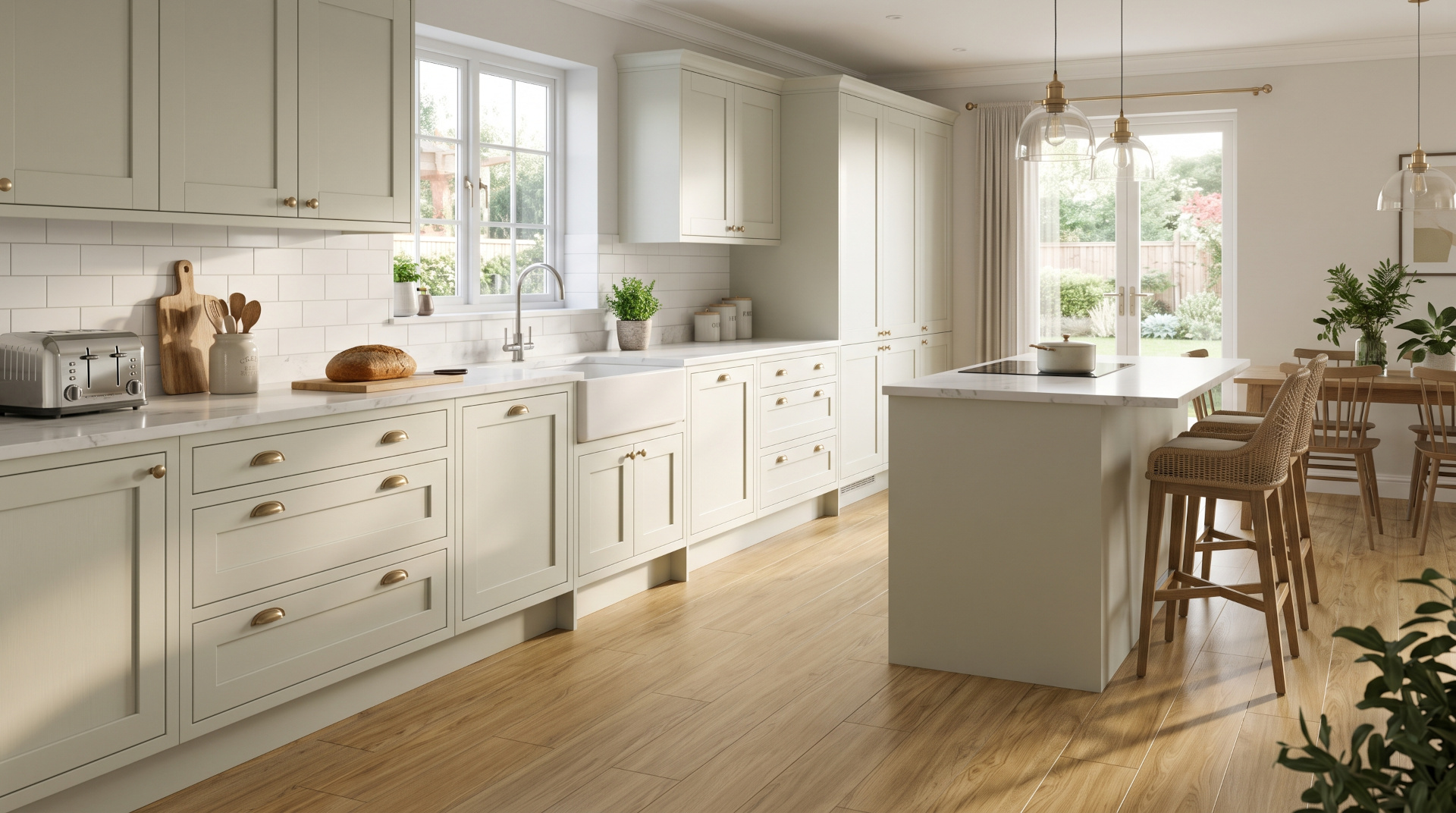
Kitchens. Mid-tone or golden oak is the easiest to keep looking clean. Light oak shows every drop of spilled tea, and very dark oak shows dust. Choose a textured finish (it helps with grip near the sink) and a 0.55mm or 0.7mm wear layer to handle dropped pans and dragged chairs. Pro-Tek™ Editions and Excel both have strong kitchen-friendly oak options.
Bathrooms. Lighter oak in a matte or textured finish is the practical pick. You want the warmth of wood without the slipperiness of glossy surfaces. R10 slip resistance is the minimum, with the bathroom vinyl flooring page covering the safety detail in more depth.
Living spaces
Living rooms. And this is where you can go bold.
Bedrooms. Light to mid-tone oak creates a calm, restful feel, particularly with the soft natural light most bedrooms get. Comfort matters more than heavy-duty wear layers here, which is where the warmer, softer Excel WPC construction earns its place. Or go full cosy with a herringbone in a deeper shade.
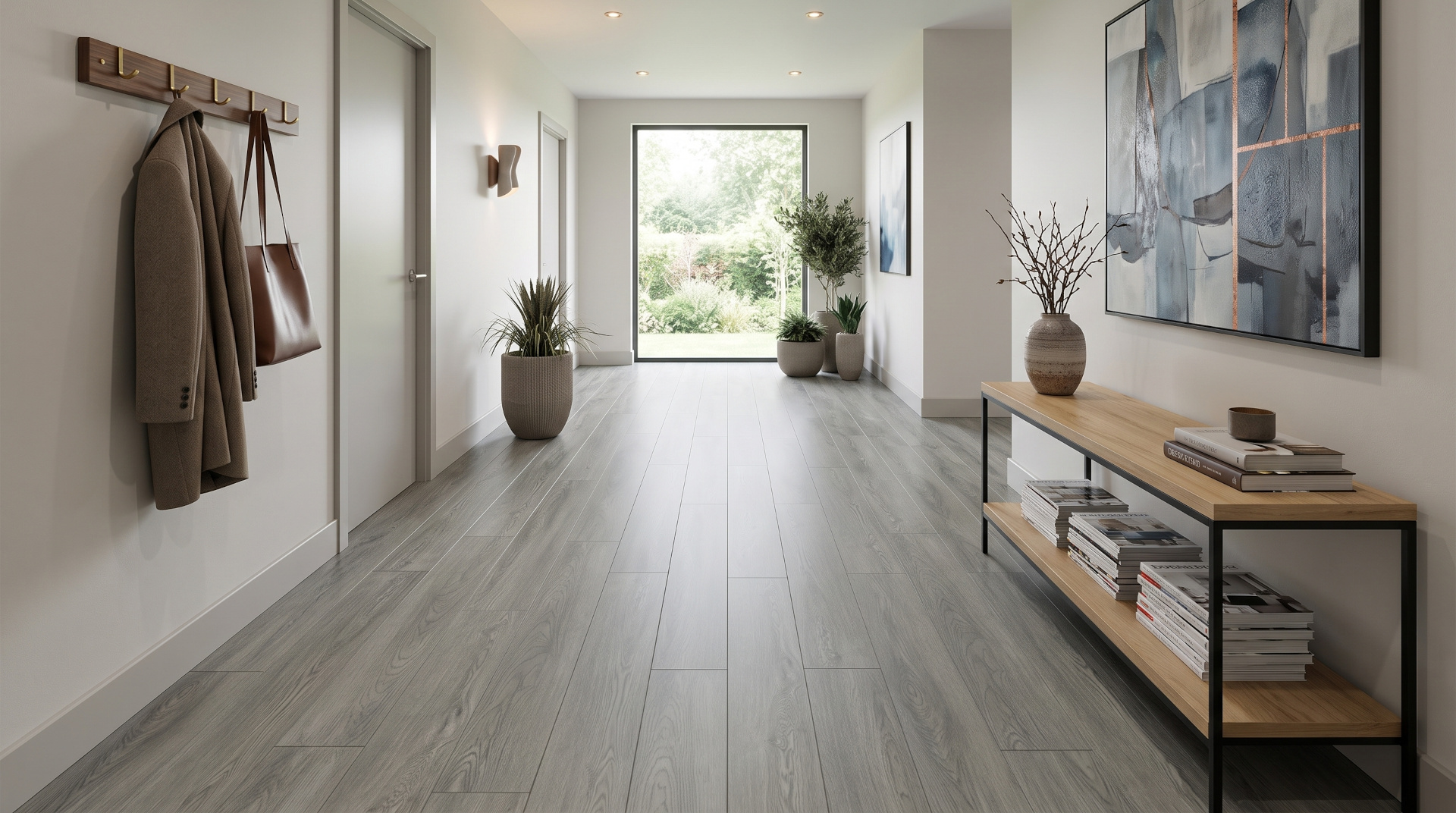
Hallways. The hardest working room. Dark or mid-tone oak hides scuffs, a 0.7mm wear layer handles the foot traffic, and a textured finish grips well on wet coats and umbrellas. Tek-Core Pro Plank in a smoked oak finish is the high-performance pick for busy family hallways.
Looking at real homes
The customers gallery is a good way to see what real homes have chosen, room by room, and it is worth browsing before you commit.
Fitting and Caring for Oak Vinyl Flooring
Short answer: Quality oak LVT clicks together over a level subfloor with a suitable underlay. Once down, it needs a sweep and a pH-neutral mop, nothing more. Avoid steam mops, abrasive cleaners, and waxes that fill the embossed texture.
The good news about oak vinyl flooring is that the maintenance is refreshingly simple. The installation is straightforward too, provided the subfloor is right.
Getting it down
Before fitting. The subfloor must be flat (within 3mm over 2 metres), clean, and dry. Concrete needs a damp-proof membrane if it is ground floor. Timber subfloors need a layer of plywood or hardboard to firm up any flex. Acclimatise the planks in the room for 24 hours before fitting, especially in homes with underfloor heating.
Underlay. A good underlay smooths out minor subfloor imperfections, supports the click system, and adds a bit of warmth and acoustic comfort. LVT with built-in underlay is the all-in-one option if you want to skip the separate underlay step.
Underfloor heating. Compatibility varies by product and by UFH type, so always check the technical data sheet for the specific range you are buying. Water-based (piped) systems run at lower surface temperatures than electric mat systems, which means a broader range of LVT is approved for them. Electric UFH is the more restrictive category, and the data sheet is the only answer that counts.
Click system. Most quality LVT uses a Unilin or Unifit click system that locks the planks together without adhesive. The Unilin click system guide explains how the joint works and what to do if a plank refuses to seat. A tapping block and a pull bar are the only specialist tools most DIY fitters will need.
Keeping it looking good
Day-to-day care. Sweep or vacuum (on hard floor setting) a couple of times a week. Mop with a pH-neutral cleaner and a well-wrung mop when needed. Avoid steam mops, which can damage the wear layer and the click joints. Avoid abrasive pads and any cleaner that leaves a film, because that film will fill the embossed grain and slowly flatten the texture you paid for.
Scratches and scuffs. Specifically, furniture pads under chair and table legs. A doormat at the entrance. A trimmer at the door rather than letting outdoor grit migrate in. Most scuffs lift with a soft cloth and a tiny amount of the cleaning solution. For deeper marks, the cleaning and maintenance guide has a section on stubborn stains.
Common Mistakes When Buying Wood Effect Flooring
However, a few small choices can undo all the research above. Avoid these, and you are most of the way there.
Buying on shade alone. The colour is the first thing you notice, but it is the wear layer, the print quality, and the click system that decide how the floor lives. Two mid-tone oak floors at the same price can perform very differently over five years.
Cheap LVT with a thin wear layer. A 0.30mm wear layer is fine for a spare room. It is not fine for a kitchen, hallway, or family living room. Save money on the colour or the plank format, not on the wear layer.
Skipping samples. The shade that looks perfect in the showroom can read completely different in your room’s light. Order free samples, lay them on the floor, and live with them for a few days before you commit.
Specification and care mistakes
Ignoring the room’s orientation.
Forgetting about texture. Embossed in register (EIR) texture is what makes oak vinyl flooring feel real underfoot. Cheaper smooth finishes look more obviously printed, especially in low light. The wood floor texture guide covers how to spot the difference.
Going too trendy. While grey oak and very dark oak are fashionable, they will date. Mid-tone and natural oak are not fashionable, which is exactly why they are the safe long-term choice if you would rather not refloor in ten years.
Trying to use a steam mop. It will damage the click joints, the wear layer, and any warranty you are relying on. A well-wrung mop is all you need.
The honest answer is that oak vinyl flooring has earned its place at the top of the wood effect charts. It looks like oak, behaves like a modern floor, costs less than the real thing, and asks very little in return. Pick the shade and format that suit the room, specify a wear layer thick enough for the traffic, and order samples before you commit.
A budget-friendly start is the Value range in plank format, which covers the essentials. The broadest design spread in oak lives in Editions and the Editions herringbone range, where most fitters land. Step up to Tek-Core Pro Plank when comfort underfoot or high-traffic durability matters most.
Order some free samples to feel the texture underfoot, and use the room visualiser to see how each shade works in your space.