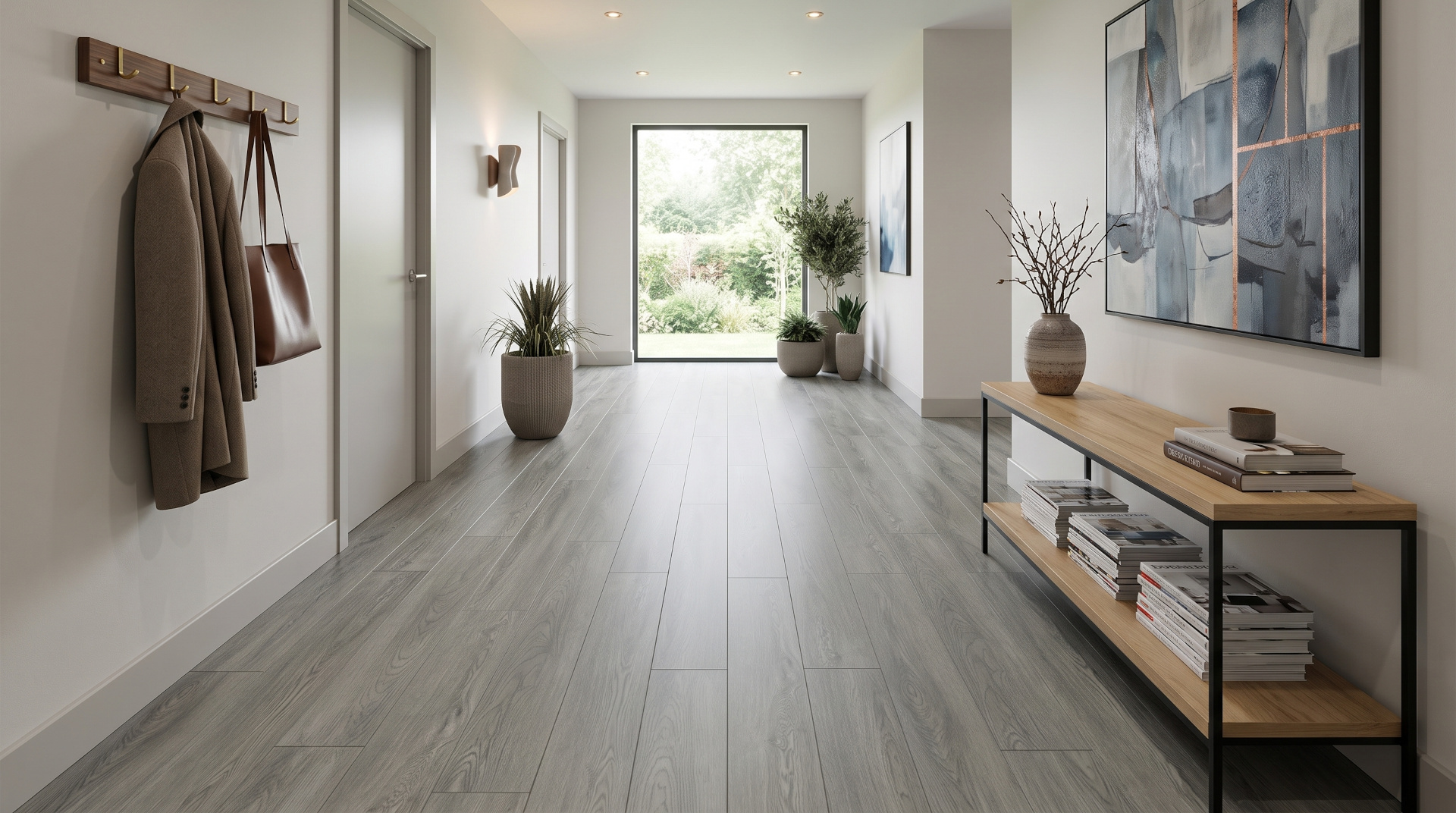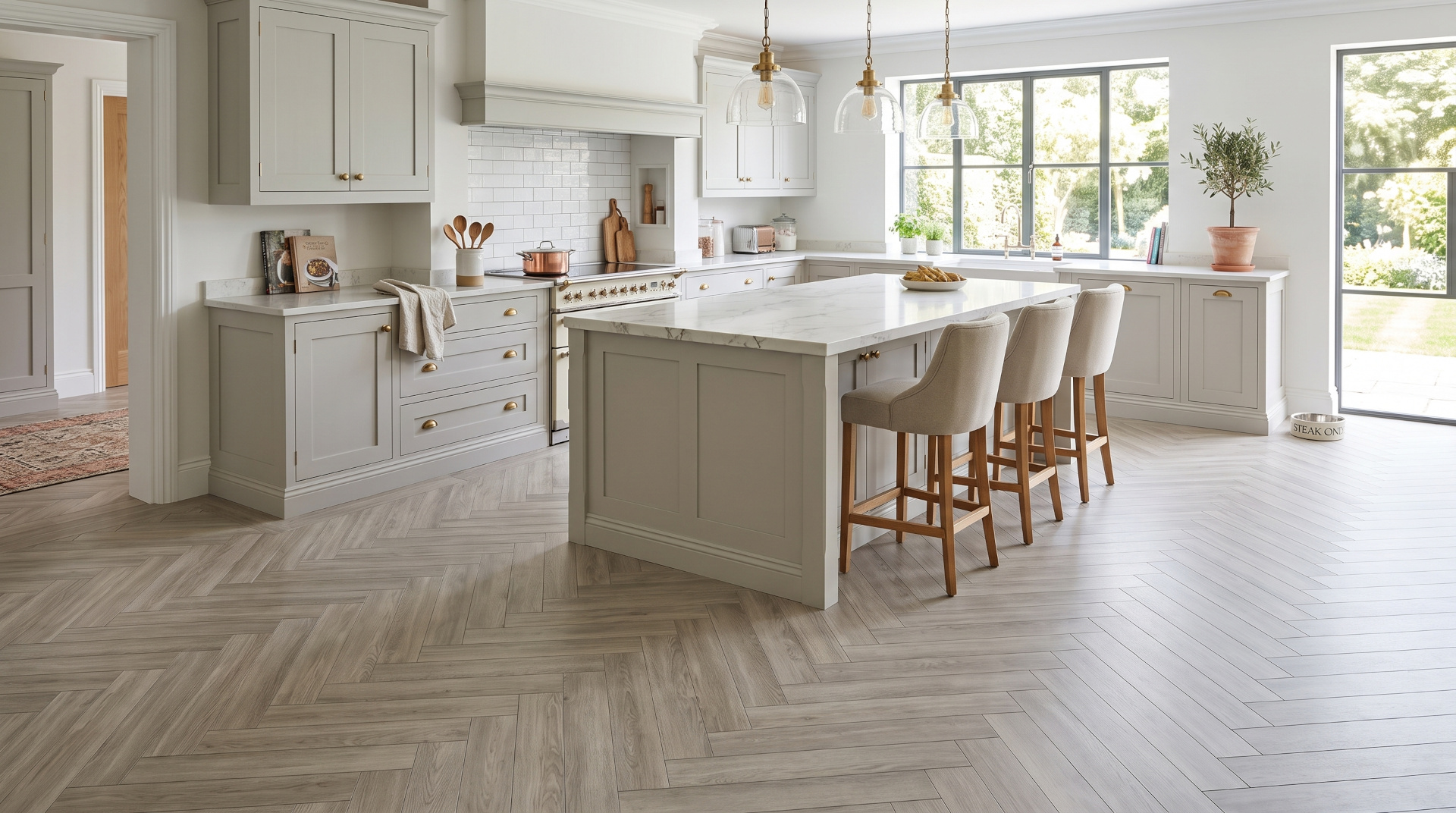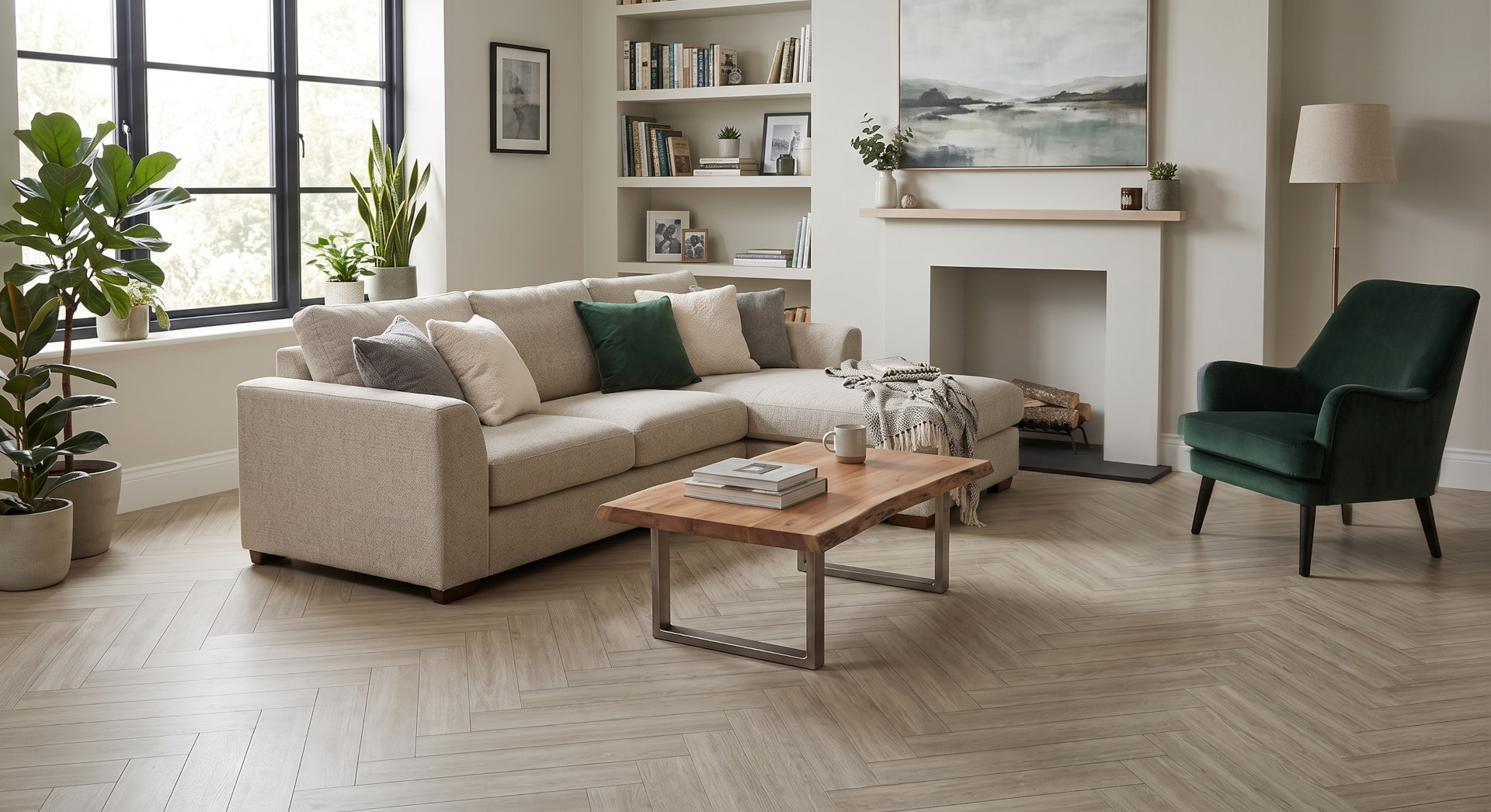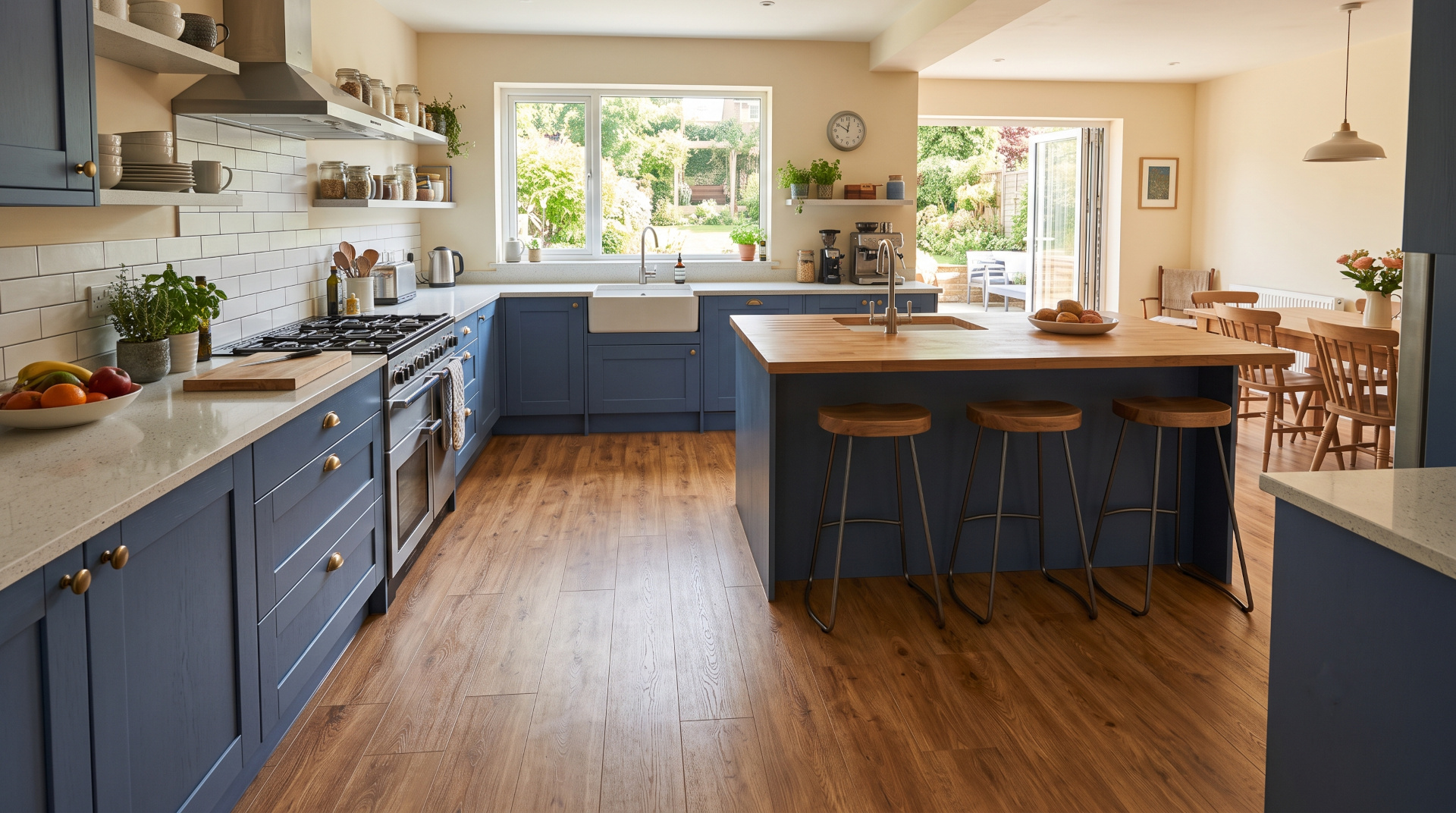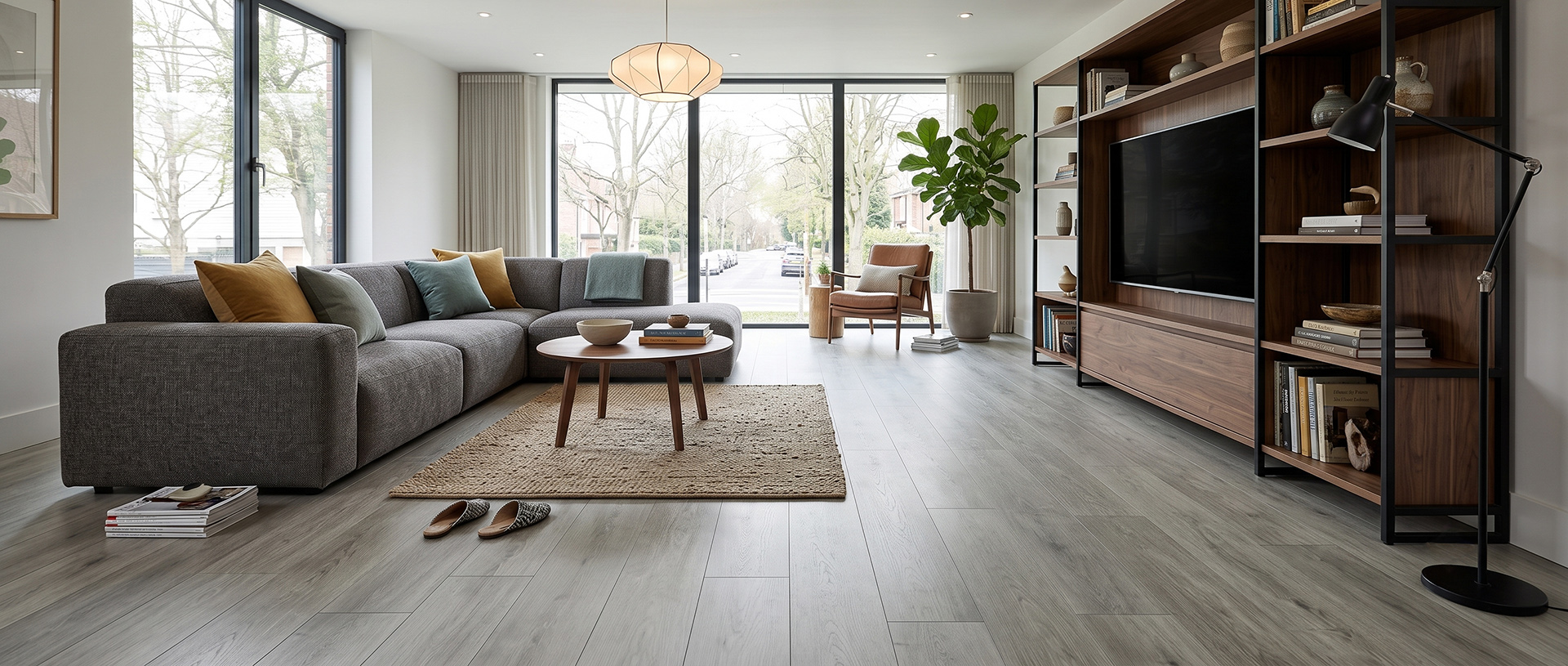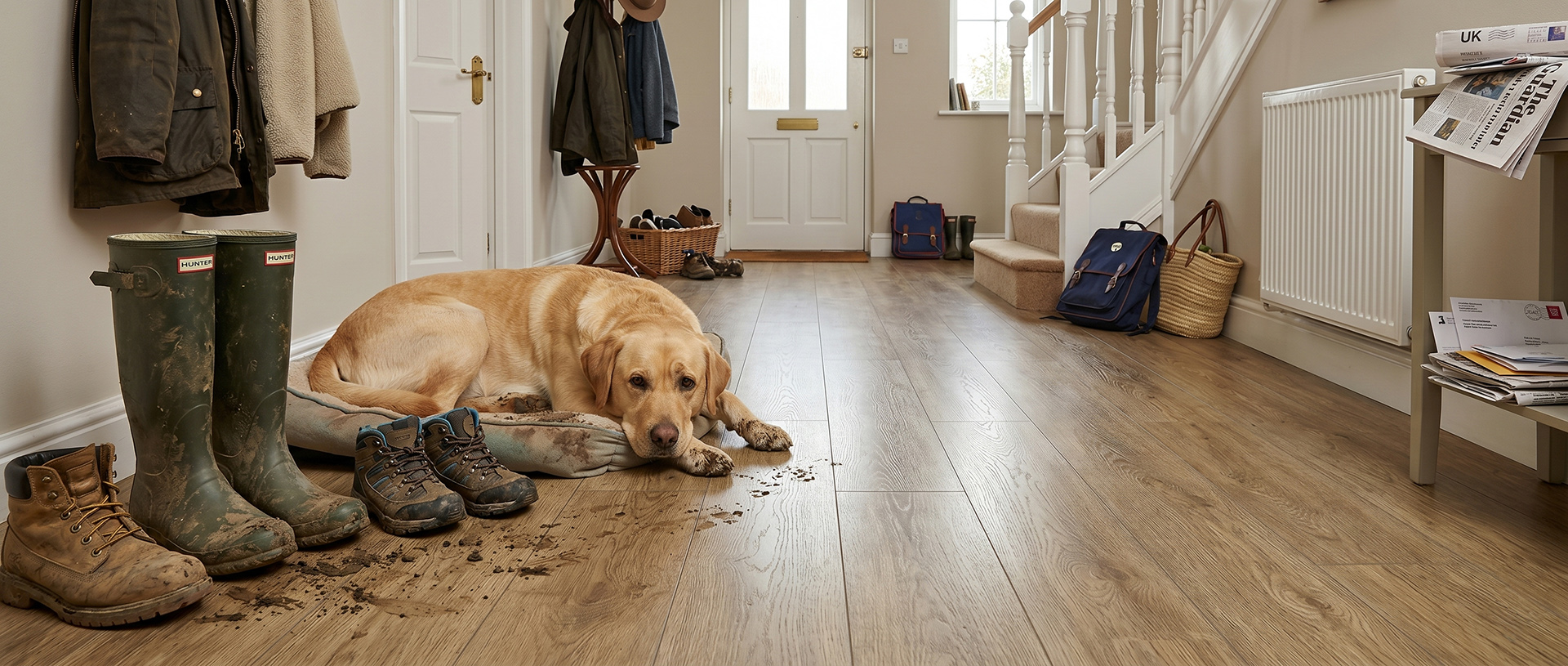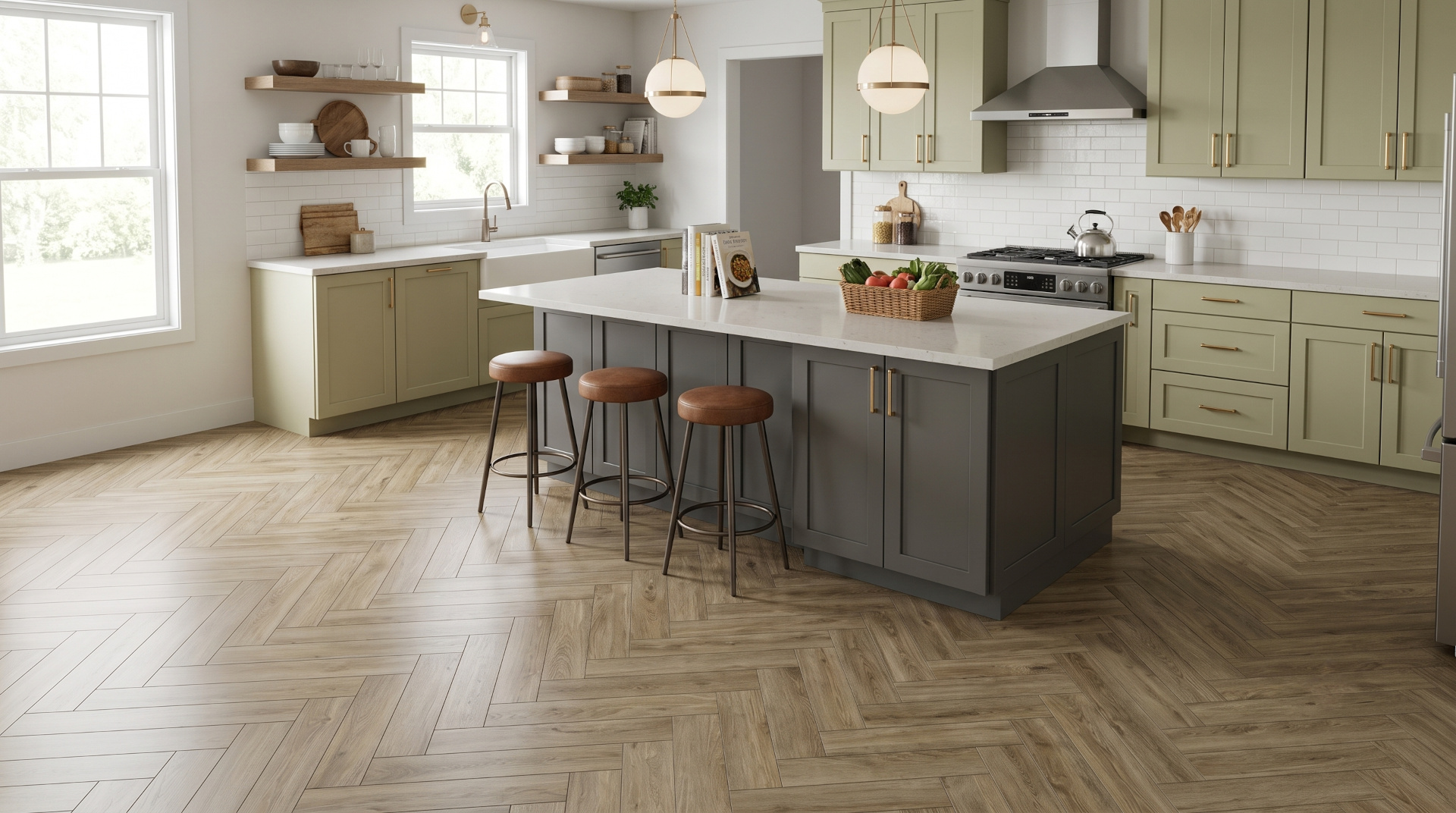
The kitchen is the busiest room in the house, which means the floor takes a beating from spilled food, splashed dishwater, muddy pets, and constant foot traffic. In the past, you had to choose between beautiful but delicate real wood, cold and hard ceramic tiles, or cheap-looking lino.
The Waterproof Vinyl Solution Modern waterproof vinyl flooring (LVT) changes everything. It is specially made to handle messy, wet kitchen environments while still looking exactly like high-end wood or natural stone.
By choosing this type of floor, you get the warm, stylish look you want for your kitchen without any of the worry about water damage, stains, or everyday wear and tear.
Jump To Section
- The Science Behind the Product
- Resistance to Kitchen Mishaps
- Warmth and Comfort
- Low-Maintenance Living
- A Quick Breakdown: 10 Pros and Cons
- Frequently Asked Questions (FAQ)
The Science Behind the Product
To see why luxury vinyl works so well in a kitchen, it helps to look at how it is made. Unlike traditional laminate flooring—which has a wood-based core that easily absorbs dampness—waterproof vinyl contains absolutely no wood. Instead, it uses a solid plastic core that water cannot touch.
The SPC Advantage The most popular choice today is SPC (Stone Plastic Composite) flooring. This mixes natural limestone powder with plastic to create a super dense, solid plank.
- Won’t swell or warp: Because the core cannot absorb liquid, the planks will never bend, buckle, or peel apart, even if a kitchen pipe bursts and leaves a flood on your floor for hours.
- Tough top layers: On top of this solid core is a high-quality picture layer that gives the floor its realistic look, followed by a clear, tough shield that protects against scratches, scuffs, and fading from the sun.
Resistance to Kitchen Mishaps
In a busy kitchen, spills are bound to happen—whether it’s a dropped egg, a splash of red wine, or a leaking dishwasher.
While real wood floors warp and split from moisture, and tile grout lines stain easily and trap bacteria, waterproof vinyl fixes these problems completely.
Why it works so well:
- Locks water out: The planks click together so tightly that liquids can’t leak down into the subfloor underneath.
- No need to panic: If you spill something while cooking, the liquid just sits on the surface until you are ready to wipe it up with a cloth or mop.
- Stain-proof and clean: Because vinyl doesn’t absorb liquids, it resists stains and stays naturally hygienic—making it safe and clean for spaces where you prepare food.
Warmth and Comfort
Aside from being waterproof, luxury vinyl is much more comfortable to live with than hard stone or ceramic tiles.
- Warmer Underfoot: Walking on bare ceramic tiles during a freezing winter is never fun. Vinyl stays naturally warmer because it holds onto the room’s temperature. It also works perfectly with underfloor heating to keep your kitchen cozy all year round.
- Softer to Stand On: Vinyl has a slight, built-in cushion. If you are standing for a long time cooking a big Sunday roast or doing the washing up, it is much gentler on your feet, knees, and lower back.
- Quieter Rooms: Large, open-plan kitchens can easily become loud and echoey. Vinyl floors absorb sound beautifully, muting the noise of dropped forks, scraping chairs, and heavy footsteps so your home stays peaceful.
Low-Maintenance Living
Keeping a kitchen clean can feel like a full-time job, but waterproof vinyl makes looking after your floor incredibly easy. Because there are no deep grout lines to scrub and no porous surfaces to seal, daily cleanup is a breeze.
- Everyday Cleaning: A quick sweep or vacuum is all it takes to clear away daily dirt and crumbs.
- Deeper Cleaning: When the floor needs a proper wash, just use a damp mop with a mild everyday floor cleaner.
- No Extra Maintenance: Unlike real wood or stone—which require special oils, waxes, or regular resealing to stay protected—vinyl keeps its tough shield for life without any extra work.
A Quick Breakdown: 10 Pros and Cons
To help you decide if waterproof vinyl is the right choice for your upcoming kitchen renovation, here is a detailed breakdown of the top ten advantages and disadvantages.
The Pros
- 100% moisture protection: The completely synthetic core will not swell, warp, or split when exposed to puddles, spills, or high humidity.
- Highly realistic designs: Advanced embossing technology perfectly mimics the deep textures and grains of authentic oak, marble, slate, and concrete.
- Warm and comfortable underfoot: It feels significantly warmer and softer than stone, making it highly comfortable during long periods of cooking.
- Compatible with underfloor heating: It transfers heat efficiently, allowing you to pair it with embedded heating systems for ultimate comfort.
- Outstanding durability: The tough, transparent wear layer offers excellent protection against scratches from pet claws and heavy foot traffic.
- Stain and slip resistant: The non-porous top layer keeps spills on the surface, preventing permanent discolouration from stubborn foods or liquids.
- Superb acoustic insulation: It dampens impact sounds, effectively reducing the echo of footsteps in large, open-plan kitchen designs.
- Hygienic and easy to clean: With no deep grout lines to trap grease, food particles, or bacteria, maintaining a sterile floor is effortless.
- Simple click-lock installation: The glueless click fitting system makes it an accessible and straightforward weekend project for confident DIY enthusiasts.
- Cost-effective luxury: It delivers the premium appearance of luxury materials at a fraction of the supply and installation cost of real timber or stone.
The Cons
- Subfloor preparation is critical: Any bumps, dips, or grit left on the subfloor can telegraph through the vinyl or damage the joints over time.
- Cannot be sanded or refinished: Unlike solid hardwood, you cannot sand down a deeply gouged vinyl plank; damaged pieces must be completely replaced.
- Susceptible to heavy puncture damage: Dropping an incredibly sharp object, like a heavy chef’s knife, can slice or puncture the wear layer.
- Risk of sun fading: Prolonged exposure to intense, unfiltered UV sunlight through large bifold doors can gradually fade the printed design over time.
- May retain furniture indents: Extremely heavy kitchen appliances left in place for years can leave permanent indentations in softer vinyl backings.
- Not suitable for open fires: While highly flame-retardant, a stray spark from an open fireplace or log burner can melt and ruin the surface.
- Requires flat transit: Uninstalled boxes must be stored entirely flat to prevent the planks from bowing or warping prior to fitting.
- Environmental considerations: While many modern options use recycled materials, vinyl is inherently petroleum-based and harder to recycle than timber.
- Lower property value impact: While highly desirable, it may not add the same premium resale value to a property as authentic, high-end solid oak.
- Chemical sensitivity: Harsh, bleach-heavy household cleaners or rubber-backed mats can sometimes chemically react with the vinyl, causing yellowing.
Frequently Asked Questions (FAQ)
1. Is all vinyl flooring waterproof, or do I need a specific type for kitchens?
No, not all vinyl is completely waterproof. Traditional sheet vinyl can resist surface moisture, but water can seep into the seams. For absolute protection in a kitchen, you should look specifically for Luxury Vinyl Tile (LVT) or Luxury Vinyl Plank (LVP) featuring a rigid Stone Plastic Composite (SPC) or Wood Plastic Composite (WPC) core.
2. Can water seep through the click joints of waterproof kitchen vinyl?
Premium waterproof vinyl features precision-engineered click-lock joints that snap together tightly to form a highly water-resistant barrier. While the planks themselves will not absorb water, standing puddles left for days can eventually find their way through micro-gaps, so it is best to wipe up major spills within a reasonable timeframe.
3. What happens if my dishwasher leaks onto my waterproof vinyl floor?
Because SPC vinyl contains no wood by-products, the planks will not swell, warp, or de-laminate even if submerged. However, if a major leak occurs, you may need to uplift the floating floor to dry out the subfloor beneath to prevent mould from growing on the concrete or timber base.
4. Can I install waterproof vinyl directly over my old kitchen tiles?
Yes, but only if the existing tiles are perfectly flat, stable, and firmly adhered. If the grout lines are deep or the tiles are uneven, you will need to apply a self-levelling compound first, as any subfloor imperfections will eventually show through or stress the vinyl joints.
5. Is waterproof vinyl flooring suitable for a kitchen with underfloor heating?
Absolutely. Waterproof LVT is an excellent conductor of heat. It expands and contracts very little when exposed to temperature changes, making it fully compatible with both electric and water-based underfloor heating systems up to the manufacturer’s recommended temperature limit (usually 25°C).
6. How do I clean grease and cooking oil spills off a vinyl kitchen floor?
For greasy spills, use a damp microfiber mop with a mild, pH-neutral floor cleaner or a specialized vinyl cleaner. Avoid using harsh dish soaps, washing-up liquids, or floor waxes, as these can leave a dull, slippery residue on the transparent wear layer over time.
7. Will dropping a heavy cast-iron pan crack waterproof vinyl?
Unlike ceramic or porcelain tiles, which can easily crack or shatter under the impact of a dropped cast-iron skillet, luxury vinyl is highly resilient and impact-resistant. While a massive impact might cause a small dent or scratch, it will not shatter.
8. Can I use a steam mop on waterproof vinyl flooring in the kitchen?
It is generally not recommended. Even though the vinyl is waterproof, the intense heat and pressurized steam from a steam mop can break down the adhesives within the planks or force moisture deep into the click-lock joints, potentially voiding your manufacturer warranty.
9. Do I need to use an underlay with waterproof kitchen vinyl?
This depends entirely on the product you buy. Many modern waterproof vinyl planks come with a pre-attached foam or IXPE underlay. If your chosen flooring does not have a built-in backing, you will need to purchase a specific, high-density LVT underlay to support the joints.
10. How long does waterproof vinyl flooring last in a busy kitchen?
When properly installed and maintained, high-quality waterproof vinyl can easily last between 15 to 25 years in a residential kitchen. The lifespan depends heavily on the thickness of the transparent wear layer; a thicker wear layer (such as 0.55mm) offers greater longevity.
11. Does waterproof vinyl stain if I spill red wine or turmeric curry on it?
The clear top wear layer of luxury vinyl is non-porous and highly stain-resistant. Spills like red wine, coffee, or tomato sauce will not sink into the material. However, highly pigmented spices like turmeric should be wiped away promptly to prevent superficial discolouration.
12. Can I install waterproof vinyl under heavy kitchen cabinets and islands?
If you are installing a floating click-lock vinyl floor, you should not place heavy kitchen islands or base units on top of it. Floating floors need to expand and contract freely; pinning them down with immense weight can cause the joints to buckle. Install the kitchen units first, then fit the floor up to the legs.
13. Is waterproof vinyl scratch-resistant against pet claws?
Yes, waterproof vinyl is highly durable and features a scratch-resistant commercial wear layer designed to handle daily traffic from dogs and cats. Keeping your pets’ nails trimmed will further minimize the risk of micro-scratches on the surface texture.
14. What tools do I need to cut waterproof vinyl planks during fitting?
Unlike ceramic tiles that require a wet saw, rigid core waterproof vinyl is incredibly clean and easy to cut. You only need a sharp utility knife to score the top layer, a straight edge guide, and a pair of hands to snap the plank cleanly along the score line.
15. Is vinyl flooring slip-resistant when wet in a kitchen?
Most modern kitchen vinyl tiles are engineered with an R10 slip-resistance rating and feature realistic, textured surfaces that mimic wood grain or stone. This textured embossing provides much better grip underfoot than smooth ceramic tiles when the floor is damp.
16. Can sunlight from kitchen bifold doors cause the vinyl to fade?
Prolonged, intense exposure to direct ultraviolet (UV) sunlight can cause fading over many years. To protect your floor’s vibrant design, consider using blinds, curtains, or UV-filtering glass films on large south-facing bifold doors or floor-to-ceiling windows.
17. What is the difference between SPC and WPC waterproof vinyl?
SPC (Stone Plastic Composite) features a core made of limestone and stabilizer, making it incredibly rigid, dense, and highly resistant to dents. WPC (Wood Plastic Composite) uses a core made of wood flour and foaming agents, making it slightly softer and quieter underfoot, but less resistant to heavy impacts.
18. Can I use rubber-backed mats on my kitchen vinyl floor?
No, you should avoid rubber-backed or latex-backed mats. Over time, chemicals in the rubber can react with the vinyl’s polyurethane coating, causing permanent yellow staining or discolouration that cannot be washed away. Opt for natural fiber mats instead.
19. How much extra material should I order for a kitchen installation?
For a standard rectangular kitchen layout, you should add a 10% waste percentage to your total square footage. If your kitchen has complex alcoves, an awkward L-shape, or multiple built-in pillars, increase your overage to 12% or 15% to cover the extra cuts.
20. If one plank gets deeply damaged, do I have to replace the whole kitchen floor?
No. If a plank is deeply scratched or gouged by a sharp object, a floating click floor can be dismantled from the nearest wall to replace the damaged piece. Alternatively, specialized LVT repair kits can fill minor gouges, or a professional installer can cut out and replace a single central plank using specialized tape.