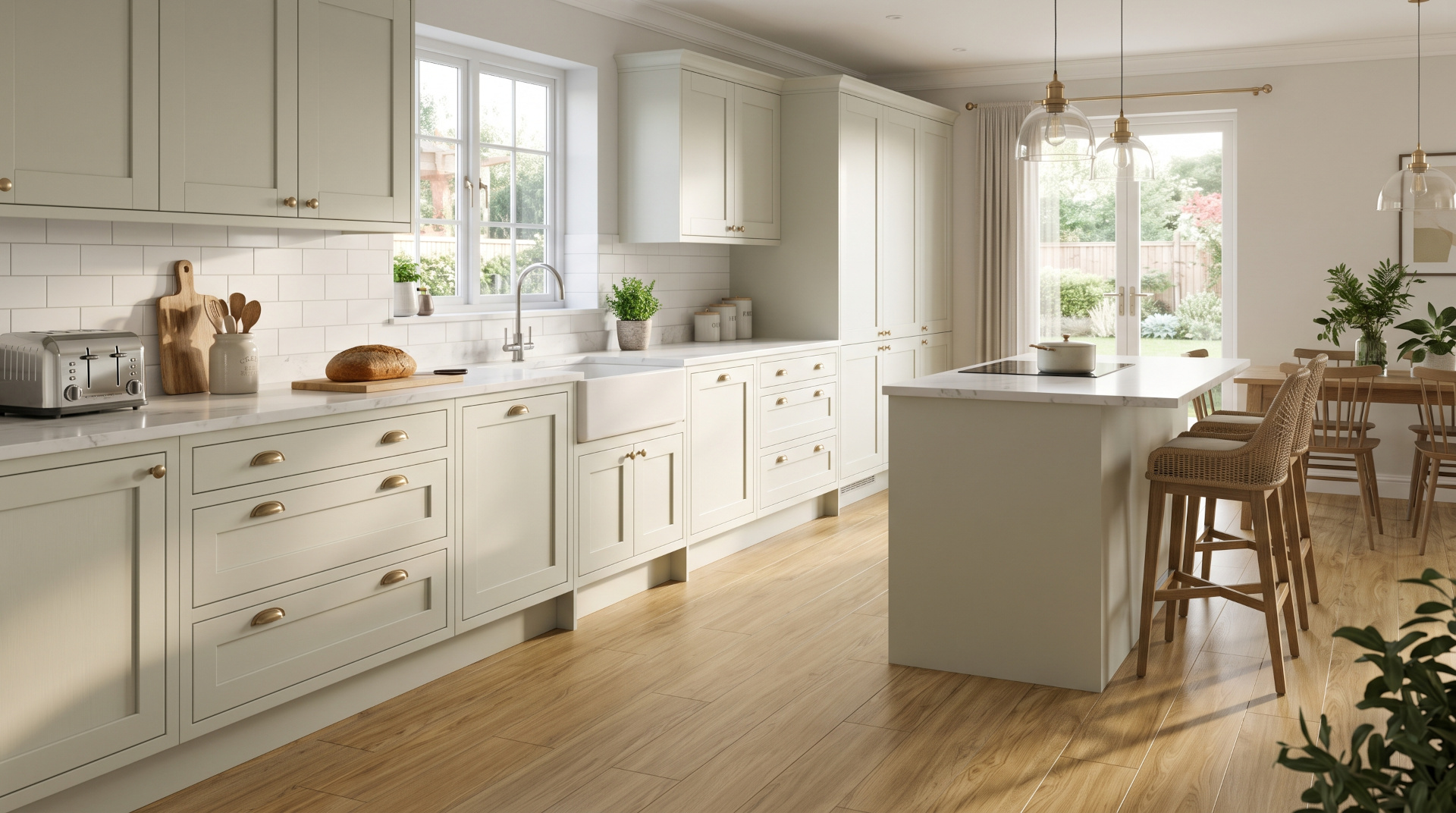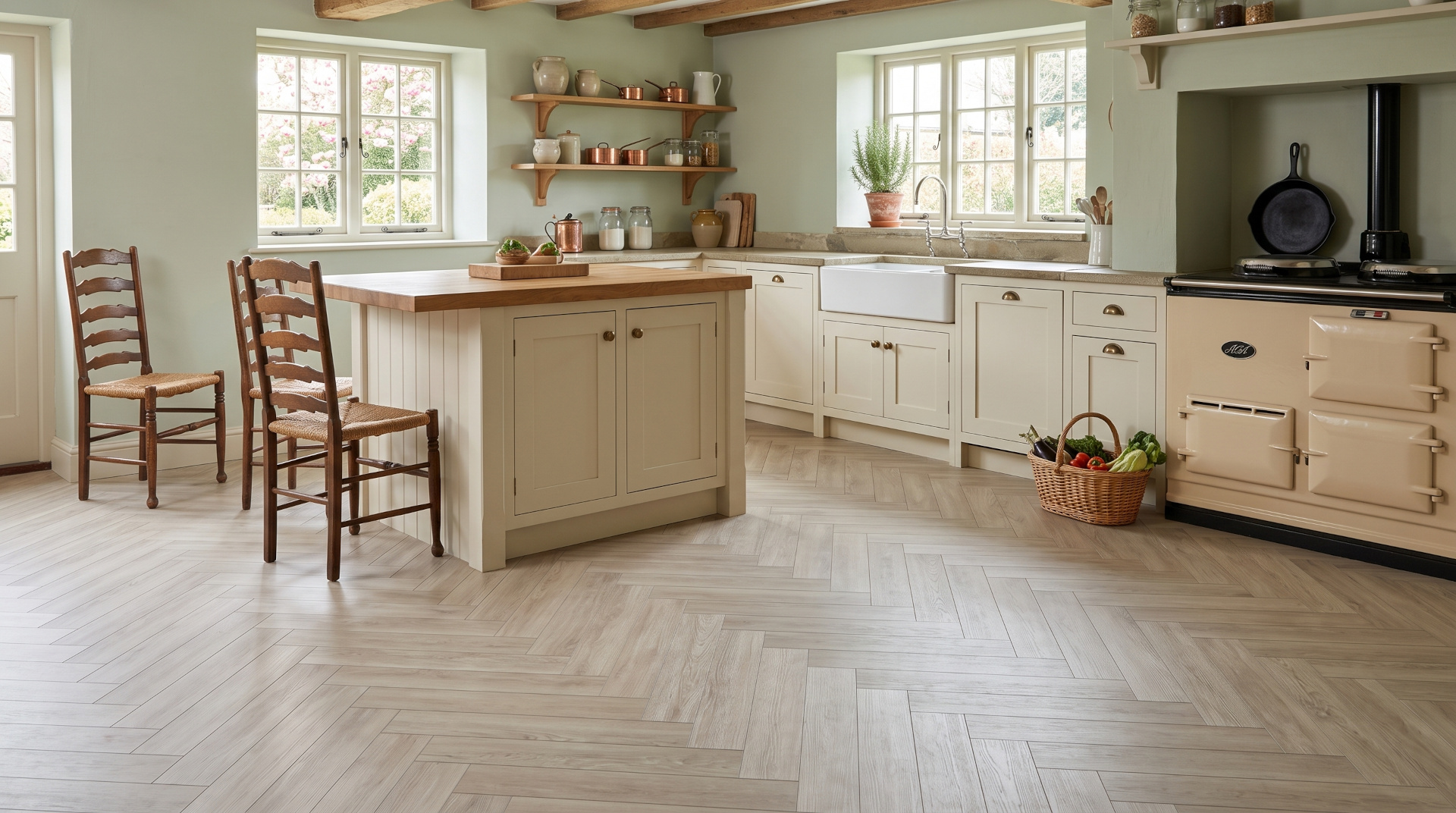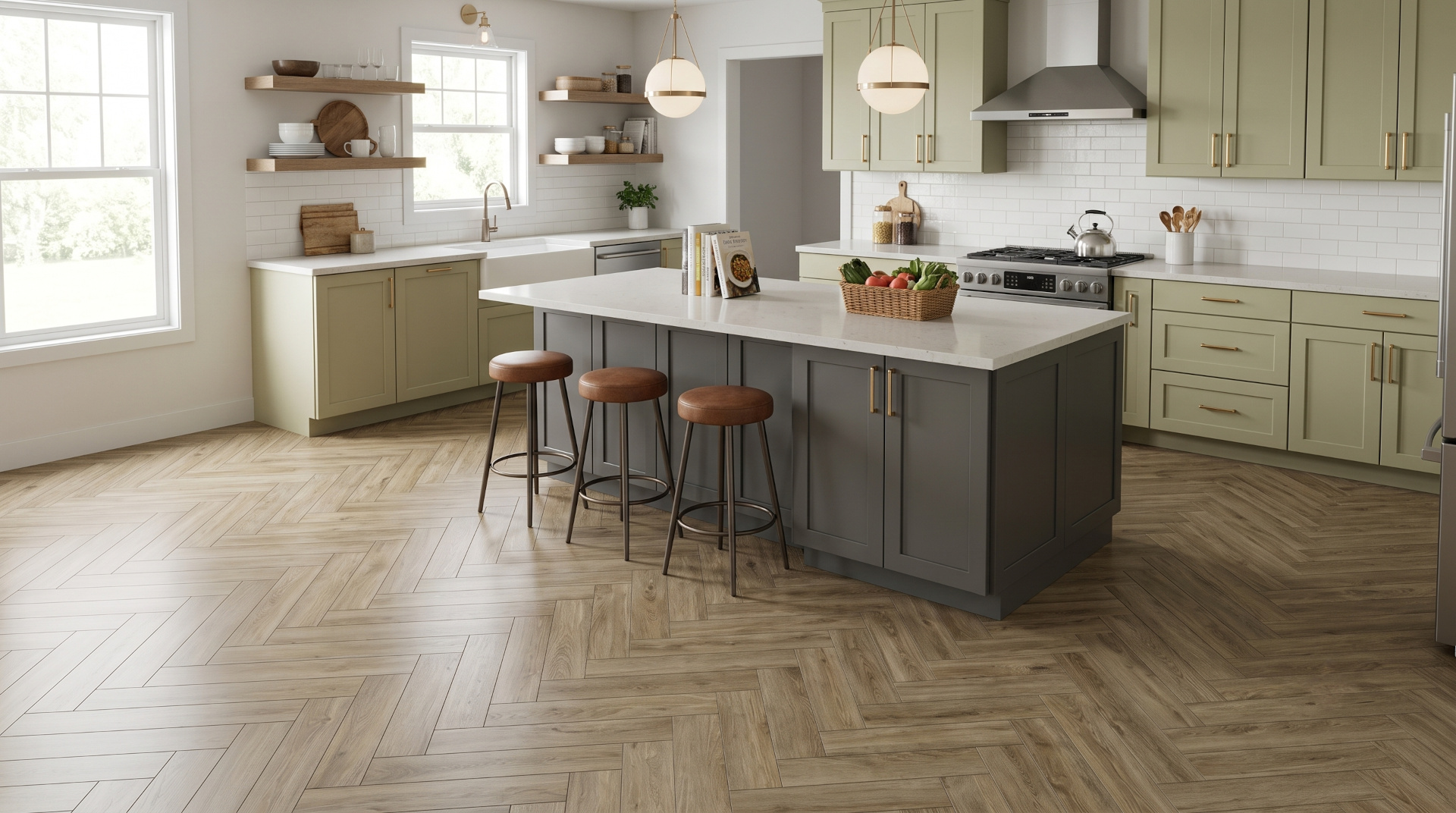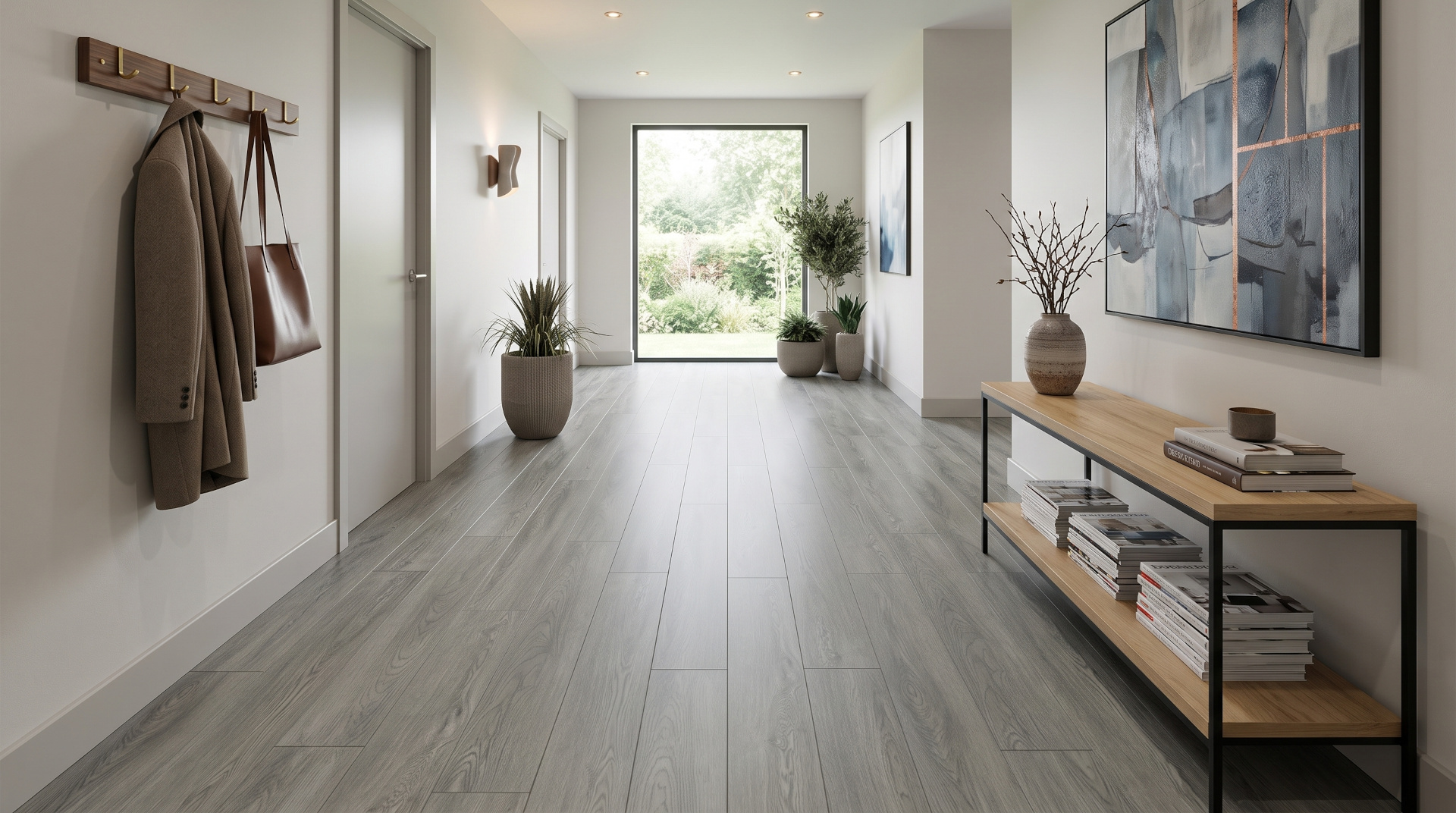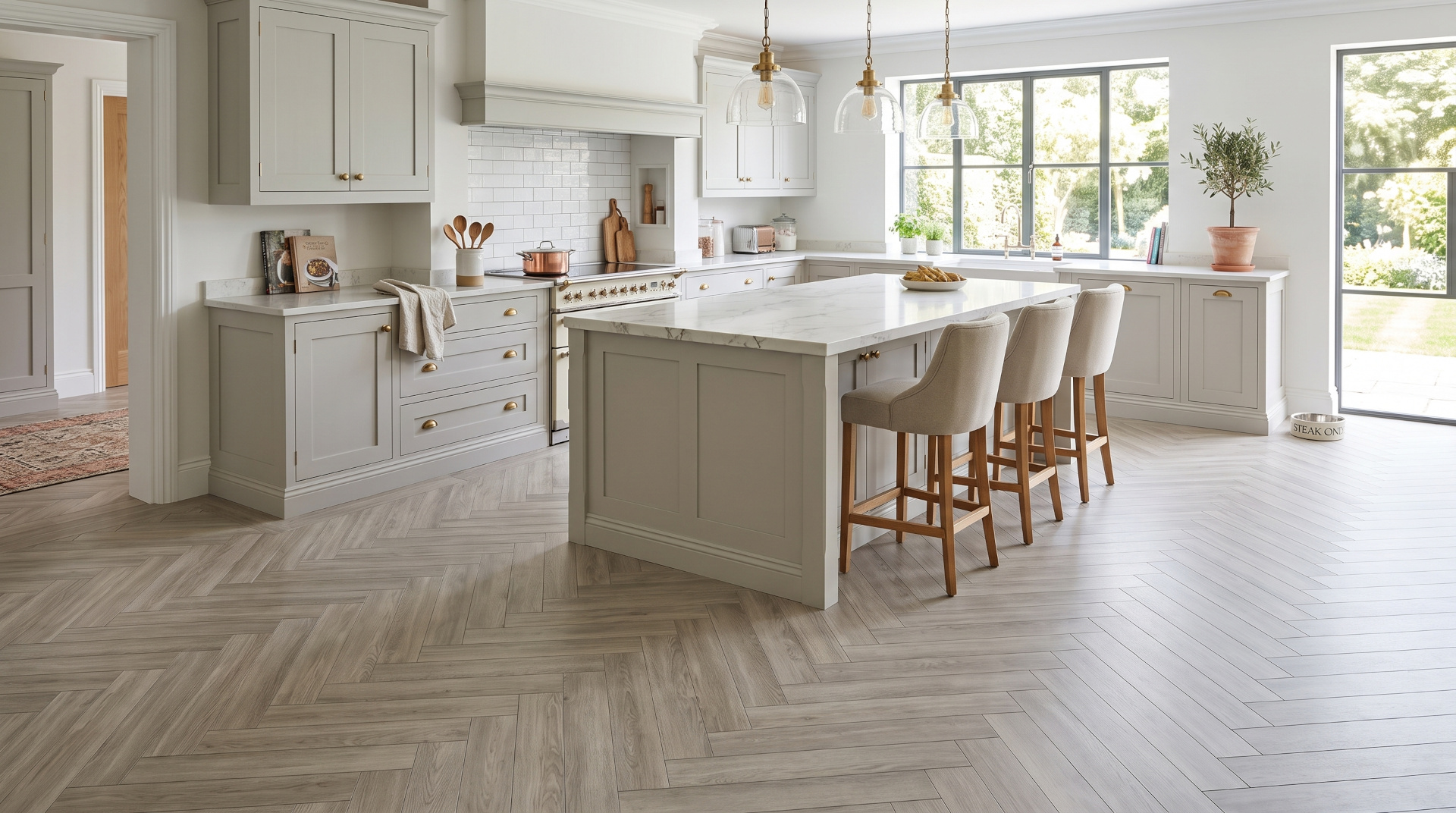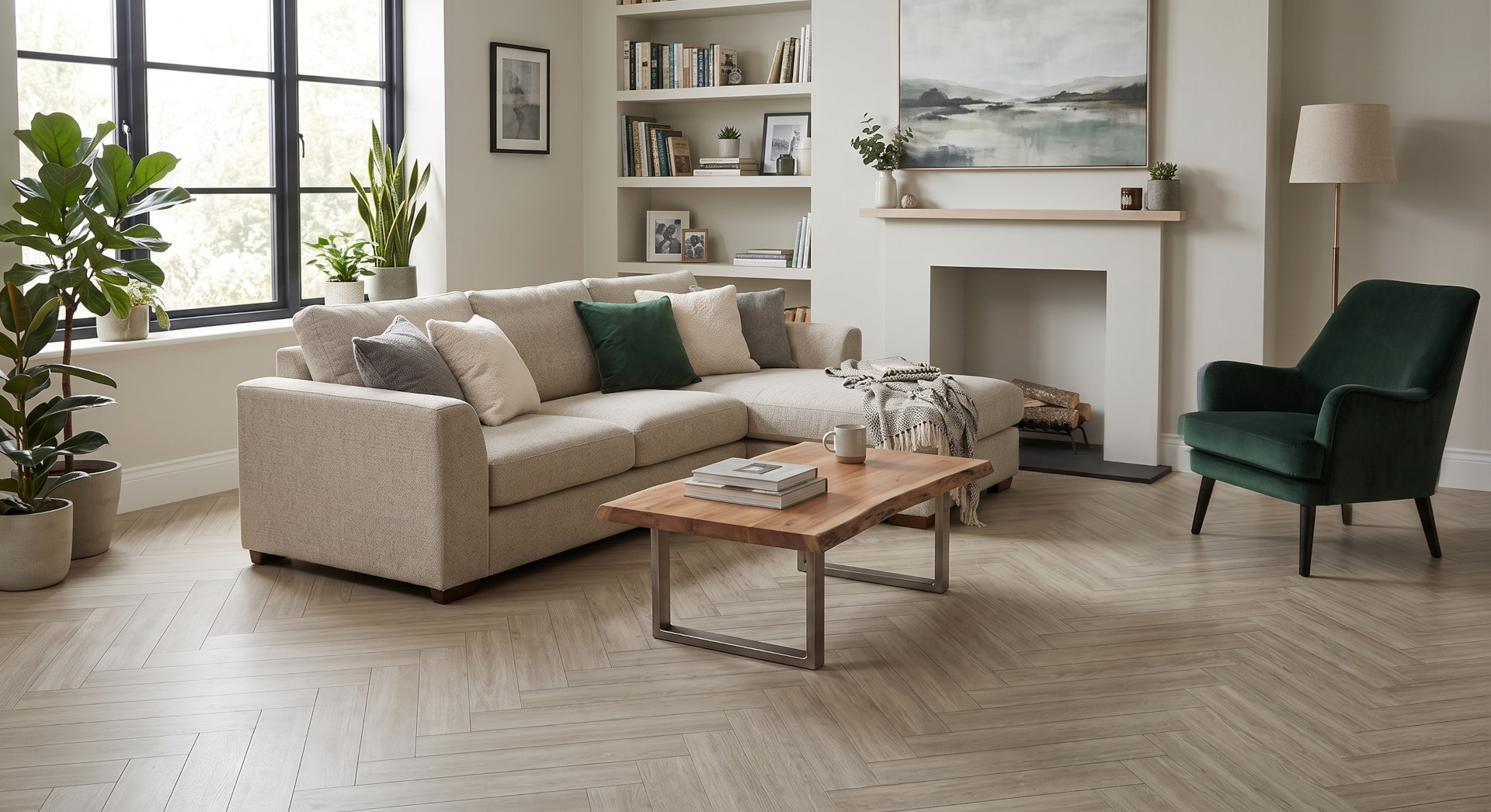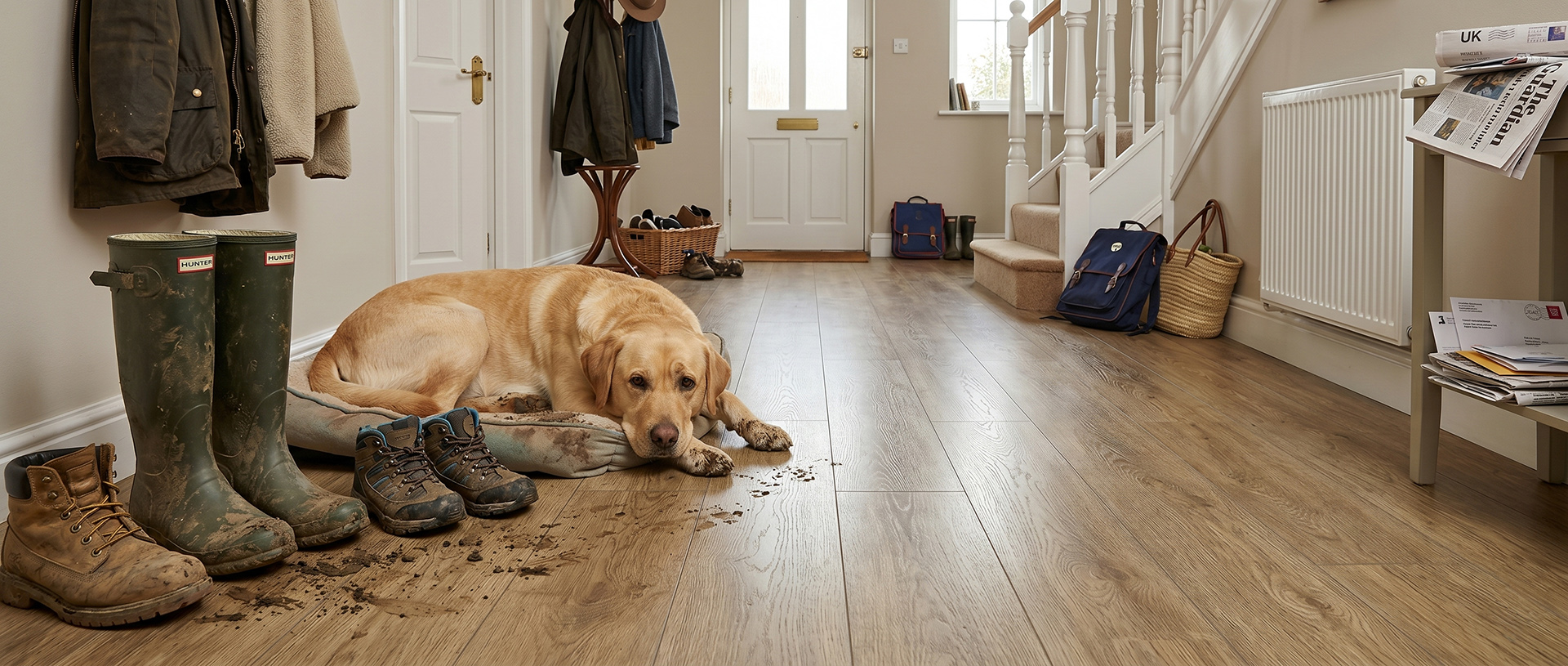
Selecting a floor for an active home requires reviewing the technical specifications to ensure it can handle heavy traffic. Muddy boots, pets running through the hallway, and dropped items mean the surface takes the brunt of daily life. If you require durable vinyl flooring to withstand this level of activity, you need a material engineered for high wear resistance. Luxury Vinyl Tile (LVT) and Stone Plastic Composite (SPC) are popular in UK homes for this exact reason.
When reviewing products, you will see specifications like “0.3mm wear layer” or “0.70mm commercial grade”. These numbers directly dictate how the floor performs under pressure. Understanding these figures determines whether your floor lasts for 15 years or shows wear within a few. Locating truly durable vinyl flooring means looking closely at these technical details.
Jump To Section
- What Makes Durable Vinyl Flooring Work?
- Wear Layer Thickness Explained
- Overall Plank Thickness vs. The Wear Layer
- Durable Vinyl Flooring for Dogs, Kids, and Mud
- The Impact of a 0.70mm Surface on Durable Vinyl Flooring
- 10 Real-World Tests for Your Floor
- Final Thoughts on Durable Vinyl Flooring
What Makes Durable Vinyl Flooring Work?
Manufacturers measure the working life of a floor by its resistance to scratches, dents, stains, and foot traffic.
The performance of the floor relies entirely on how effectively the surface layer protects the printed design beneath. This determines whether the boards remain intact after years of use. A surface like durable vinyl flooring is water-resistant and built to handle daily impacts, relying on one specific component to achieve this: the wear layer.
Wear Layer Thickness Explained
The wear layer is the transparent protective coating applied to the top of the plank. It takes the physical abuse from shoes, claws, and dirt.
Measured in millimetres (mm), this layer is the primary factor in the working life of the floor. To ensure you have durable vinyl flooring, note that a thicker coating provides more protection against surface damage. Here is how the measurements apply to real-world use:
| Wear Layer Thickness | Suitability | Pro-Tek™ Collection Examples |
|---|---|---|
| 0.2mm – 0.3mm | Light domestic use (bedrooms, low traffic areas) | Value Range |
| 0.3mm – 0.5mm | Standard household use | General Market Standard |
| 0.55mm | Heavy domestic use | Editions Range |
| 0.70mm+ | Premium, high-traffic commercial grade | Excel & Tek-Core™ Ranges |
A wear layer of at least 0.55mm is the recommended starting point for active households.
Overall Plank Thickness vs. The Wear Layer
A thicker plank does not automatically result in a tougher surface. Overall thickness dictates sound absorption and insulation, but it does not prevent surface scratches.
You could have an 8mm plank with a thin topcoat that scratches easily, or a 6mm plank featuring a heavy-duty wear layer that performs significantly better over time. Always prioritise the wear layer specification when assessing the resilience of the surface, as this is what defines durable vinyl flooring.
Durable Vinyl Flooring for Dogs, Kids, and Mud
- Pets: Dogs and cats stress floor surfaces with claws and accidental messes. Durable vinyl flooring with a robust wear layer resists scratches. Furthermore, veterinary charities often recommend hard, wipe-clean surfaces to manage pet hygiene effectively. Unlike wood, vinyl does not absorb moisture or stain.
- Mud and Dirt: The UK weather guarantees mud. The protective wear layer stops dirt from embedding into the material, allowing for simple cleaning.
- Kids: Dropped toys and spills create a high-impact zone. The rigid core of high-quality SPC vinyl absorbs impacts better than ceramic tiles, while the wear layer prevents scuffs.
The Impact of a 0.70mm Surface on Durable Vinyl Flooring
For environments with intense foot traffic, a 0.70mm wear layer provides maximum protection. This specification ensures the floor is fit for purpose in demanding homes and commercial spaces.
Achieving top-tier abrasion classifications, a 0.70mm layer provides high resistance to scuffs, preventing visible wear paths from forming in narrow hallways over time. Premium ranges like Pro-Tek™ Tek-Core™ and Excel feature these heavy-duty coatings, engineered for areas where high performance is a strict requirement.
10 Real-World Tests for Your Floor
Here is how quality SPC and LVT handle common daily scenarios:
- Dog claws: A 0.70mm topcoat resists visible scratching.
- Muddy footprints: Dirt sits on the surface for easy mopping without staining.
- Spilled drinks: The 100% waterproof surface stops liquids from soaking in.
- Dropped toys: The solid core limits the risk of deep dents.
- Moving furniture: A thick wear layer stops scuffs (felt pads are still required).
- Hallway traffic: A 0.55mm+ layer stops wear paths from forming.
- Food stains: The non-porous surface wipes clean rapidly.
- Pet water bowls: Standing water causes no swelling or warping.
- Outdoor grit: The robust coating limits abrasion from small stones.
- Fading: UV inhibitors in the topcoat slow the effects of direct sunlight.
Final Thoughts on Durable Vinyl Flooring
Review the technical specifications before making a decision. Choose a minimum 0.55mm wear layer for standard family homes, and up to 0.70mm for intense traffic.
Choosing durable vinyl flooring from the Pro-Tek™ ranges ensures the surface can handle the reality of an active home. Explore our technical data sheets to review the exact specifications of our wear layers. If you are a trade professional, sign up for a Pro-Tek™ Trade Account today to access exclusive pricing for your next project.