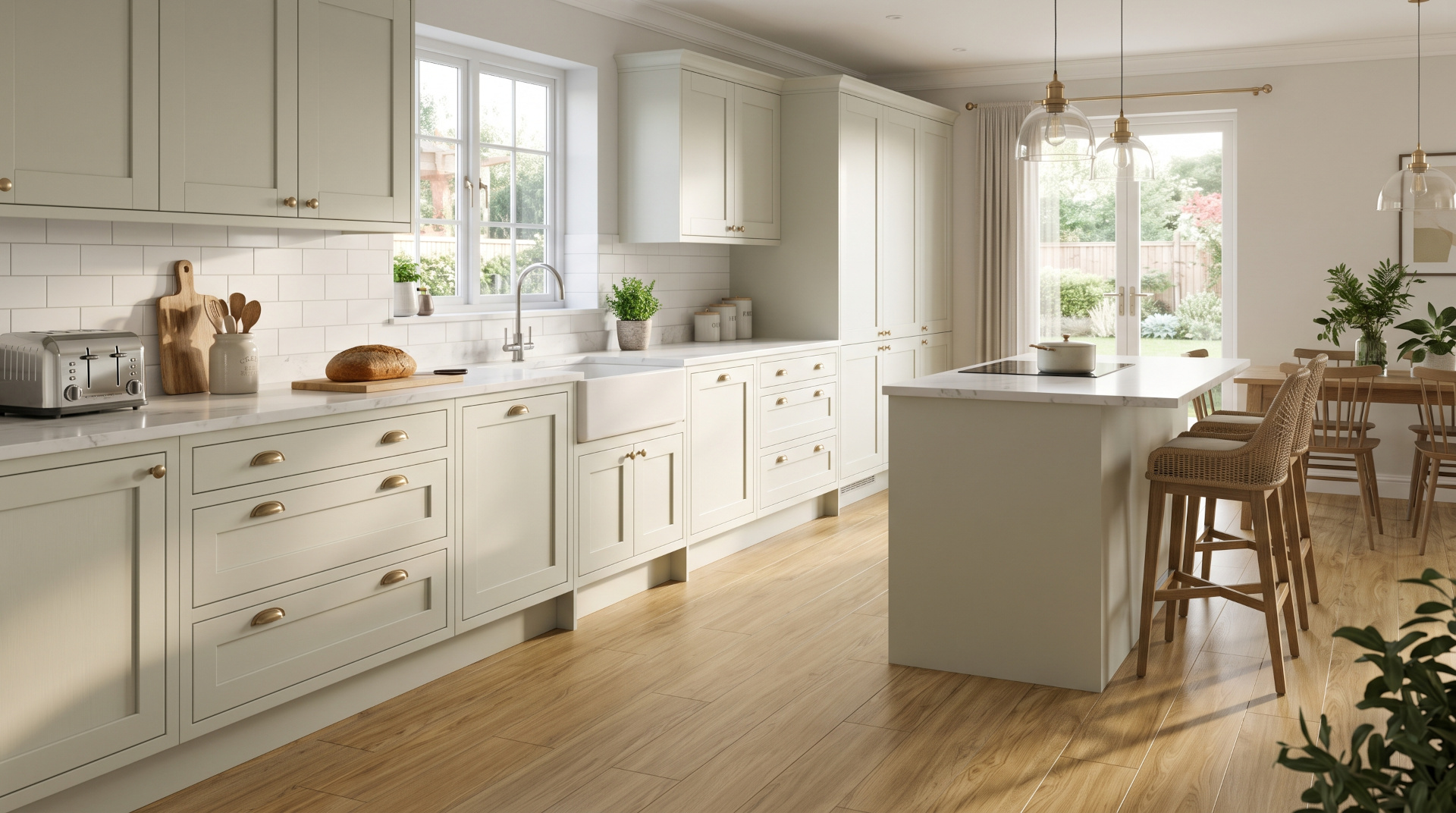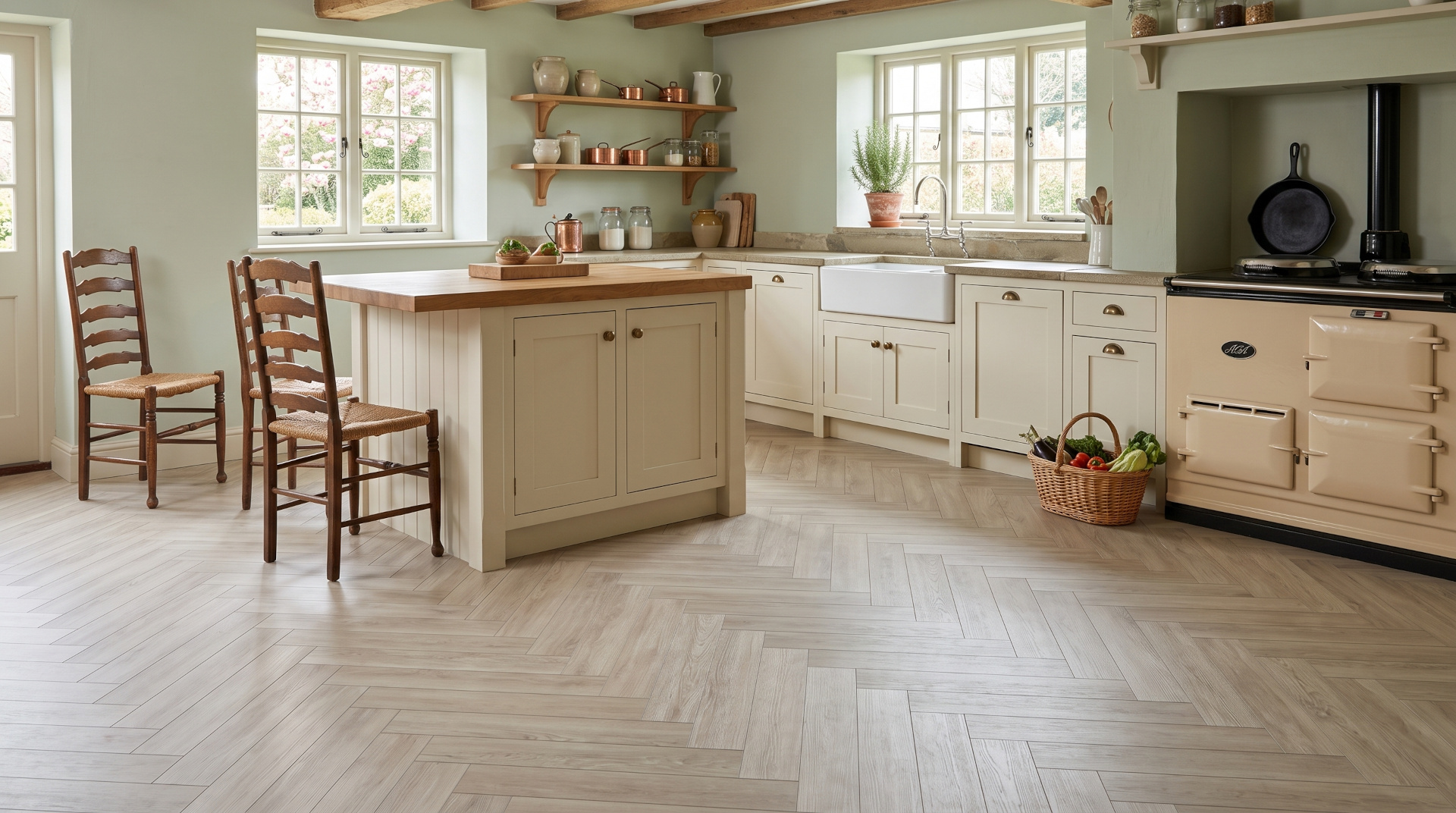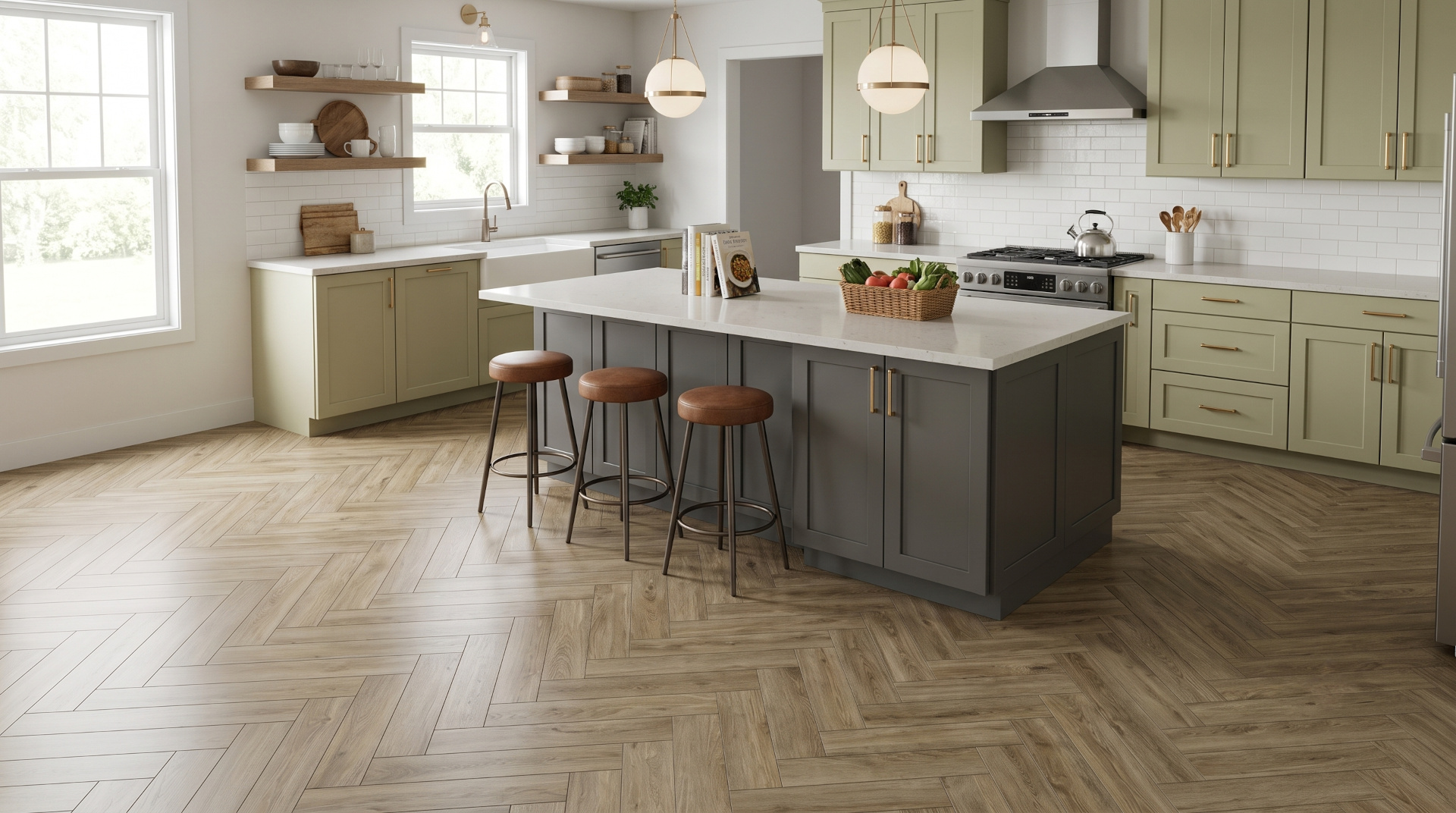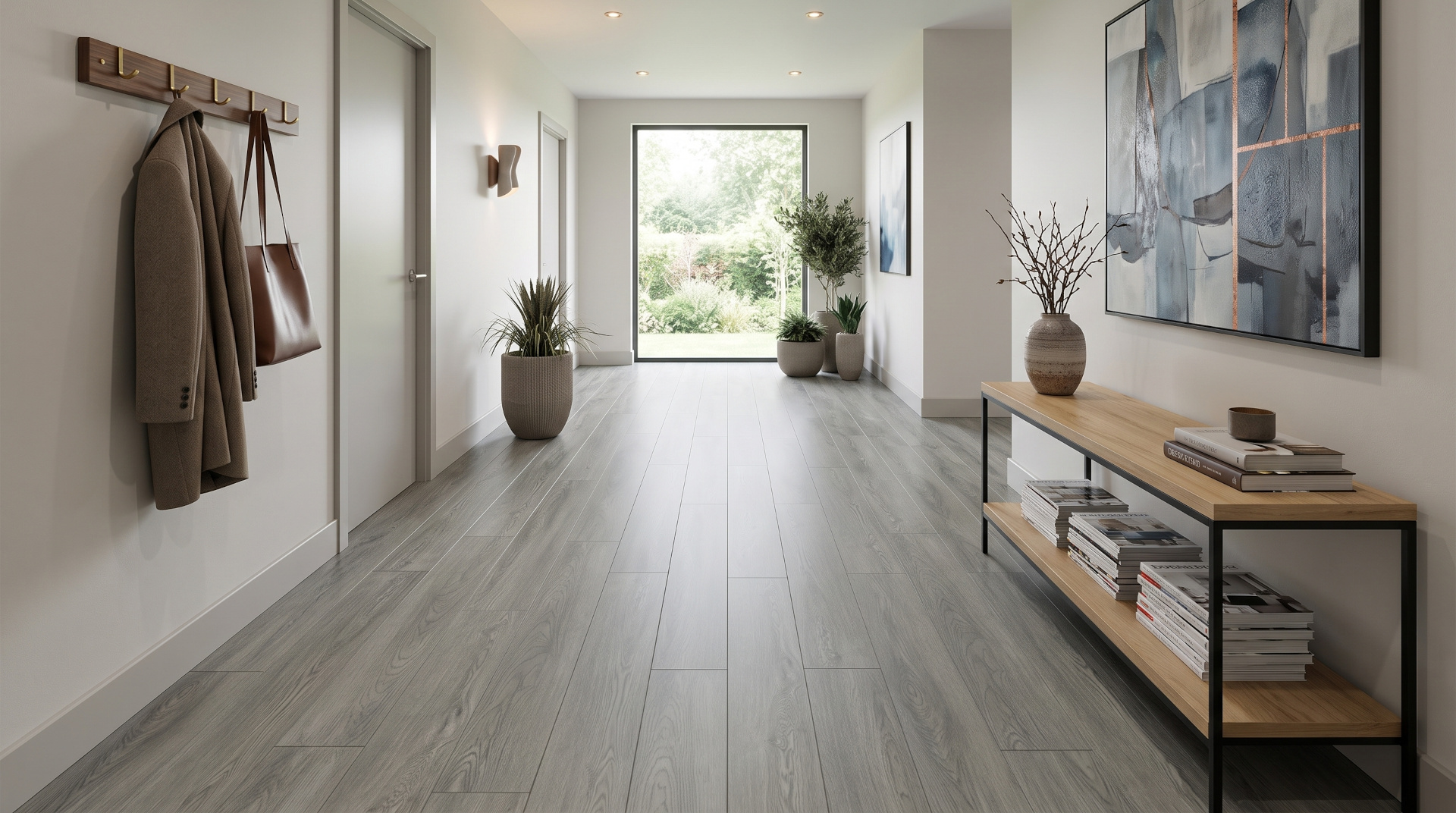
If you are planning a room update or a full property renovation, you have probably run into a wall of industry acronyms. When talking to builders or browsing suppliers, you might find yourself asking: what is LVT flooring, and how does it actually differ from the old sheet vinyl people used to glue down in kitchens?
Let’s break it down. As tradespeople, we work with these materials every day. LVT is currently one of the most specified materials on our job sites because it handles the reality of a busy home. It is tough, it handles water, and it goes down quickly. This guide will walk you through exactly how these boards are made, the different types of cores available, and what the fitting process looks like in the real world.
Jump To Section
- Breaking Down the Basics: What is LVT Flooring?
- How Are These Boards Actually Made?
- SPC vs WPC: Understanding What is LVT Flooring Cores
- Where Does It Work Best in the House?
- The Fitting Process: What is LVT Flooring Installation Like?
- Final Thoughts on What is LVT Flooring
Breaking Down the Basics: What is LVT Flooring?
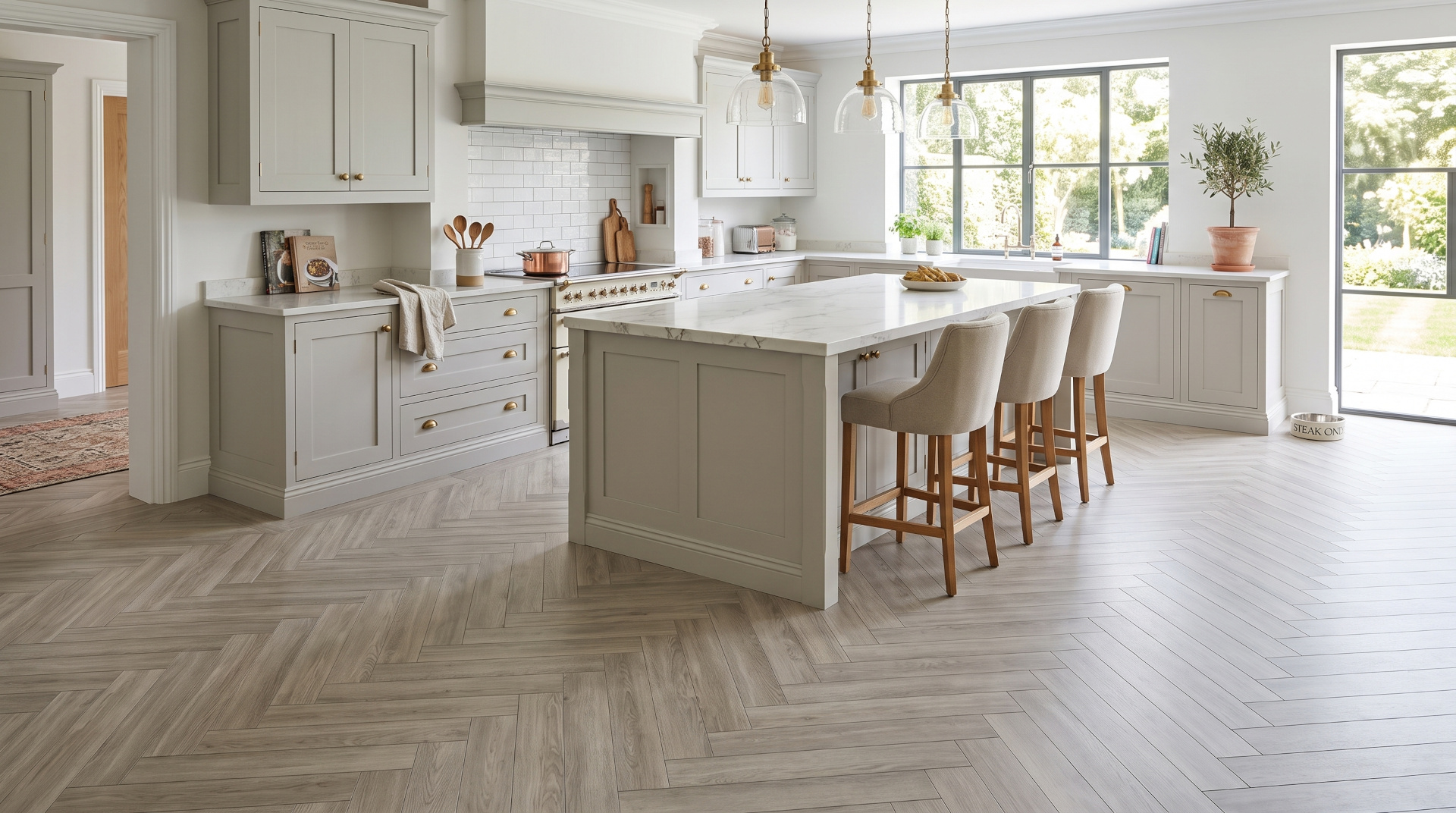
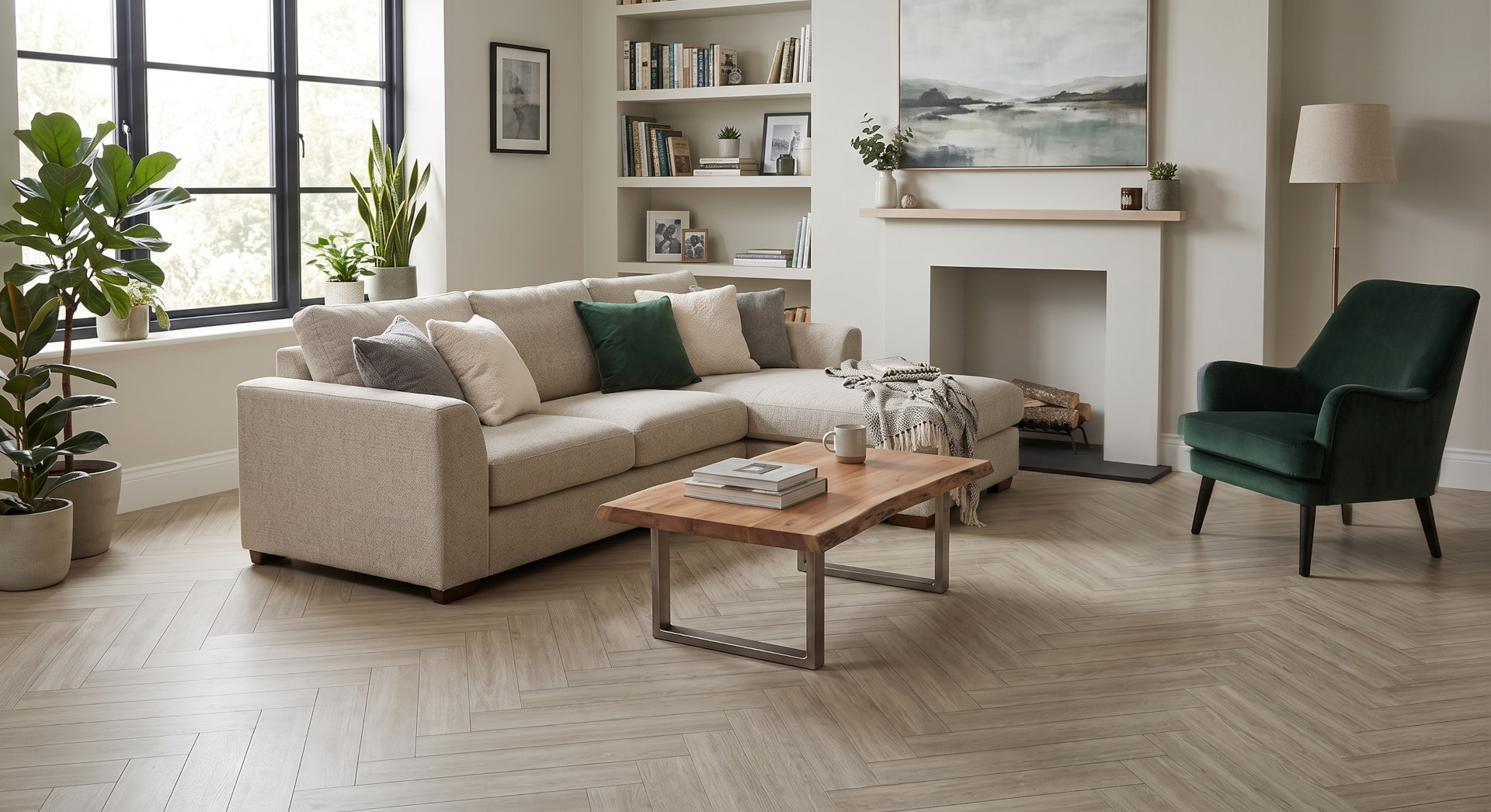
To answer “what is LVT flooring”, we start with the name. It stands for Luxury Vinyl Tile. Despite the word “tile”, this material comes in square tile formats (mimicking stone or concrete), and long plank formats (mimicking wood floorboards). Currently, it is also available in a highly popular herringbone design.
Unlike traditional sheet vinyl that comes on a large, soft roll, LVT is engineered into individual, rigid pieces. This modular format means if one board gets heavily damaged by a dropped tool, you can replace that single piece rather than tearing up the entire room.
How Are These Boards Actually Made?
When you pick up a Pro-Tek™ board, you will notice it feels solid and heavy. That is because it is built using several distinct layers compressed together under high heat. Think of it like a sandwich:
- The Underlay: Most modern boards feature a built-in IXPE foam layer on the bottom. This provides sound absorption and before starting. All our products come with our SAFEGRIP underlay.
- The Core: This is the thick middle section that provides the board with its shape and stability.
- The Print Film: A high-definition photographic layer. This is what gives the board the exact visual appearance of natural oak, walnut, slate, or marble.
- The Wear Layer: A clear, protective topcoat. This layer takes the physical abuse from shoes, claws, and furniture. The thicker this layer is (ranging from 0.30mm up to 0.70mm), the higher the wear resistance of the floor.
SPC vs WPC: Understanding What is LVT Flooring Cores
If you are researching what is LVT flooring, you will quickly run into two different types: SPC and WPC. These refer to the material used to make the core of the board, and choosing the right one depends on your room.
- SPC (Stone Plastic Composite): Used in the Pro-Tek™ Editions and Value ranges. This core mixes limestone powder with plastics. It is very dense, hard, and resists expansion from heat. It is the go-to option for high-traffic areas and rooms with large windows or conservatories.
- WPC (Wood Plastic Composite): Used in the Pro-Tek™ Excel range. This core uses wood pulp and foaming agents, creating tiny air pockets. It is slightly softer underfoot and provides better acoustic insulation, making it a great option for upstairs bedrooms or flats where you want to keep footstep noise down.
Where Does It Work Best in the House?
Because the core and the surface are made from composite materials and plastics, LVT is 100% waterproof. It does not act like a sponge.
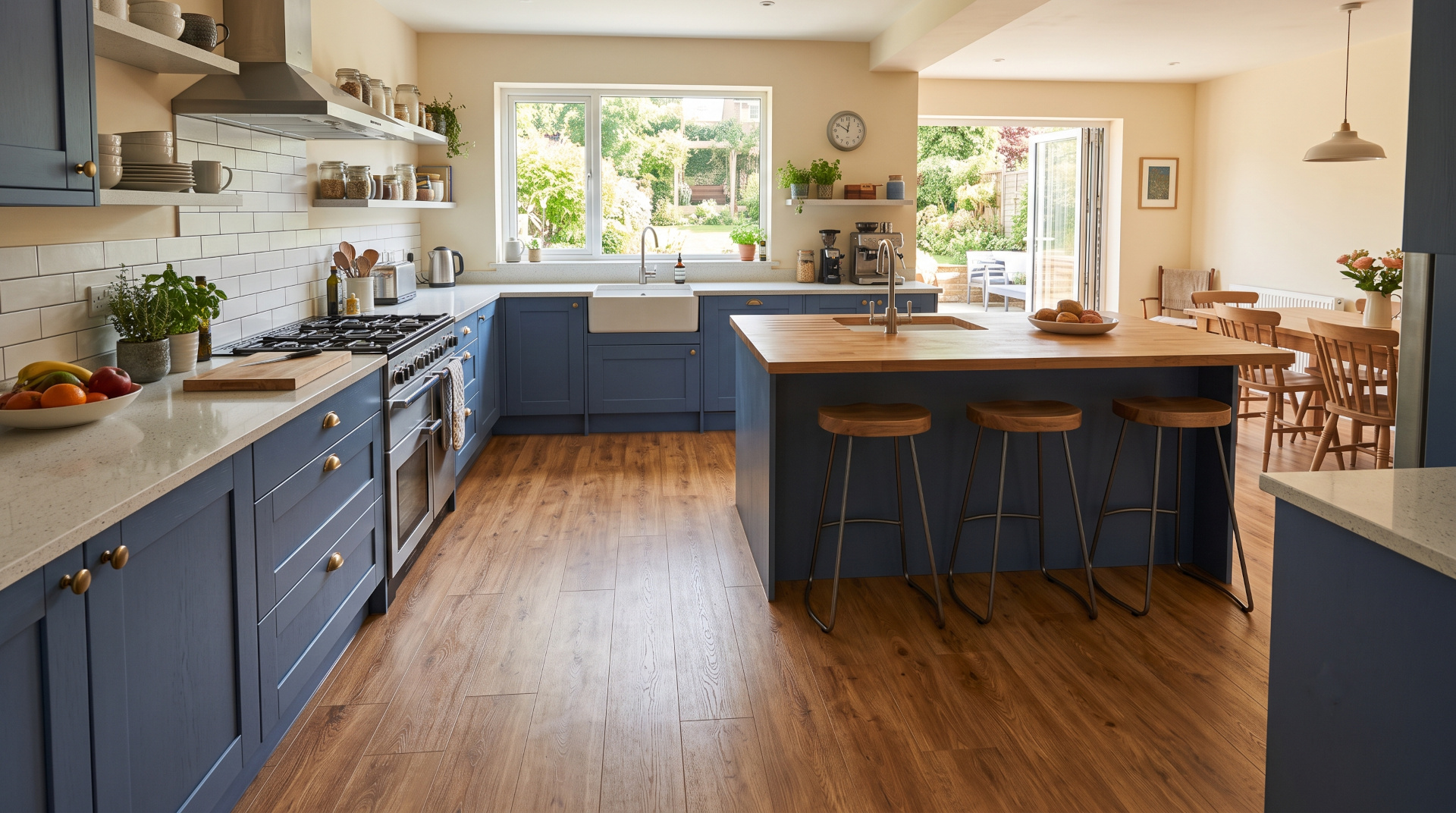
If you have a busy house with kids spilling drinks, or dogs tracking in mud from the garden, water will just sit on the surface waiting to be mopped up. This makes it a highly practical option for bathrooms, utility rooms, and kitchens. You can even run the same wood-effect planks from your front door straight through the hallway and into the kitchen without needing transition strips at the doors.
The Fitting Process: What is LVT Flooring Installation Like?
For anyone asking what is LVT flooring like to fit, the process is straightforward but requires correct subfloor preparation.
Modern LVT uses a “floating floor” method. The boards feature a machined profile along the edges, such as the Uniclic™ system used by Pro-Tek™. The planks simply lock together using a tapping block and a mallet, meaning there are no wet adhesives or drying times involved. You can walk on the floor the minute the last board is down.
However, the subfloor underneath must be solid, flat, firm, and stable. If you lay LVT over a bumpy concrete floor, the joints will experience stress when you walk on them and may eventually separate. You must also leave a 6 to 10mm expansion gap around the entire perimeter of the room. This space accommodates natural thermal movement, stopping the boards from pushing against the skirting boards and buckling upwards in the summer.
Final Thoughts on What is LVT Flooring
So, what is LVT flooring? It is a highly engineered, multi-layered material designed to give you the visual appearance of natural wood or stone while standing up to the heavy wear and tear of a modern household.
By selecting a product with a strong core and a thick wear layer, you get a waterproof surface that requires minimal maintenance. If you want to see how these boards feel in person, browse the Pro-Tek™ collections online and order a few free samples to test in your own home.