Vinyl flooring kitchen installs are one of the smartest choices for a busy household. Kitchens take more abuse than any other room in the house and the floor wears most of it. Hot pans, spilled milk, muddy boots, the dog that thinks it is a racetrack. (The lot.)
Here is the thing though. Not every vinyl is equal. Get the wear layer wrong and you will regret it within a year. Get the finish wrong and the room will look tired before it is old.
What follows is what I would tell a friend before they order. Specs to look for, designs that hold up, and how to live with the floor once it is in.
Jump to section:
- What to Look for in Vinyl Flooring Kitchen Options
- Why Vinyl Flooring Works So Well in Kitchens
- Wear Layers, Waterproofing and Slip Resistance
- Design Options: Wood, Stone and Tile Effects
- Vinyl Flooring Kitchen Installation: What to Know
- Caring for Vinyl Flooring in the Kitchen
- Common Mistakes When Choosing Kitchen Vinyl Flooring
What to Look for in Vinyl Flooring Kitchen Options
Wear layer first. Everything else second. (This is the bit people get wrong most often.)
Actually, no, let me back up. The wear layer is the transparent top coat that takes the abuse, and it’s measured in millimetres. 0.30mm is fine for a spare room. For family homes, 0.55mm is the everyday sweet spot. In a busy kitchen, go for 0.7mm. It handles dropped pans, dragged chairs, and the kind of traffic a working kitchen gets. Ask anyone with a kitchen and a toddler.
Waterproofing is table stakes now, so it is not really a differentiator. Modern LVT handles water fine. What matters more is the click system and the joints. Look for a rigid core (SPC or hybrid) that locks tight and does not separate.
Slip resistance is the one everybody forgets. A textured finish with an R10 rating is the minimum for a kitchen. R11 is better if you have kids or older family members. Or if you are, like me, occasionally carrying three things at once.
Comfort underfoot is the thing nobody thinks about until their back hurts. Standing at a sink for 20 minutes on concrete versus a well-padded LVT floor. Very different. (Your back will notice.)
Why Vinyl Flooring Works So Well in Kitchens
Why bother with vinyl in a kitchen? Because kitchens are wet, busy and unpredictable. Most materials do not handle all three. Good vinyl flooring kitchen design accounts for all three.
Waterproofing is the headline advantage. Vinyl does not swell when it gets wet, does not warp around the dishwasher, and does not stain when someone drops a bottle of red wine. It happens. More often than anyone admits.
Warmth matters more than people think, too. Vinyl is warmer than tile underfoot and softer to stand on. If you spend time at the sink or the stove, that difference is real. My own kitchen has LVT and it has survived two toddlers and a labrador. The floor is fine. (The floor is the only thing that is fine.)
Then there is cleaning. A sweep and a mop. No grout lines to scrub, no sealing, no special products. Honestly, this alone is worth the switch. (Real talk. This is my favourite part of having LVT.)
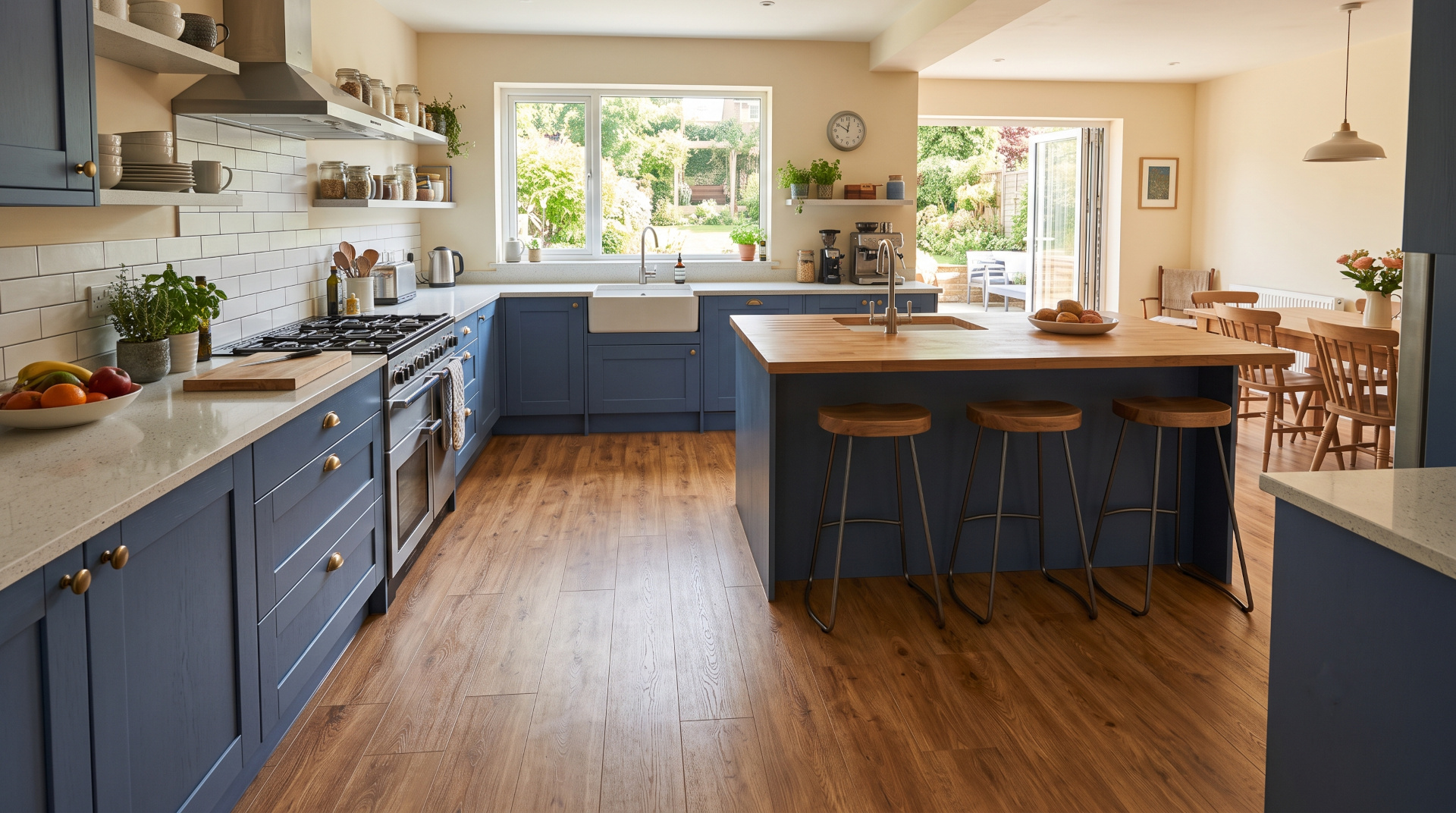
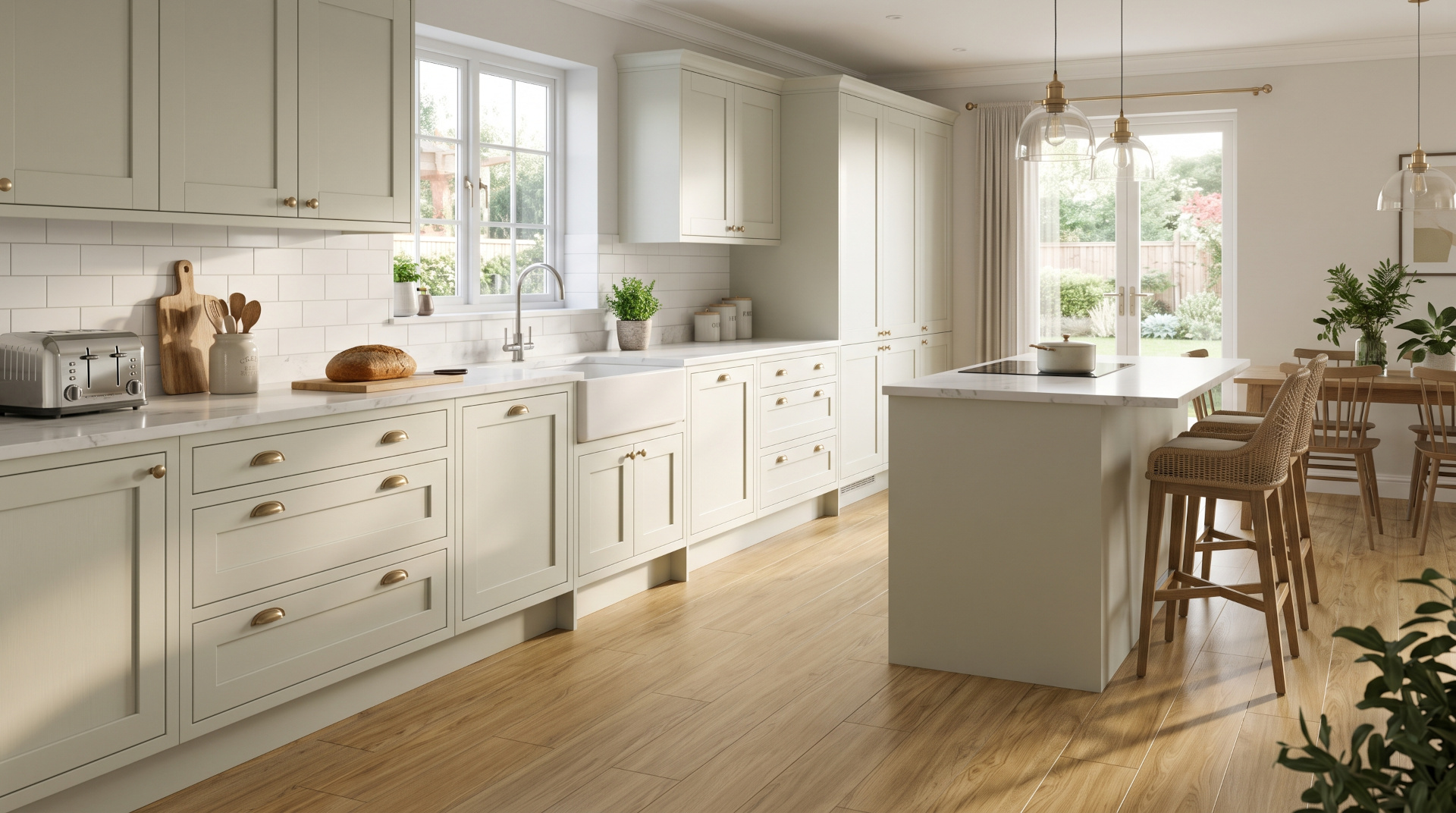
Design is where vinyl has quietly overtaken everything else. Actually, I say quietly. It has been pretty loud. The prints are so good now that people genuinely cannot tell the difference between a wood effect vinyl and a real oak floor without getting on their knees. I have tested this at dinner parties. It is quite funny. Someone always gets defensive about their real oak.
Wear Layers, Waterproofing and Slip Resistance
Three specs make or break vinyl flooring kitchen installs. Let’s look at each one.
Start with wear layer. It is measured in millimetres and it is the transparent top coat that takes the abuse. 0.55mm handles most kitchens without complaint. 0.7mm is where you want to be if there are kids, pets, or heavy pans involved. (Ask me how I know. Actually, do not. It involves a chip pan, a 0.30mm wear layer and a very apologetic call to the supplier. The floor lost.) The LVT wear layer guide goes into the detail.
Waterproofing is a given in modern LVT, so this is less about whether it can handle water and more about whether the core and joints hold up over years. SPC is rigid and stable. Hybrid (like Tek-Core) adds layers for extra durability. Both work. The difference is stability over time.
Then there is slip resistance, the one people forget. Look for an R10 rating as a minimum. R11 is better if the kitchen gets wet regularly. A textured finish helps too. Smooth glossy finishes can be slippery when you are carrying a hot pan across the room. (Trust me on this one.)
What about underfloor heating?
Vinyl generally handles UFH well but check the spec sheet. Water-based systems are compatible with more products than electric mat systems. Electric UFH is the more restrictive category. Not a deal-breaker. Just worth knowing before you order.
Design Options: Wood, Stone and Tile Effects
Vinyl prints have come a long way. Modern vinyl flooring kitchen designs can pass for real wood, stone or tile without getting on your knees to check.
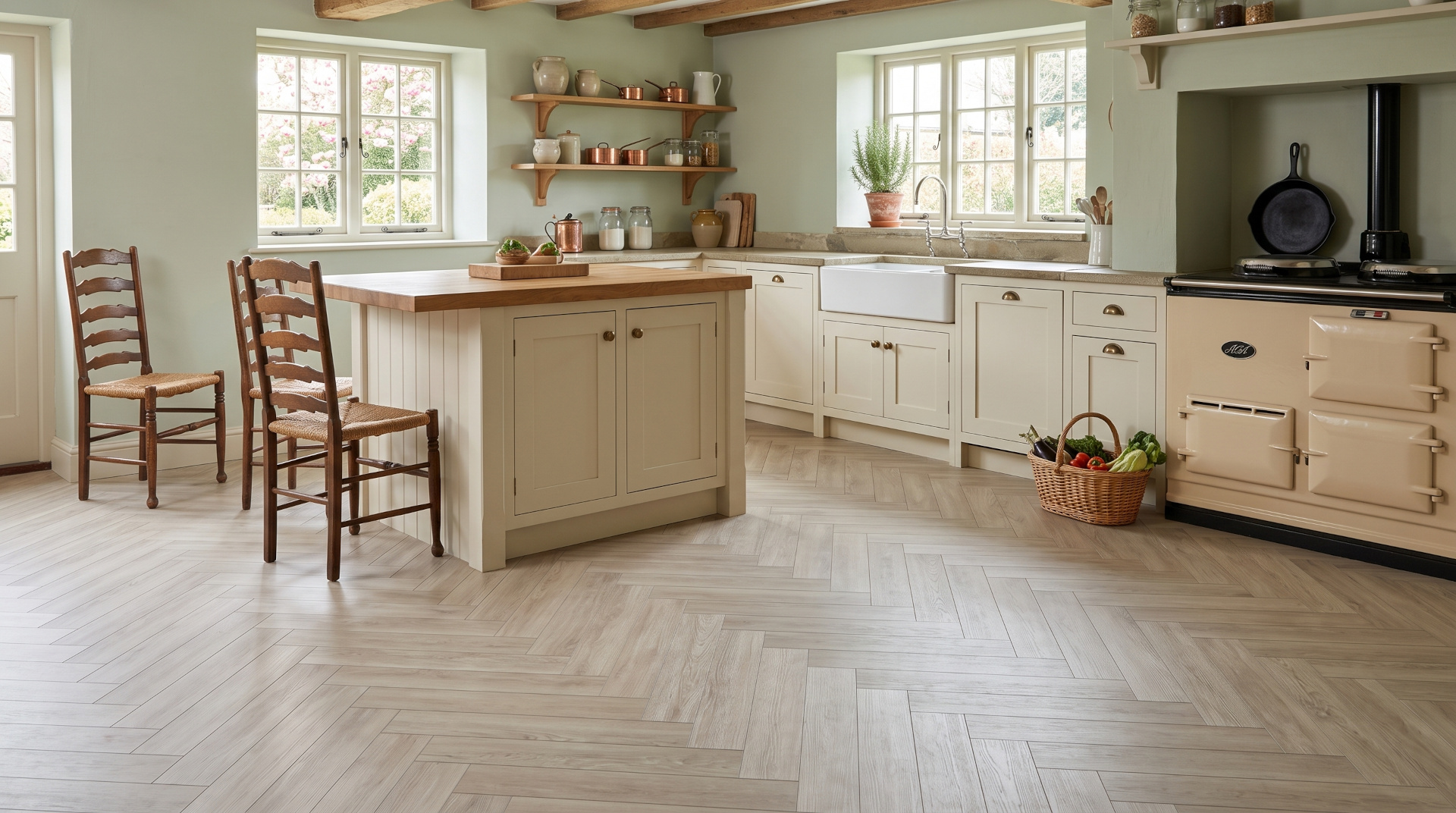
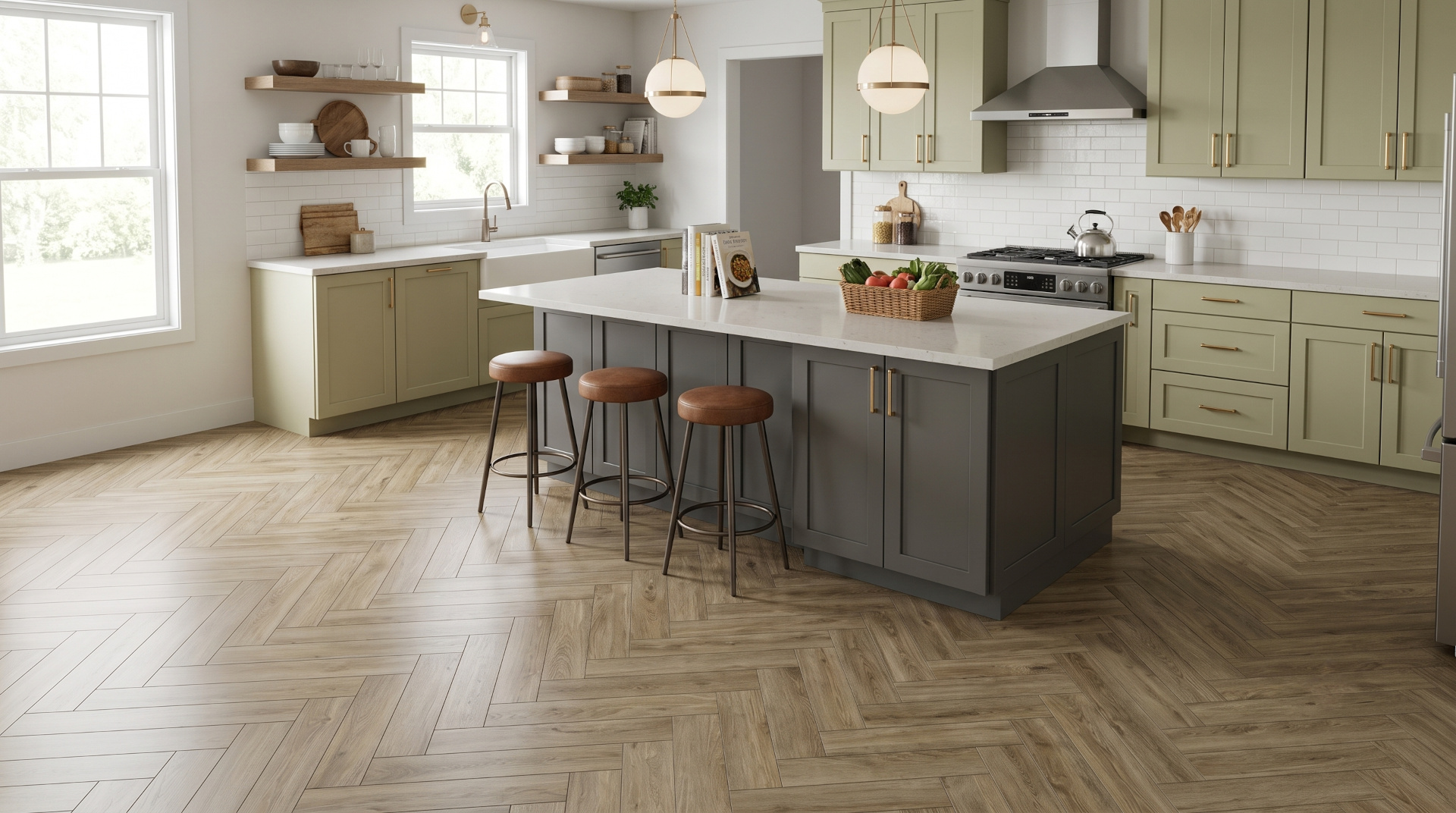
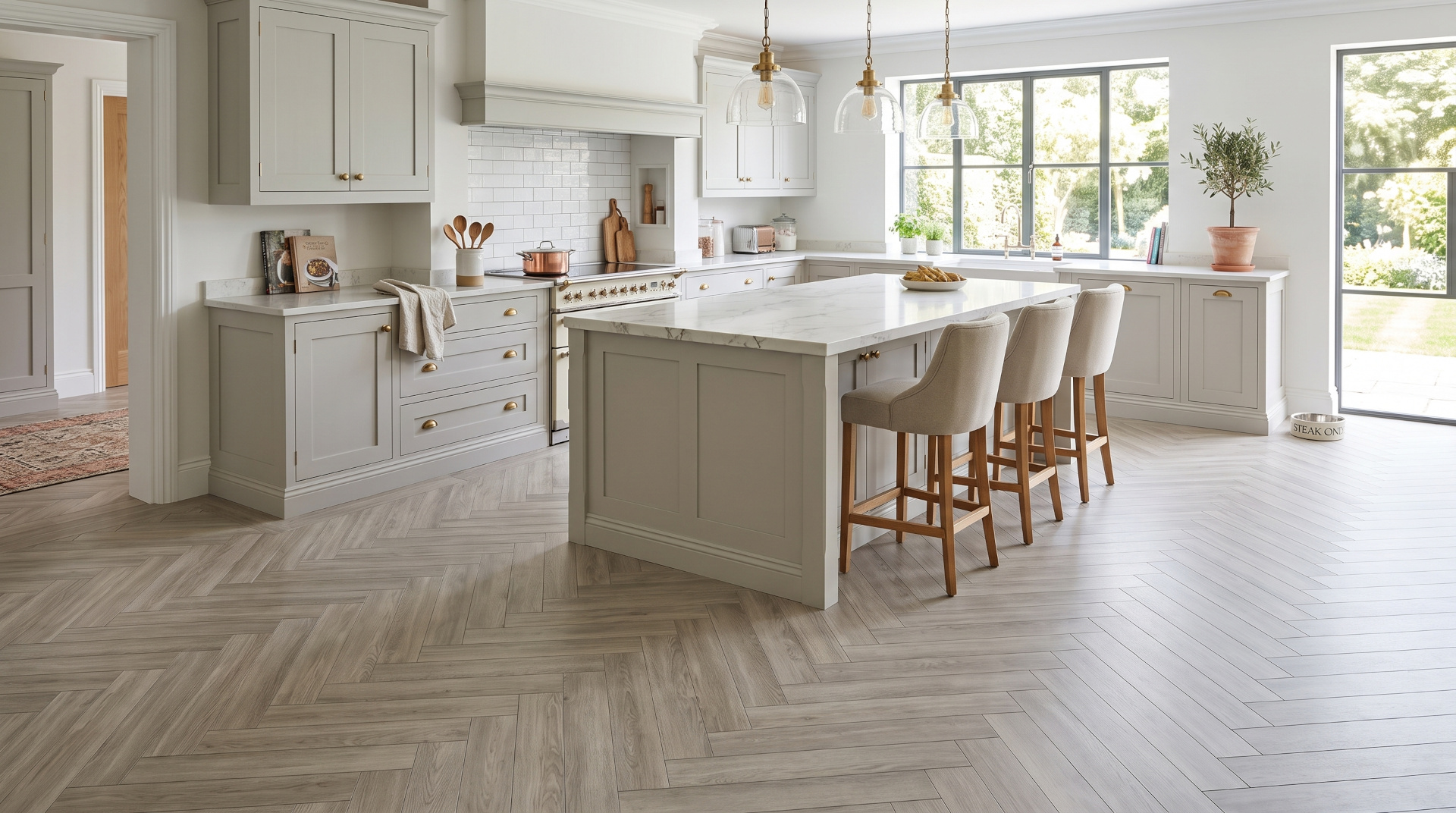
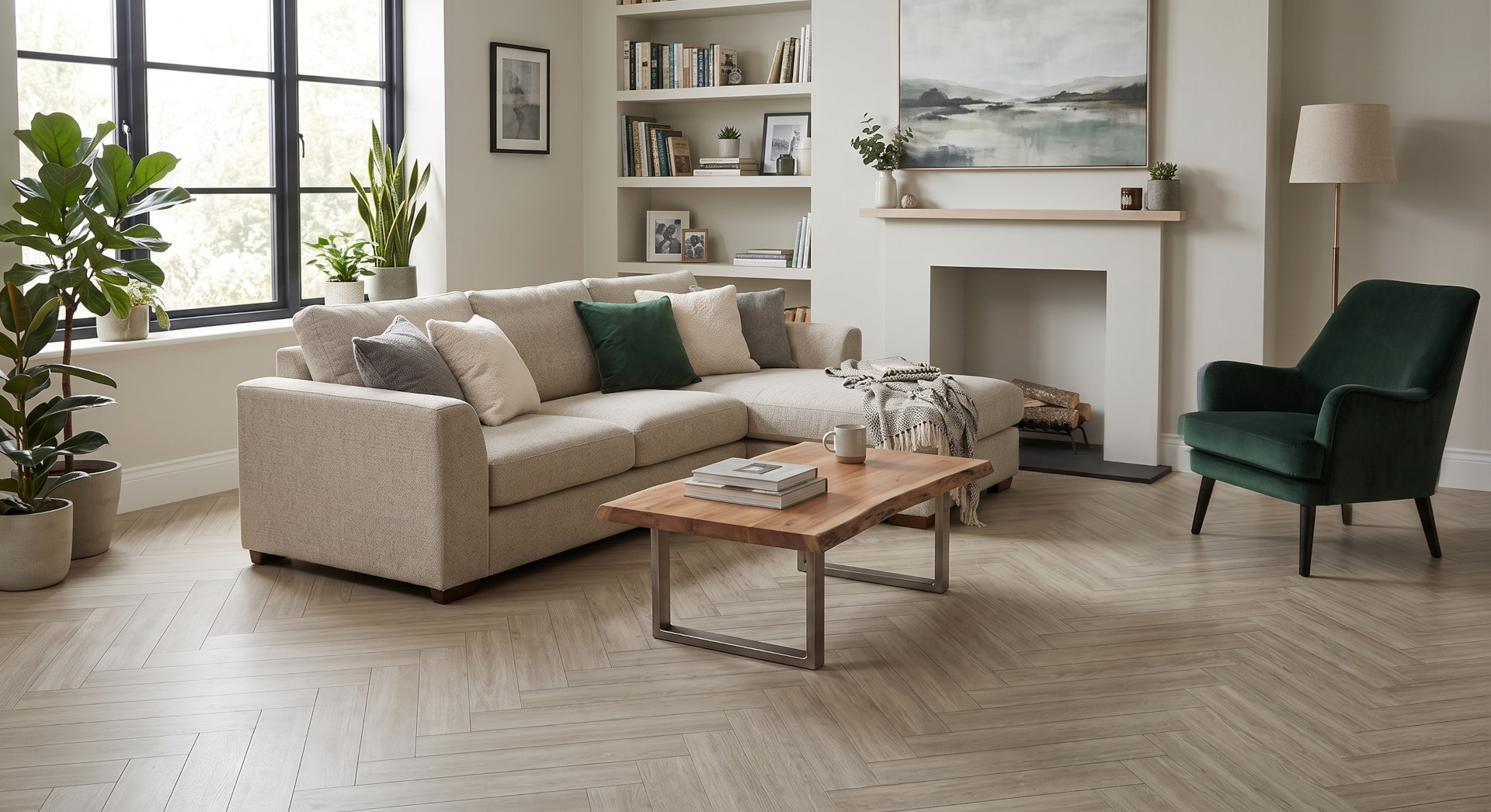
Wood effects are the most popular. Oak is the safe bet. Walnut is warmer and richer. Ash is lighter and more contemporary. Herringbone patterns are everywhere right now and they work well in kitchens where you want the floor to be a bit of a feature. The kitchen flooring ideas page has more on pattern choices.
If you want stone, the prints are good. Slate, limestone and travertine effects look great with shaker units and stone worktops. The catch is that stone effect prints show dirt more easily than wood effect. (Learned this on a light limestone job. Beautiful floor. Constant sweeping. Client was not thrilled.)
Tile effects are less common in vinyl but they work well in smaller kitchens where you want the tile look without the grout.
Colour matters more than pattern. Lighter floors show every crumb. Darker floors show dust and footprints. Mid-tones are the forgiving middle ground. This is where most people land and it is not a coincidence. (If you want to argue about mid-tones with me, my DMs are open. Sort of.)
Vinyl Flooring Kitchen Installation: What to Know
Let’s talk about fitting. Because this is where good floors go bad.
The whole job lives or dies in the prep. Subfloor has to be flat (within 3mm over 2 metres), clean and dry. Concrete gets a damp-proof membrane. Timber gets a plywood layer to firm up any flex. It is the unglamorous bit but it is the bit that matters.
Then there is acclimatisation. Not optional. Leave the planks in the room for 24 hours before fitting. Kitchens especially, where the temperature swings between cooking and not cooking. I know. It feels like a faff. Do it anyway.
Click system installation is the standard route. Most quality LVT uses a Unilin or Unifit click system that locks without adhesive. The how to lay vinyl flooring guide covers the detail.
Underlay is worth it if you want the extra warmth and acoustic comfort. It smooths minor imperfections too, and it’s cheap insurance. If you are going for UFH, check that the underlay and product are compatible.
Fitting around the kitchen
Here is where kitchens get interesting. Cabinets, appliances, islands. They all create cutting challenges. Plan the layout before you start.
Where possible, fit the floor before the cabinets go in. Yes, it is more work upfront. It pays off when you need to replace an appliance five years later. Real story: someone I know fitted a kitchen floor before measuring the fridge alcove. The fridge did not fit. The floor had to come up. (Learn from his mistake.)
Caring for Vinyl Flooring in the Kitchen
Caring for vinyl flooring kitchen floors is refreshingly simple. Sweep or vacuum a couple of times a week. Mop with a pH-neutral cleaner when needed. Done. Really. That is it.
Avoid steam mops. They can damage the wear layer and the click joints over time. (I know they are convenient. They are also the fastest way to shorten the life of your floor. A well-wrung mop is genuinely better. Sorry.)
Furniture pads under chair and table legs. Especially important in kitchens where chairs get dragged around at every meal. Cheap insurance.
For scratches and scuffs, most lift with a soft cloth and a tiny amount of cleaner. Deeper marks are harder but the cleaning and maintenance guide has specific advice.
The big one is protecting the floor during kitchen renovations. If you are painting, tiling or doing other work, cover the floor. Paint on a wear layer is a faff to remove. Cardboard and tape. Cheap. Effective.
Common Mistakes When Choosing Kitchen Vinyl Flooring
A handful of mistakes come up over and over on vinyl flooring kitchen projects. The one I see most often is going too thin on wear layer. A 0.30mm wear layer will not survive a busy kitchen. Save money elsewhere. Not here.
Then there is slip resistance. Smooth glossy finishes can be slippery when wet. Textured R10 or R11 finishes are safer. This matters more than most people realise until they are carrying a hot pan across a wet floor.
Picking the wrong colour catches people out. Light floors show every crumb. Dark floors show every footprint. Mid-tones are the safe choice but order samples first. Yes, I keep saying this. It is that important.
Some people skip the sample stage entirely. Colours look different on screens and different again in different lights. Order samples and live with them for a few days. Not a big faff. (People order entire floors without seeing a sample. Wild.)
Others forget about appliances. Dishwashers, fridges and washing machines need to be able to come out for maintenance. Fit the floor in a way that allows this. Seems obvious. People forget.
And then there is future planning. Kitchen layouts change. Islands get added. Appliances get upgraded. Fit the floor in a way that gives you options.
Vinyl flooring in the kitchen is one of those choices that quietly makes everything else work. Get the wear layer right, choose a finish that holds up to water and grip, and the floor will look after itself.
If you want to see colours in your own light, order samples. The Pro-Tek™ collections explained page walks through the differences if you want to narrow it down first.
Treat the kitchen floor like the working surface it is and it will last for years. Kitchens are not showrooms. They are where hot pans get dropped and the dog thinks the floor is a racetrack. Get the floor right and it takes all of it. (Yes, I have mentioned the dog twice. He is very fast.)